
Tea industry facing various challenges
Production target not achieved last year though YoY growth was 1.87million kg
OUR CORRESPONDENT | Thursday, 30 April 2026
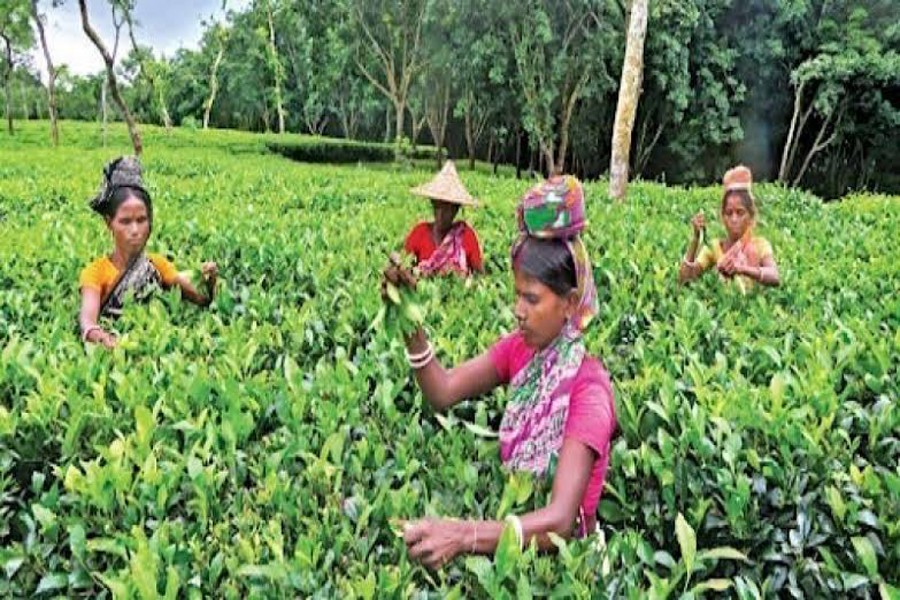
SYLHET, Apr 29: The country's tea industry has been facing various challenges for a number of reasons while its production target of 2025 could not be achieved.
The yield in 2005 was 94.912million kilograms against the target of 103 million kg, up 1.87 million kg from the previous (2024) year's production of 93.042 million kg, said an official of the Tea Board.
Contacted, Director of the Project Development Unit (PDU) of the Bangladesh Tea Board Dr AKM Rafiqul Haque said production in 2025 increased by 1.87 million kg to 94.912million kg from the previous year's (2024) 93.042 kg although the target remained unachieved.
Meanwhile, the current year's (2026) tea production target has been set at 104 million kg, he said, adding the tea gardens started having a good season amid a favorable weather.
The official said this trend of growth indicates stability of the industry amid good weather conditions with rains and competitive pressure in the global market.
In particular, modern cultivation methods, the use of improved cloned tea plants and the active participation of small tea farmers of the northern region have played an important role in achieving increased production in recent years.
Highest production in the country's nearly 170-year history of the tea industry was recorded in 2023 with 102.918 million kg produced, which was 918 kg higher the target set for that year.
On the other hand, load-shedding of electricity has caused a severe trouble for the sector, various tea producers said.
Most of the remote gardens suffer 6 to 10 hours of power outage even for weeks. Raw leaves either go rotten or their quality declines due to delay in processing. Besides, when tea gardens use generators overall cost goes higher.
Contacted, Sylhet branch president of Bangladesh Tea Association, (tea producers association), GM Shibli told this correspondent today yet the tea producers are about 60 to 70 per cent ahead of their target amid a favorable weather.
But hour-long power outages have caused a severe blow to the tea gardens. If it is not resolved soon, the sector would suffer badly this year, he warned.
"There are challenges to ensure increased tea production. Especially, we need to raise the per-hectare tea yield through increased irrigation facilities and other logistics," the tea board official added.
Contacted, consultant of a private tea estate, Md. Shahjahan, also a former general manager of the tea board, said, "Our per-hectare yield has increased to some extent at 1,554 kg but still it needs to be raised through some realistic measures." Otherwise, it would be hard to stick on stability or existence, he added.
Setting sufficient numbers of shed trees, raising irrigation facilities and combating pests through natural means are very important, he mentioned.
Tea is a sensational crop, which needs uniform rains and a favorable weather with sunshine, he said, adding power outage has become another trouble by now.
According to the project development unit (PDU) of the Bangladesh Tea Board, there are currently a total of 171 tea gardens in the country.
Of these, the maximum 90 gardens are in Moulvibazar district only. In addition, the others are in Habiganj, Chattogram and Sylhet. However, the small holdings in Panchagarh, Rangamati and in Thakurgaon spread over 10,000 hectares also contribute a good part for years.
The total area of land under tea cultivation, including nurseries, across the country stands at 158,741 acres. The expansion of small-scale tea cultivation in the north has added new momentum to the country's total production.
Experts say that the country's tea industry can reach a better deal position if effective initiatives are taken to increase the use of technology, ensure worker welfare and expand the export market.
forsylhet@gmail.com