
The dairy sector: A global picture
Dr B K Mukhopadhyay | Thursday, 9 October 2014
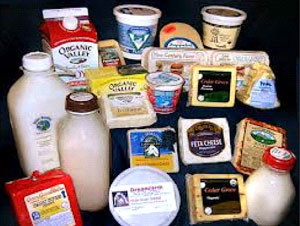
The global demand for dairy products is continuing to grow. In particular, population growth, rising income, urbanisation and westernisation of diets in developing countries (e.g. China and India) are leading to the increased demand. But the question remains - are milk supplies in China and India, as well as the countries in Southeast Asia and Africa, keeping pace with this growth? Is it not a fact that these markets are becoming increasingly important for global dairy companies; who are helping to meet the demand with dairy ingredients, as well as locally produced consumer products?
Everyday dairy nutrition products comprising almost all globally-traded dairy products (SMP and WMP) together account for more than half of all globally-traded products. Asia continues to be the major growth market globally, accounting for around 34 per cent of all dairy imports in 2011. Asia accounts for around 53 per cent of the world's SMP (Skim Milk Powder) and 40 per cent of the world's WMP (Whole Milk Powder) imports. In developed countries, where consumption is already high - there is a more consistent outlook - with demand expected to remain stable, if not bettered.
Globally, milk production is now estimated to expand by a slower rate, a far slower pace than registered in recent years. Growth prospects have been affected by a number of factors as international markets have been responding to the historically high international price levels over the past couple of years. On balance, prospects for the world's six major milk product exporters, which conduct around 77 per cent of global trade, have improved somewhat in recent years. Their milk production is now expected to hover around 40 per cent of global production. But production growth is slowing in some regions, due to high feed prices and high opportunity-costs for pasture. In some areas, new issues have surfaced that may affect consumer demand. In particular, food safety concerns are currently clouding the dairy outlook.
If the current trends are any indication, commodity-wise and country-wise picture reflects not a very rosy view indeed. Skim milk powder exports are now expected to rise, particularly due to the recent increased exports from the United States, which are larger than expected. Exports from New Zealand, Australia and the European Union are anticipated to decline marginally in 2012, but are likely to be higher than previously expected. Imports to both African and Asian countries are expected to increase, stimulated by comparatively lower prices. Imports by Mexico are expected to continue at previous levels, given the importance of and support for its social feeding programmes.
Global exports of whole milk powder are expected to rise, as global milk supplies expand. Whole milk powder remains the key milk product exported by surplus milk producing regions to growing developing country markets. New Zealand, the largest whole milk powder exporter, is set to increase sales. But the largest increases are expected to be there from the European Union, as its milk production increases. Deliveries by Australia and Argentina are expected to be better. Algeria and Venezuela are the two largest importers of whole milk powder, and while imports in the former have declined considerably, those of the latter have remained firm, despite high prices. Milk production in these two countries has been increasing amid efforts to replace imports.
International cheese trade continues to grow, and is by far the highest-value market for milk products; exports are expected to go up steadily.
It is also becoming clearer that regional trade shares are changing, and this may mark the emerging structure of the world dairy market. Europe's role as a major source of supplies for trade has diminished significantly, as has that of Oceania, while those of the Americas and Asia have grown. The United States may export, increasing its trade share to around 12 per cent. Conversely, the trade share of the European Union is set to fall.
Elsewhere in Asia, strong output growth is predicted in the large traditional milk producers: India is expected to sustain its normal growth, while Pakistan and China look set to increase production as high internal prices have stimulated investments in the sector. Brazil may soon be the second-largest exporter in the region or even the largest if the current trends continue over the next several years. In other parts of Latin America and the Caribbean, Mexico, one of the world's largest importers of milk powder, will post limited milk production gains given the high feed costs and a shortage of domestically available feed.
As a whole, milk production in Africa is anticipated to be consistently below world average growth, showing weaker supply response to price spike. But the United States' dairy sector has responded significantly to attractive internal and external prices in the last couple of years. However, this growth is lower than expected, due to the downturn in profitability experienced so far this year, as indicated by the milk-to-feed price ratio. This has limited milk-yield growth and has induced higher culling of cows.
In India today, the animal husbandry and dairy sector has occupied a very significant position. Besides providing cheap nutritional food to millions of people, it is helpful in generating gainful employment in the rural sector, particularly among the landless labourers, small and marginal farmers and women by supplementing their family income. Livestock continues to be the best insurance against the vagaries of nature like drought, famine and other natural calamities. As things stand now, India has a vast resource of livestock and poultry, which plays a vital role in improving the socio-economic conditions of the rural masses. India ranks first in respect of buffalo, 2nd in cattle and goats, 3rd in sheep, 4th in ducks, 5th in chickens and 6th in camel population in the world. The country has around 57 per cent of the world's buffalo population. The livestock sector not only provides essential proteins and nutritious human diet through milk, eggs, meat, etc. but also plays an important role in utilisation of non-edible agricultural by-products.
Though, undoubtedly, the situation has changed mainly due to "operation flood programme", the overall picture cannot give rise to any sort of complacency. The question naturally comes up: why cannot India's per capita milk production has been able to present a very satisfying picture? The Indian dairy industry was still suffering under colonial cooperative laws that do not ensure a level-playing field for the cooperatives making them globally incompatible, as viewed by the father of India's White Revolution - Verghese Kurien. Very practically, he opined that while dairying in Europe, Australia, New Zealand and North America is dominated by cooperatives, enjoying the same legal and regulatory environment as any other enterprise, sadly, India continues to suffer under a colonial cooperative law that ensures anything but a level-playing field. The valued comments must be taken in the right spirit indeed.
The analysis will definitely remain incomplete, especially in the absence of the New Zealand Dairy Industry, inasmuch as New Zealand is unique in that it exports 95 per cent of the 19 million tonnes of milk produced by New Zealand farmers, continuing a history of dairy exports dating back to 1846. As such, being a very significant industry, dairy represents a quarter of all New Zealand merchandise exports. What is more - New Zealand is the world's largest exporter of dairy commodities, representing approximately one-third of international dairy trade each year. Since New Zealand farmers receive no subsidies, the incidence has encouraged a focus on low-cost, high productivity farming systems. It is very pertinent to note here that the processing facilities are mostly co-operatively-owned, by farmers, with the main cooperatives being Fonterra, Westland and Tatua. The New Zealand dairy industry is predominantly pasture-based, with a temperate climate ensuring adequate feed for herds year-round. Dairy farming occupies 1.6 million hectares out of a total of 12 million hectares of pastoral land. Dairy activities have been three times more profitable per hectare than other pastoral land use, encouraging conversions from other farming systems, such as sheep and beef, to dairy - especially in the South Island of New Zealand.
Then why not learning a lot from the New Zealand experience? In terms of US dollars worth of dairy products exported (net), New Zealand has the highest per person earnings at US$ 641 a year. Dairy produce from New Zealand is exported to 140 different territories, 3.5 million dairy cows live there. Overall, less than a quarter of the world territories have net dairy exports. India will definitely gain much if the experience is learnt in a planned manner.
The writer is a management economist and an international commentator on business and economic affairs.
m.bibhas@gmail.com