
STRINGS ATTACHED
The people keeping puppet tradition alive
MAHMUD NEWAZ JOY | Wednesday, 1 July 2026
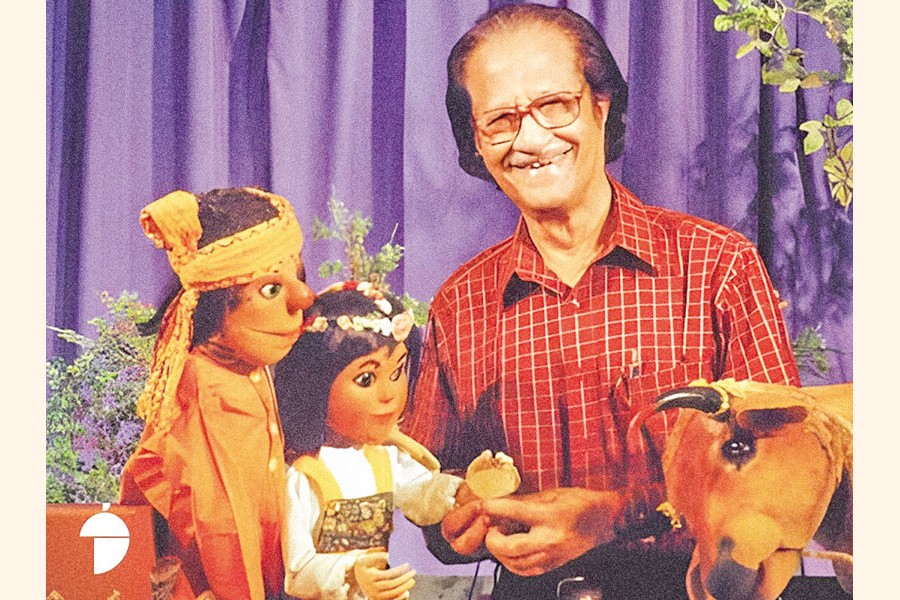
Mustafa Monwar died on the morning of 29 June 2026 at Square Hospital in Dhaka. He was 90, and pneumonia had been wearing him down for a while. People called him the Puppet Man, which undersells what he actually did, he took puppetry off the village fairground. He put it on national television, and for about twelve years, Bangladeshi children grew up with Parul, Bagha and Mini the way other kids grow up with cartoon characters. Except these weren't cartoons. Someone was operating rods underneath the set in real time.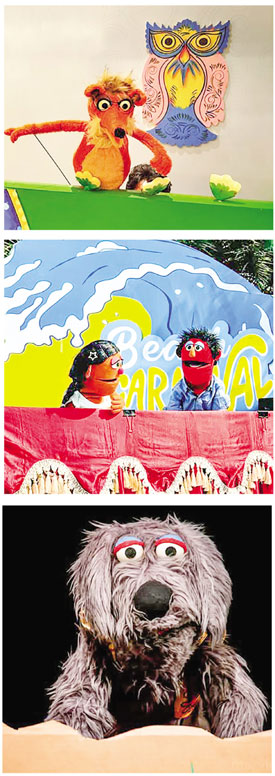 He used to say Bangladeshis don't promote what comes from their own culture. He said it more than once, in more than one interview, and it stopped sounding like a complaint and began to sound like something he'd accepted as true.
A tradition under pressure
Puppetry here goes back at least a thousand years: wire puppets, stick puppets, beniputul, the kind tied together and worked by hand. Brahmanbaria used to be the centre of it. The string puppets were usually one to three feet tall, worked with up to nine strings, and the stories were the usual ones: Radha and Krishna, scenes pulled from the Ramayana, domestic dramas, the odd bit of social commentary.
Balaram Rajbongshi started at eleven. He's from Jhitka, in Manikganj. In the sixties, his troupe would go from house to house for six straight months, Kartik through Chaitra Sankranti, doing Ravaan Bodh, Sheetar Biye, and Kamala Ranir Banabash. Now he gets five or six shows a year, mostly annaprashanas and Baishakhi fairs, and whatever money comes in gets split between seven people. He fishes the rest of the time.
There's a reason this happened, and it's not just television. After Partition, most of the puppeteers, who were largely Hindu, left for India.
During the Pakistan years, there'd already been pushback against dolls and figures, and even after independence, when that pressure lifted, nobody had been writing new scripts or training new performers in the meantime. The gap just kept widening.
Fifty or sixty puppet teams still exist in the country. Maybe ten or twelve actually perform regularly. For nearly everyone in that smaller group, this is not how they pay rent.
The institutions holding the line
Dhaka Puppet Theatre started in 2002. The founders had trained under Monwar at his Educational Puppet Development Centre and wanted to keep going on their own.
Arthur Baptist, who studied Fine Arts at Dhaka University, and his wife, Eshita Jahangir, were at the centre of it from day one; he's now the creative director and the group's senior researcher.
It took them until 2017 to actually stage their first proper productions, Kathuriya Jolpori and Dushtu Rakhal.
Fifteen years between forming and performing, the team is today ten people. A single puppet takes six months to a year to build, and that's before you've spent anything on wood, iron, paper, rubber, foam or plastic.
They run school shows, make puppet dramas for TV, hold teacher workshops, and put on a two-day fair every year.
Baptist keeps coming back to one number: ten days of rehearsal, and a puppeteer ends up with two thousand taka for the show itself. Nobody survives on that long-term.
Shuvangkar Das Shuvo's path into all this was almost accidental. He'd just finished his SSC exams and was out walking with a friend when he ran into Mustafa Monwar, the man behind Moner Kotha, and something about the encounter didn't let go of him. He trained under him, helped start Dhaka Puppet Theatre in 2004, stayed there a while, and in 2012 broke off to start Inventor's Puppet.
It runs on seven puppeteers now, with ties to Bangladesh Shilpakala Academy and UNIMA, the international puppetry body.
The group works mostly through the lens of the Sustainable Development Goals, featuring health messaging, environmental awareness, and development- and culture-related topics.
Shuvo describes the strange appeal of the job this way: "You can see the talent and hear the voice, but the artist stays invisible."
He seems to mean that as a compliment to the form, even though it's also basically the reason nobody gets famous doing it.
Parvin Paru's audience has probably been the largest of anyone mentioned here, mostly through Sisimpur. She's played a handful of Muppet characters over the years, covering Tuktuki, the five-year-old girl who's one of the show's main figures.
The Sisimpur puppeteer roster has included Shuvangkar Das Shuvo too; he voiced Shiku the jackal after nine days of auditions, along with Nurul Absar Palash, Tanzila Afrin, Sayma Karim, Quazi Nawshaba Ahmed, Pothik Sudip and Iresh Zaker.
Seven months after it first aired, Sisimpur was already reaching three-quarters of Bangladeshi households with a TV set.
Foisal Mahmud is an actor and puppeteer who's worked on both Sisimpur and Duronto TV. He said, "Children enjoy watching puppets. Adults do too. Hand puppets, the ones that talk, even more so. Children think they're alive, want to take them home, want to stay with them."
"Balancing the money and the time that puppetry demands is hard. So work becomes a little less. In a project there might be three or four puppeteers; you have to pay each one six to seven thousand taka a day, or three to four thousand for an open programme. Sometimes we do free or charity programmes too. I've done a lot of charity work myself," Foisal added.
What comes next
None of these people is sitting around waiting for puppetry to come back into fashion. They're already doing the work: school shows, charity gigs, the occasional international festival, TV productions when the budget allows, mostly without much of a safety net underneath any of it.
Ask Baptist, or Shuvo, or Foisal, and the math comes up the same way each time: the pay doesn't match what the job demands, and until that changes, not many people are going to choose this as a full-time career.
Shuvo mentioned, almost as an aside, that he's managed to make a living off puppetry alone. Monwar spent a lot of his life arguing that children take in things through a puppet that they would tune out if an adult said the same thing. Nobody working in the field today disputes that. The harder question is whether the country will ever build the kind of support that lets that argument actually mean something.
mahmudnewaz939@gmail.com