
The saga of char dwellers
Shihab Sarkar | Friday, 12 June 2015
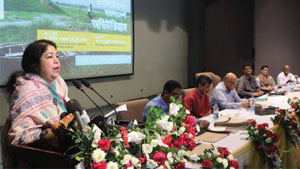
A meet on Bangladesh chars (river shoals) held in Dhaka on June 06 once again brought into focus the plight of the people living on these unique swathes of land. Called the National Char Convention 2015, first of its kind in the country, it was organised by 80 national and international non-government agencies engaged in activities aimed at improving the lot of char-dwellers. According to the convention sources, a total of six million people live on these chars. The shoals are located either in the middle of large rivers, or constitute tracts of new lands adjacent to the river banks. The mid-river chars could also be defined as river islands.
Chars or shoals have been an integral part of the country's river-dominant landscape for centuries. In the bygone days, newly emerged sandy lands were sparse in the country. As the rivers used to flow in their pristine might from upstream across Bangladesh, the major water courses had their normal depth. Over time, yearly floods, coupled with silting, have led to the formation of chars. With the rise in population along the river banks, human encroachment on rivers kept hastening the emergence of shoals. In the modern times, natural and human-induced obstruction of river currents has increased the pace of chars' appearance. Nowadays, major rivers not dotted with chars are hardly seen in Bangladesh. All these are among the 54 trans-boundary rivers flowing downstream from the upper riparian India. The country's total number of rivers and their tributaries now stands at around 700. Barring a few with strong current and higher depth, almost all big rivers in the country are filled with shoals. A large number of these rivers are located in the northern, northwestern and southern regions of Bangladesh. The estuaries of the country's large rivers in the south have long been witnessing emergence of chars.
The chars emerging in the rivers at a frequency faster than in the past now pose a major challenge to the country's broader economy. They affect the navigability of river channels rendering once-bustling river ports useless. Inland cargo ships and boats have to make many a detour to finally reach their destinations. This lengthened travel time increases fuel cost. Passenger transports along waterways also face hurdles in movement, especially during lean seasons.
The emergence of chars is directly linked to climate and human interventions. It has been more than a hundred years since human habitat on chars began in this country on a large scale. In the earlier days, occupation of char areas would spark violent fight between people from the nearby villages. Different influential quarters would lay claim to the char lands in remote areas. Bloodshed, deaths and injuries were part of the violent mayhem. But once the dust settled, life would be smooth and pleasant on the new-found lands. People for generations in a row have lived on our chars, more or less happy and content. Agriculture, cattle-rearing and fishing thrived on many chars. But with life becoming complicated amid various economic crises, living on chars has kept getting tougher. In the meantime, successive governments entered the scene, exerting their control over the chars. As part of their rehabilitation of the extreme poor, the governments distributed household plots and croplands among the landless people. Later, many of them were eventually forced to sell their lands to powerful people at throwaway prices. The trend continues even today. Some people are just driven out of their homesteads.
In general, the river shoals nowadays stand witness to endless deprivations and sufferings of those who live there. The chars symbolise day-to-day ordeals of hundreds and thousands of destitute people who move there on their own. These people spin their dreams around their humble homesteads which they build on the chars. However, upon settling down on the river shoals, lots of fortune-hunting people end up being caught in an inescapable web of woes. Many discover later that life is not as easy as they were told it would be, like the settlers do on Mainadwip, the so-called El Dorado in Manik Banyopadhay's novel Padma Nodir Majhi. In the twenty-first century Bangladesh, the char people constitute one of the most marginalised and neglected sections of its population.
Apart from being caught in the vicious cycle of poverty, various forms of miseries afflict them. As the designated government centres that provide basic services are located far from their dwelling clusters, they remain deprived of the facilities enjoyed by people in overland villages. The services range from those related to health, education, childbirth, income generation, flood protection to law enforcement to communication. The people living on mid-river chars do not get timely supplies of agricultural inputs, nor are they offered guidance from experts. Except the strongly rural-based ones, few non-governmental organisations (NGOs) have the infrastructural capability to reach the char people. This is mainly due to poor communication facilities. Given this fact, a sizable part of the char-villages remain outside the micro-credit and different types of socio-economic and health programmes. At the same time, many government entities running poverty alleviation, literacy and income-generating activities do not also show much enthusiasm for the inhabitants of chars. A fact that might startle many is the government keeps a considerable chunk of budgetary allocation for the char people every fiscal year, but the money remains unutilised.
Against this dismal picture, there appear initiatives by local and donor-funded organisations who work in the country's island-chars. The Chars Livelihoods Program (CLP) is one of them. It has started operation after carrying out a study on social protection and poverty reduction of char-dwellers in June, 2013. CLP aims to promote livelihood opportunities. It has focused on improving livelihoods of one million people in the char-islands in northwestern Bangladesh. The programme is jointly funded by UKaid through the Department for International Development (DFID) and the Australian Government (AusAID). The programme is sponsored by the Rural Development and Co-operatives Division of the Ministry of Local Government, Rural Development and Co-operatives. The UK-based. Maxwell Stamp Plc, one of the world's leading international economics consultancies, is implementing it.
After its launch, CLP-1 worked in 2004-2010 on the Jamuna river char-islands in the districts of Kurigram, Bogra, Gaibandha, Sirajganj and Jamalpur. It targeted bailing 55,000 of poorest households out of poverty in these areas. Its total beneficiaries are now estimated at 900,000 people.
The CLP-2 is working in some newer districts in the region like Lalmonirhat, Nilphamari, Rangpur, Pabna and Tangail --- alongside the phase-1 districts of Kurigram, Gaibandha and Jamalpur. CLP-2 will run up to 2016. The programme this time aims to lift 67,000 people out of extreme poverty.
Keeping the six million char-dwelling people in view, even an all-out execution of CLP in a number of vulnerable districts may seem inadequate.
In order to face up to the formidable challenge of ensuring a better life for these off-mainstream people, more initiatives ought to be undertaken. At the day-long colloquium on June 06, 2015, Khondokar Ibrahim Khaled, the char convention's national committee chairperson, has found reasons for looking to the NGOs. These organisations are free of the traditional red tape. He urged them to take up char-specific programmes to ensure a better life for the people living on shoals. On the other hand, Jatiya Sangsad Speaker Shirin Sharmin Chowdhury underscored the need for involving parliament members in the uplift of char people's life, if their constituencies include shoals. At the convention, many were supportive of the idea of collaboration between government and non-government agencies in the task of improving living standards of the char people.
Owing to their being an integral part of the country's population, the char dwellers deserve a better deal, rightfully at that. They comprise the sections of people who brave all adversities as they opt for a life of struggles for a decent survival. In the process, they contribute to the nation's well-being in their humble way. They should not be viewed as a drag on the country.
shihabskr@ymail.com