
The times of Justice Murshed
Justice A. M. Mahmudur Rahman | Thursday, 3 April 2014
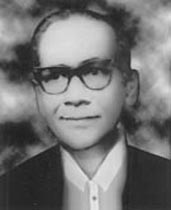
Justice Murshed was born on January 24, 1911 in Kolkata in a distinguished Muslim family. He passed the matriculation examination in 1926 securing first position among the students who appeared in the examination from Rajshahi Division of British Bengal. He passed BA examination with honours in Economics from the Presidency College in Kolkata in 1930 and M. A. in 1932 and obtained LLB degree from Calcutta University in 1933 securing first class. He enrolled himself as an advocate of the High Court of Judicature at Fort William in Bengal in 1934 and within a short span of time he discontinued his legal practice and went to England to study for the bar. He was called to the bar at Lincoln's Inn in 1939. He was the lone student from British India to secure honours in the Bar-at-Law final examination in that year. In England, he came in touch with great people like Prof Harold Laski of the London School of Economics and Mr Krishna Menon.
On his return from England he took up again legal practice and within no time made his mark as a lawyer in the Calcutta High Court. He was Senior Government Counsel for Improvement Tribunals, Calcutta Improvement Trust. He was associated with those who tried to form a coalition ministry in Bengal composed of representatives of the Congress and the Proja Party. He was also associated with the progressive Muslims who formed the Muslim Majlish with the purpose of bridging the Hindu-Muslim divide.
Justice Murshed joined those who actively supported the proposal of the Cabinet Mission led by Sir Stafford Cripps. It proposed for autonomous Muslim groups in north-west and east India and a Hindu majority group in the rest of India. He was one of the champions who wanted to keep Bengal undivided. In 1947 he took active part in resisting communal violence that was escalating in the subcontinent. His efforts and the efforts of those with whom he worked -- Humayun Kabir, Syed Badrudduja, Prof Hiron Mukherjee, Sadhon Gupta and others -- contributed to a great extent in framing the Nehru-Liaquat Pact.
Coming to Dhaka, he got involved in politics and took part in the State Language Movement. He helped draft the 21-Point Manifesto of the United Front in 1954. He joined Dhaka High Court as an advocate. Within a short time he made his mark in the legal profession and was elevated to the Bench in 1954.
As a judge Murshed was uncompromising and a firm believer in the rule of law and democracy. He stood up against the imposition of military rule by General Ayub Khan in 1958.
I shall be failing in my duty unless I make reference to some of the landmark judgments Justice Murshed delivered in various cases. These are:
(1) the famous case of Abdul Haq vs Fazlul Quader Chowdhury and others, popularly known as the 'Minister Case'. In this case Justice Murshed as a presiding Judge of the Special Bench delivered the judgment resulting in the unseating of the Central and Provincial Ministers under the Constitution of 1962 and because of the judgment, President Ayub Khan had to amend the Constitution regarding appointment of ministers. This judgment is not only a heroic one but it demonstrates a lucid exposition of constitutional law.
(2) In the Dhaka University Convocation Case, popularly known as Zakir Ahmed Case, he struck down the decision of the Dhaka University regarding the expulsion of Zakir Ahmed. The doctrine of audi alterm partem, which he aptly applied in this case, is still followed by the highest judiciary of our country.
(3) In the Col Bhattacharya's case, Justice Murshed, speaking for the Bench, observed: "It was further argued that force has never been the source of law referring to a dictum of Rousseau in his well known work, 'Social Contract'. It is true according to Rousseau, the origin of 'state' and 'laws' is a primeval contract between the members of a somewhat nebulous society. This is one school of political philosophy, which has not been accepted in its undiluted form, there is another school of political thought led by Hobbes, which recognises that the might and force behind a sovereign authority is the origin of law and 'state'.
Other political philosophers like Locke, for instance, have taken a view which is a via media between the two views expressed above. With regard to the origin of law, political philosophers have held different views and they are far too numerous to be discussed here. Such discussion would be irrelevant for the purpose of this case. Similarly no useful purpose would be served by grouping round the interminable definitions that have been given to the expression 'Law' across long-drawn centres by different philosophers and jurists who have obviously undcrstood that expression in various senses. This accounts for the great divergence in their views. We have, therefore, refrained from discussing the opinions, ponderous as they are, of philosophers from Aristotle and Plato to Salmond and Holland that have been read out before us by the learned advocates in order to support two different views. But an examination of the great mass of divergent definitions as propounded by thinkers beginning from Hellenic philosophers to modern jurists will lead one to the conclusion that a workable definition which is accepted by lawyers for practical purposes is a body of acts, orders, ordinances, regulations, rules, conventions, customs and practices."
Regarding lawyers, he said: "The essential characteristic of a lawyer is that by interest and 'predilection, and often by birth, he belongs to the people; by habit and taste he belongs to the aristocracy. He is thus a happy connecting link between the two. They are very properly co-sharers of the Court not so much as law-givers but as interpreters of the law."
Even after he resigned, Justice Murshed did not stop thinking about the people and the country.
In his reply to a Full Court Reference on the occasion of his becoming the Chief Justice of the then High Court of East Pakistan, Justice Murshed cautioned the judges about their duty. He said, "A judge is nothing but the law-speaking with uncompromising justice, for, it has been truly said that the best government is that the law speaks rather than the law-givers. This is where the judges come in. But where the law ends tyranny begins and there is no worse tyranny than judicial arbitrariness and no misfortune can be worse than judicial subservience. When a judge departs from the spirit of the law and from a fearless independence in its application, he becomes the worst lawbreaker."
The writer was a judge of the Appellate Division of Bangladesh Supreme Court.