
Taliban entrenched in Afghanistan after 2 years of rule
They keep struggling economy afloat
Tuesday, 15 August 2023
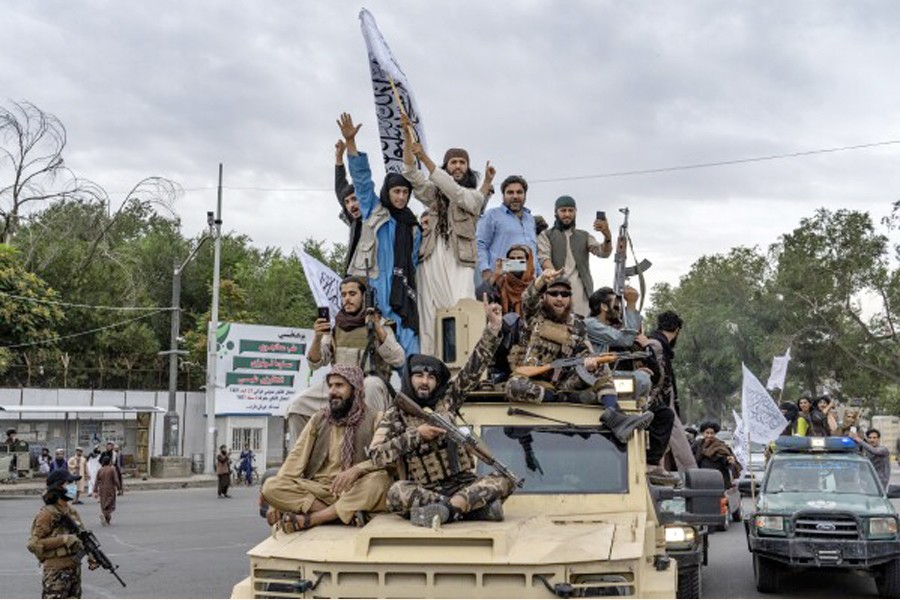
KABUL, Aug 14 (AP): The Taliban have settled in as rulers of Afghanistan, two years after they seized power as U.S. and NATO forces withdrew from the country following two decades of war.
The Taliban face no significant opposition that could topple them. They have avoided internal divisions by falling in line behind their ideologically unbending leader. They have kept a struggling economy afloat, in part by holding investment talks with capital-rich regional countries, even as the international community withholds formal recognition.
They have improved domestic security through crackdowns on armed groups such as the Islamic State, and say they are fighting corruption and opium production.
But it's their slew of bans on Afghan girls and women that dominated the Taliban's second year in charge. They barred them from parks, gyms, universities, and jobs at nongovernmental groups and the United Nations. These orders followed a previous ban, issued in the first year of Taliban rule, on girls going to school beyond sixth grade.
The Taliban say they are committed to implementing their interpretation of Islamic law, or Sharia, in Afghanistan. This leaves no space for anything they think is foreign or secular, such as women working or studying. It's what drove them in the late 1990s, when they first seized power in Afghanistan, and it propels them now, ever since they took control again on Aug. 15, 2021.
Their supreme leader Hibatullah Akhundzada has praised the changes imposed since the takeover, claiming life improved for Afghan women after foreign troops left and the hijab became mandatory again.
Foreign governments, rights groups, and global bodies condemned the restrictions. The U.N. said they were a major obstacle to the Taliban gaining international recognition as the legitimate government of Afghanistan. Overseas aid is drying up as major donors stop their funding, pulled in different directions by other crises and worried their money might fall into Taliban hands.
The lack of funds, as well as the exclusion of Afghan women from delivering essential humanitarian services, is hitting the population hard, pushing more people into poverty.
Nearly 80% of the previous, Western-backed Afghan government's budget came from the international community. That money - now largely cut off - financed hospitals, schools, factories and government ministries. The COVID-19 pandemic, medical shortages, climate change and malnutrition have made life more desperate for Afghans. Aid agencies have stepped into the breach to provide basic services like health care.
Afghanistan is struggling with its third consecutive year of drought-like conditions, the ongoing collapse in families' income, and restrictions on international banking. It's also still suffering from decades of war and natural disasters.
The World Bank said last month that the local currency, the afghani, gained value against major currencies. Customers can withdraw more money from individual deposits made before August 2021 and most civil servants are being paid. The World Bank described revenue collection as "healthy" and said most basic items remained available, although demand is low.
The Taliban have held investment talks with countries in the region, including China and Kazakhstan. They want sanctions removed and billions of dollars in frozen funds to be released, saying these measures will alleviate the suffering of Afghans. But the international community will only take such steps once the Taliban take certain actions, including lifting restrictions on women and girls.
It's largely up to the Taliban leader, Akhundzada. The cleric counts like-minded government ministers and Islamic scholars among his circle. He is behind the decrees on women and girls. His edicts, framed in the language of Islamic law, are absolute.
The bans will only be lifted if Akhundzada orders it. Some Taliban figures have spoken out against the way decisions are made, and there has been disagreement about the bans on women and girls. But the Taliban's chief spokesman Zabihullah Mujahid slammed these reports as propaganda.
"The secret of their success is that they are united," Abdul Salam Zaeef, who served as the Taliban envoy to Pakistan when they ruled Afghanistan in the 1990s, said.
Aid officials say the Taliban view recognition as an entitlement, not something to be negotiated. The officials also cite high-level meetings with powerful states like China and Russia as signs that the Taliban are building bilateral relations in their own way.