
TIB slams draft CSA with black DSA provisos
FE REPORT | Thursday, 31 August 2023
Transparency International Bangladesh (TIB) on Wednesday rejected the draft Cyber Security Act-2023, saying it has incorporated controversial provisions of the preceding oppressive Digital Security Act-2018.
If the draft becomes a law, according to the anti-corruption watchdog, individuals will be subjected to legal harassment for expressing their opinions and information through digital media.
"If the CSA as it is now is implemented, it will be another oppressive law similar to the Digital Security Act," said TIB executive director Dr Iftekharuzzaman.
Addressing a press conference at Midas Centre at Dhanmondi, he said the draft was approved in just 14 days without taking opinions [from stakeholders].
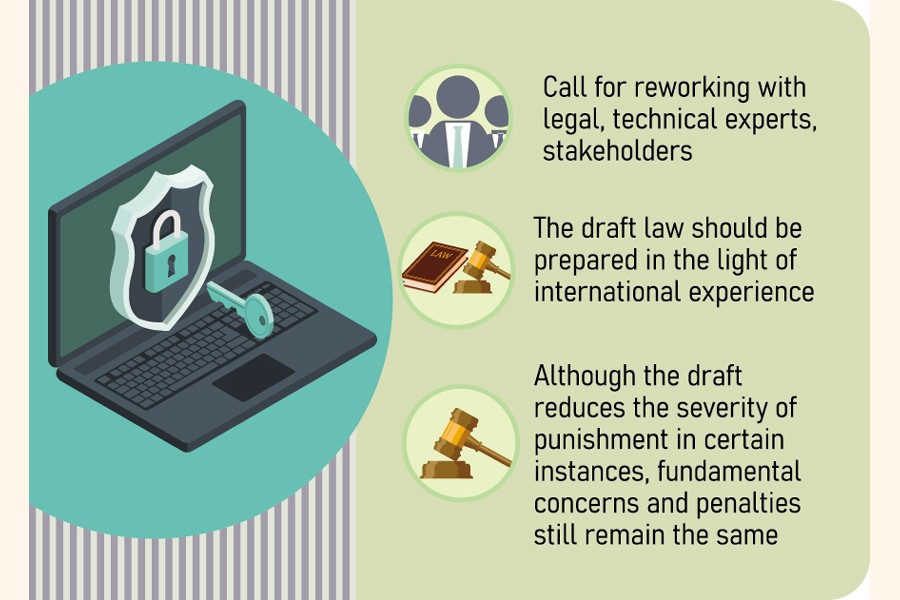
"Although the draft reduces the severity of punishment in certain instances, fundamental concerns and penalties still remain the same."
Dr Zaman said the basic right of individuals, freedom of speech, was still being limited.
As this law was drafted by changing some punishments espoused in its predecessor DSA, according to the TIB, it relies heavily on copying and pasting.
"We must move beyond this copying approach, and the draft be completely reworked," asserted Dr Zaman, saying it is a problematic law in many ways.
"Just changing the name is not enough; its sections need to align with the intended name."
The TIB executive said there was still room for discussion over the cybersecurity law at issue as it could be corrected in consultation with stakeholders.
"The way the law put in place will disrupt people's security," he continued.
Even though there is an existing law to deal with actions like defamation, according to Dr Zaman, this new law appears unnecessary for such matters.
The TIB called for drafting the proposed law in the light of international practices, objectives and content related to cybersecurity and taking into consideration the opinions of experts and stakeholders.
The draft law empowers police to investigate crimes and enforce the law, but it is necessary to review whether law-enforcement agencies have technical knowledge or specialised capabilities related to cybercrime.
"The draft law doesn't mention judicial supervision, and even if the offence is non-bailable or bailable, individuals can still be arrested by the police."
The TIB said the draft law should be prepared in the light of international experience by involving all stakeholders, including experts from the relevant sectors, civil society and media.
It recommends that the draft CSA, as approved on 28 August, be thoroughly overhauled to prepare a genuine Cyber Security Act that will truly serve the purpose of ensuring the security of cyber infrastructure, computer and internet systems, digital platforms, and other components of the cyber system.
It said the draft CSA should refrain from retaining any provisions from the DSA that compromise freedom of speech, dissent, thought and conscience, freedom of the press, and independent journalism.
"All stakeholders, including independent legal and technical experts, sector specialists with knowledge and expertise on international best practices, human rights organisations, journalists and relevant professionals, should be closely involved in the process of overhauling the draft."
bdsmile@gmail.com