
Tigers win back nation’s trust
Monday, 23 March 2015
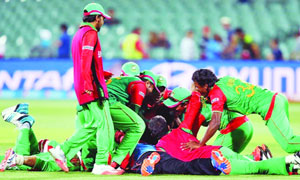
Before Bangladesh left for Australia in January, the players and coaches routinely mentioned that the team's primary target was to reach the World Cup quarter-finals. It was often followed by a reminder of the reality that Bangladesh would be playing in two countries they had not toured since 2010. Having embraced the reality of different pitches for two months, Bangladesh will return home having reached the World Cup knockouts for the very first time.
Bangladesh's campaign underwent plenty of mood swings, but their form curve did not waver too much. They lost all four of their pre-tournament practice matches, but started the World Cup soundly beating Afghanistan in Canberra. They gained a point after their match against Australia was washed out. It was a lucky break and the mood was lifted, only to be dampened by Al-Amin Hossain's exit due to a discipline breach, says ESPNcricinfo.
Three dropped catches, balls slipping between legs, and fielders not keyed into the on-field action ensured Bangladesh took only one wicket in 50 overs against Sri Lanka at the MCG and were comprehensively beaten. In the next game, Scotland's batsmen put up a formidable target, but Tamim Iqbal, Mahmudullah and Shakib Al Hasan fought through to complete a big chase.
While Bangladesh progressed to five points, England's struggle meant that the March 9 contest between the two teams was a virtual knockout game. It was one of the best matches of the tournament, which Bangladesh prevailed mainly on the back of Mahmudullah's maiden ODI hundred, and Rubel Hossain's late burt. The momentum from this big win gave Bangladesh enough firepower to attack New Zealand for long periods in their next match, but they finished the group stage just as they had hoped: beat both the Associates and upset one of the Full Members.
While the umpiring caused a lot of rage, Bangladesh is disappointed at their meekness against India. Particularly, when they had some control over the ball and when Tamim had given them a rapid start to the chase. Regrets aside, this World Cup campaign rode a wave of emotions and ultimately can be deemed a success, especially for a team which expected only this much success in the first place.
The number of times Bangladesh fought back from difficult situations was admirable. They were 119 for 4 and going nowhere in their first match against Afghanistan when Mushfiqur Rahim and Shakib Al Hasan drove them out of that prickly spot. Mahmudullah and Soumya Sarkar did a similar job from poorer starts against England and New Zealand. All three fight-backs were counterattacks and not rearguard jobs. The pace bowlers' timely breakthroughs were a pleasant surprise, while the leadership of Mashrafe Mortaza was exemplary.
Bangladesh lost their quarter-final by 109 runs, but they would spend the next four years wondering what would have been had they contained Rohit Sharma and Suresh Raina in the batting Powerplay. They would also rue the directionless batting of Imrul Kayes, and whether the Shakib-Mushfiqur fifth-wicket partnership could have batted swifter. The fielding against Sri Lanka and some selection decisions should go through a review, but these issues could be drowned by the umpiring rage and the moderate success of the team.
Bangladesh bounced back after a poor previous 2014, but to do so in a World Cup was to their credit. Within their overall progress, the performances of Mahmudullah and Rubel Hossain mean that Bangladesh are more than just about Shakib and Tamim. Soumya Sarkar and Taskin Ahmed are examples of young talent coming to the top of the Bangladesh cricket system, while the pace bowlers' regular involvement also showed how spin can sometimes take a backseat in the Bangladesh attack.