
Roundtable Discussion on
Tobacco Tax: Short-Term Gain vs Long-Term Sustainability
Sunday, 26 April 2026
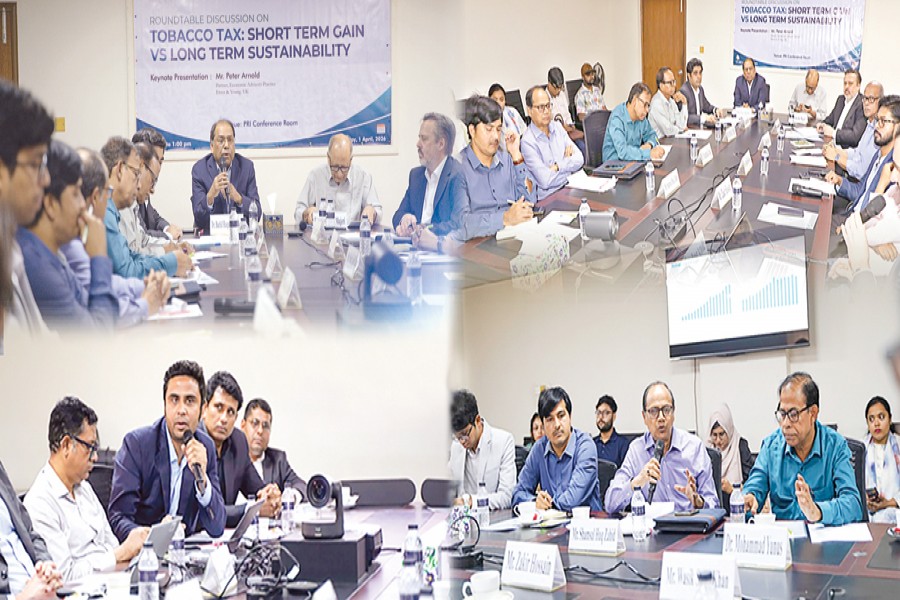
The Policy Research Institute of Bangladesh (PRI) hosted a roundtable on "Tobacco Tax: Short-Term Gain vs Long-Term Sustainability" on April 1, 2026, in Dhaka. Speakers emphasized the need for a simple, transparent, and predictable tobacco tax framework to ensure steady revenue while supporting economic stability. They noted that recent tax and price hikes have significantly raised the tax burden on the cigarette sector; consequently, revenue growth has slowed due to lower sales and rising illicit trade, leaving limited scope for further increases in ad valorem Supplementary Duty. Participants recommended a gradual transition from the existing ad valorem system toward a specific excise regime to enhance predictability and administrative efficiency. They also called for a phased, multi-year roadmap to simplify the multi-tier structure by reducing the number of price tiers over time. Strengthening enforcement measures - including improved monitoring and systems to curb illicit trade - was highlighted as essential to safeguard revenue and ensure the effectiveness of future tax reforms. Below are some key excerpts from the roundtable discussion:
EY Report - Summary
The EY report highlights two important points as context: first, understanding the dynamics of the cigarette market, and second, identifying the building blocks for a sustainable cigarette tax system. In terms of fiscal measures, the cigarette sector revenue is extremely important for Bangladesh - it contributes around 7.5% of total tax revenue, which is high by global standards. However, this also reflects a relatively narrow overall tax base, meaning the government is quite reliant on this sector.
The current system is complex. Bangladesh operates a four-tier structure with minimum retail prices and a high ad valorem tax of about 83%. While this has delivered steady revenue growth in the past, recent trends show a slowdown. In nominal terms, revenue is still increasing, but in real terms, growth has stagnated, and in the recent period, higher taxes did not generate additional real revenue.
This suggests tax rates on tobacco in Bangladesh may be approaching the peak of what economists call the Laffer curve - where further tax increases yield diminishing or even negative returns. In other words, the system that worked well in the past at raising revenue (at the same time as discouraging consumption) is now under pressure.
So, what are the key areas for reform? The report highlights four. First, moderate price increases - large hikes may increase illicit consumption without increasing revenue, but gradual increases combined with economic growth can still be effective. Second, simplification of the system, as the current multi-tier structure encourages downgrading to cheaper products. Third, considering a shift toward a specific or mixed tax system, which is simpler and more predictable. And finally, strong policy measures to control illicit trade, which becomes more attractive as prices rise. Overall, the report flags the challenge of striking a balance between revenue sustainability and market realities.
The current tax rate at 83% is already among the highest globally and above the WHO target as well, so further increases may not generate additional revenue. Instead, the focus should be on increasing prices - particularly in lower tiers, which now account for almost 90% of consumption due to significant downtrading. There is also a need to simplify the complex multi-tier system, with a gradual shift toward a specific or mixed tax structure in line with global practices. However, higher prices may increase illicit trade risks, requiring strong enforcement across the value chain. Overall, sustainable reform requires moderate price increases, system simplification, and a clear long-term roadmap supported by effective anti-illicit measures.
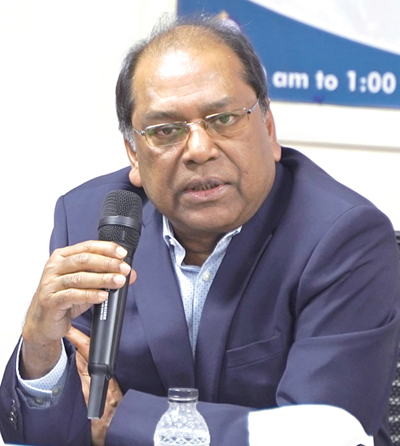
Dr. Bazlul Haque Khondker
Research Director, Policy Research Institute of Bangladesh (PRI)
Tobacco taxation is crucial from a revenue generation perspective in Bangladesh. The government earns significant revenue from this sector through VAT, Supplementary Duty, and health development surcharge, yet the issue goes beyond revenue - it intersects with sustainability, regulatory efficiency, and public health.
Now, as many of you may know, Bangladesh currently operates a multi-tiered excise system in the cigarette sector, with different minimum retail price tiers but a uniform tax rate across these four tiers. While this system has worked historically, there is growing evidence that it may have reached a tipping point. The tax lever is already maxed out, and further increases in price may not necessarily increase revenue at the same rate as it was in the past; instead, they could lead to substitution across price tiers, erode value and create opportunities for illicit tobacco to expand.
We also see that the existing structure shifts consumers to cheaper or lower-quality products, which raises both health and revenue concerns.
Three key issues are emerging from discussions. First, a large tax increase has become unsustainable for compliant manufacturers. Second, Bangladesh is not fully aligned with global practices, where many countries are moving toward specific taxation systems; Bangladesh is still following a multi-tiered ad-valorem system. Third, it is essential to address illicit trade with strong policy measures that are equally important.
Given these challenges, there is a clear need for broader, evidence-based discussion. We hope that studies like the one conducted by Ernst & Young will help guide a balanced, long-term tobacco policy that ensures revenue sustainability while minimizing harm.

Wasik Sajid Khan
Lecturer, Dept. Of Japanese studies (Economics), University of Dhaka
I would like to begin by raising an important issue that needs equal attention as the cigarette sector - the broader tobacco market, which includes both local smoked and smokeless tobacco, such as bidi and jorda. These products are widely used, particularly among lower-income groups, and in fact, the number of local smokeless tobacco users is still very high. Therefore, these segments should be properly included in the wider tobacco tax net.
While Bangladesh generates around 7.5% of internal revenue from tobacco taxes - higher than many South Asian countries - this must be seen in the context of an overall low tax-to-GDP ratio.
Regarding the tax structure, the current multi-tier ad-valorem system for cigarettes could be simplified by reducing the number of tiers in the short term and moving towards fewer or even a single tier in the long term. For bidi, introducing a specific tax instead of the existing ad valorem system could be a more effective approach.
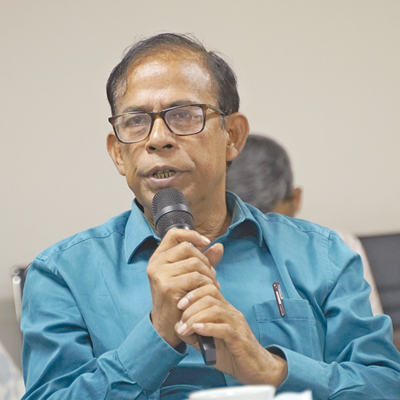
Dr. Mohammad Yunus
Research Director, Bangladesh Institute of Development Studies (BIDS)
Tobacco taxation should not be viewed solely from a revenue perspective but also in a way that will help reduce consumption. International experience shows that countries have failed miserably at times due to unsustainable and ineffective policy measures. Ultimately, tobacco policy must balance revenue considerations with overall economic welfare, particularly the long-term health costs imposed on society.

Zakir Hossain
Associate Editor, the Daily Samakal
In this discussion, a debate has emerged regarding ad valorem versus specific duty. I am not aware of any structured exercise by the National Board of Revenue (NBR) on this, but it deserves focused attention. Shifting from ad valorem to specific duty could have implications for revenue generation.
Bangladesh is significantly behind its revenue targets, particularly in terms of the tax-to-GDP ratio, despite tobacco contributing a substantial share. Yet in pre-budget discussions, tobacco taxation is rarely highlighted, possibly due to sensitivity around health concerns, resulting in limited economic analysis and think tank participation.
Anti-tobacco groups and manufacturers present contrasting narratives. A platform bringing together policymakers, manufacturers, anti-tobacco groups, and think tanks could strengthen debate and provide clearer insights into market dynamics. All relevant parties across the supply chain must be included in relevant discussions.
The illicit tobacco market is increasing, including tax evasion through counterfeit or reused stamps, misdeclaration, and smuggling, causing significant revenue loss. Consumer perception that illicit or foreign cigarettes are less harmful is also driving demand. Addressing illicit trade requires coordinated enforcement beyond NBR, and deeper investigation is needed into the relationship between taxation and illicit consumption. Most importantly, policy measures should be there. If policies are not strict, enforcement measures would not be sustainable.
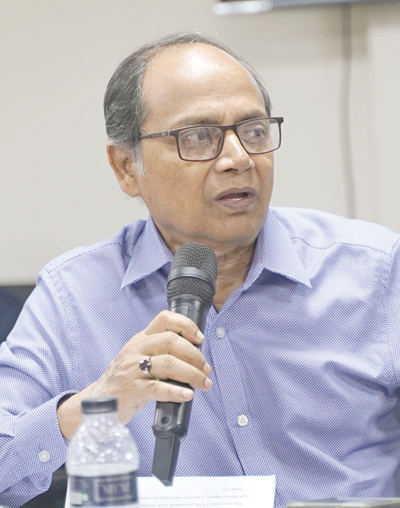
Shamsul Huq Zahid
Editor, The Financial Express
Decision makers should engage directly with the tobacco sector, which has been a longstanding topic of discussion. This is a legitimate industry. As long as it remains legal, it should have the right to speak to policymakers and raise its issues. Tobacco generates around BDT 40,000 crore in revenue (FY 2024-25) and its earnings could increase if the illicit trade were controlled. Currently, small vendors report that up to a third of daily sales involve unregulated cigarettes, and regulators and law enforcement agencies should take sufficient measures to stop it.
While some policymakers recognize this sector's vital fiscal contributions, there is an opportunity to further align their perspective on its broader role in the economy. Abrupt changes in pricing or taxation risk accelerating illicit trade. The government should hold extensive consultations with policymakers, economists, and industry participants, adopt robust volume verification, and ensure accurate reporting.
Policies must also consider employment, farmer livelihoods, and broader economic impacts. I recognize health risks, but the industry deserves a fair, constructive dialogue rather than being sidelined.

Khandokar Shakhawat Ali
Visiting Research Fellow, BIGD
I would like to highlight some key issues, particularly the need for serious engagement in research and development (R&D). It is encouraging that there has been growing attention over the last five years, and today's discussion reflects some progress. I also agree with Mr. Zakir Hossian that R&D capacity is needed within NBR itself, as national expertise is critical to safeguard revenue and sustainable development.
Three areas stand out: first, economic assessment - taxation requires analysis from multiple perspectives; second, market dynamics - considering short-term versus long-term effects, especially in tobacco taxation; and third, health economics - tobacco and health are interlinked, so costs and outcomes must be incorporated. This debate already exists, but it remains a real challenge. At the same time, tobacco generates a significant amount of revenue, so managing this trade-off is very important.
Illicit trade is another challenge, affecting compliant investors. Tobacco is both an industrial and agricultural product, involving farmers and industrial stakeholders. Historically, discussions have been tax-focused, but engagement has not been holistic, often excluding consumers and over-representing global anti-tobacco advocates or producer lobbyists.
Strengthening technical systems, such as tax stamps or banderols, and using technology for compliance, is essential. Ultimately, NBR must focus on sustainability while ensuring certainty for investors.

Md Farid Uddin
Former Member, National Board of Revenue (NBR)
I want to emphasize the need to separate policy formulation and enforcement within NBR - a concept first proposed by the IMF in 1993. I raised this in 2021 during an online seminar. Despite forming a committee, political interference and bureaucratic resistance have prevented implementation. Our recommendations, after extensive consultation with stakeholders, received minimal response from media, civil society, and business groups.
NBR remains largely reactive, not proactive. Bangladesh's tax-GDP ratio is only 6.6%, with 80% from indirect taxes, disproportionately affecting the poor. Tobacco taxation is a high-yielding sector, yet illicit trade is growing due to outdated customs systems and weak enforcement. Past reforms were conditional on political pressure or IMF mandates, not societal demand.
I strongly support long-term reforms, including the modernization of NBR, the adoption of specific taxes, and the strengthening of enforcement mechanisms like single-window systems. This reform will require four to five years to implement and an investment of approximately 78,000 crore Taka, which should come from the government rather than IMF funding, to avoid conditionalities.
Budget discussions must involve multiple ministries - finance, commerce, industry, and environment - to ensure comprehensive decision-making. Government commitment is essential for meaningful tax reform in the cigarette sector, equity, and effective modernization of the NBR.

Dr. Mustafa K. Mujeri
Executive Director
Institute for Inclusive Finance and Development (InM)
The presentation that was given dealt with the immediate issues, particularly facing the tobacco industry itself. And obviously, the discussions that followed have dealt with these aspects in particular and the overall fiscal system in general, because these two are interrelated.
You can't really have a good tax framework for tobacco unless the overall tax framework of the country is optimal and responsive to the needs of society itself. The major issue in this context is cigarette tax structure reform - what kind of reform is needed in the cigarette sector to ensure revenue generation both in the short and long term, and sustainability.
There are different opinions surrounding this topic. As long as this sector is regulated, the industry will meet it while contributing to revenue generation. If we look at the sector in terms of production and reprocessing, it is flourishing even in a hostile environment. Innovations, such as contract farming, have played a major role. The reality is that short-term compulsions drive the sector. We need to convince policymakers that reforms can bring additional revenue for social objectives, breaking the status quo and enabling efficiency, growth, and sustainable reforms.

Simon Trussler
Group Head of Fiscal Affairs and International Trade, BAT
I want to highlight a few points. Bangladesh's excise system clearly needs reform. It's not delivering the tax revenue growth it used to. Between FY 2014-15 and 2019-20, tax revenues grew by 7% above inflation annually, but in the next five years to 2024-25, revenues have been flat or declining in real terms. This is a problem, as government spending and public service costs rise with inflation.
Bangladesh's tax system is complex compared to most countries, and modernization is needed. Only 17 countries have a tiered excise system, and only three - including Bangladesh - use ad valorem excise. International institutions recommend moving to a wholly specific excise system, reducing price gaps between cigarettes and bidis, and simplifying price tiers.
Long-term reform should be careful and predictable, avoiding market shocks. The goal is a win for NBR, public health, and the legal industry. Enforcement is critical, and illicit trade should not block reform. Raising the floor price reduces incentives for illegal supply and supports legitimate industry growth. Bangladesh has a huge opportunity to reform excise, increase revenue, and strengthen public health simultaneously.

Dr. Ashikur Rahman
Principal Economist, Policy Research
Institute of Bangladesh (PRI)
I want to thank everyone - from the academic and journalist communities, Ernest & Young, to a former NBR member - for being part of today's discussion. I think it was an honest conversation. I am not a cigarette expert, but over the past month, I have been learning through discussions and reviewing presentations.
As an institutional economist, I know institutional reforms are critical. Sometimes the window for reform is closed, but for Bangladesh, I feel it has opened. Our fiscal and financial sectors are under stress, and the government faces pressure from development partners to raise revenue and implement reforms.
This gives us a clear opportunity to move forward because the sector that was delivering is now underperforming. I liked a point presented here that is about moving from a hostile intellectual environment to an honest one. An honest environment is where we know where we agree and where we don't. Only here can we escape short-term compulsions and design a comprehensive, predictable medium-term or multi-year roadmap addressing health, taxation, and farmers' perspectives.
I hope this marks the start of a meaningful conversation that continues and translates into rigorous, evidence-based policy reforms. This is a good start, but the discussion must widen and deepen. Thank you, everyone.