
Tough times ahead for global trade
Muhammad Mahmood | Sunday, 30 April 2023
The World Trade Organisation (WTO) published the new Global Trade Outlook and Statistics report on April 5. According to the WTO, “The outlook for the global economy has slightly improved since the WTO’s most recent trade forecast was issued in October last year, but the pace of trade expansion in 2023 is still expected to be subpar, weighed down by the ongoing war in Ukraine, stubbornly high inflation, tighter monetary policy and financial uncertainty”.
As set out in the report, the WTO trade projections estimate that world merchandise trade volume will grow by 1.7 per cent in 2023 before picking up to 2.3 per cent in 2024. It further noted that goods trade was remarkably resilient for most of 2022 despite the challenging macro environment. For example, during the first quarter of 2022, year-on-year trade volume growth averaged 4.3 per cent, but an abrupt decline in the fourth quarter brought growth down to 2.7 per cent.
The volume growth in 2022 was slower than expected at 2.7per cent, following a fourth-quarter slump, but still stronger than the worst-case scenario considered at the start of the war in Ukraine.
The value of world merchandise trade rose 12 per cent to US$25.3 trillion in 2022, inflated in part by high global commodity prices. The value of world commercial services trade increased 15 per cent in 2022 to US$6.8 trillion. Digitally delivered services exports were worth US$3.82 trillion in the same year.
The report also provides the WTO’s estimate for real global GDP growth at market exchange rate. It projects global GDP to grow by 2.4 per cent in 2023. Projections for both trade and output growth are below the average for the past 12 years of 2.6 per cent and 2.7 per cent, respectively.
WTO chief economist Ralph Ossa said, “The lingering effects of Covid-19 and the rising geopolitical tensions were main factors impacting trade and output in 2022, and this is likely to be the case in 2023 as well. Interest rate hikes in advanced economies have also revealed weaknesses in banking systems that could lead to wider financial instability if left unchecked. Governments and regulators need to be alert to these and other financial risks in coming months”.
According to the WTO, food prices surged 18 per cent globally, including a 21 per cent rise in the cost of grain alone. Fertiliser prices saw an even larger increase of 63 per cent year-on-year. It then went on to say that, in theory, higher food prices “should encourage more agricultural production, resulting in greater availability and lower prices food in the future”. But that is likely not the case because more expensive fertiliser would cause reduced crop yields leading to even higher prices.
WTO director general Ngozi Okonjo-Iweala called upon developed countries to be vigilant to signs of the food crisis triggering hunger in the poorer nations. She added, “Trade continues to be a force for resilience in the global economy but will remain under pressure from external factors in 2023”. According to her, these factors include the war in Ukraine and other geoeconomic tensions, high inflation, and the impact of tighter monetary policy. She further added that all these make “it even more important for governments to avoid trade fragmentation and refrain from introducing obstacles to trade”.
As with global GDP, it appears global trade prospects have also deteriorated. Surging inflation has curtailed near-term demand. Geoeconomic fragmentation and Russia’s isolation from the West continue to weigh further on trade growth. Furthermore, higher commodity prices arising from the war in Ukraine, particularly grains and energy and pandemic-related slowdowns in the travel and tourism sector, will, in the short run, likely cause the share of goods to rise in global trade. Also, the spike in commodity prices has already caused the value of commodity-intensive goods to surge, thus further pushing up the share of goods in global trade. High prices of traded goods will crimp demand for imports.
The UN Conference on Trade and Development (UNCTAD), also in a report on global trade published early this year, indicated that international trade reached more than US$32 trillion in 2022, but growth turned negative during the last quarter of the year. It added that geopolitical frictions, persisting inflation, and lower global demand would negatively affect global trade in 2023. However, it sees international trade expanding in line with global GDP growth achieving 2.1 per cent trade growth this year, down from 2.7 per cent last year. The International Monetary Fund (IMF) also predicted that goods and services trade would grow 2.4 per cent this year.
All trade forecasts by various multilateral organisations come amid challenging macroeconomic conditions, the Ukraine war and increasing geo-economics fragmentation. These have been labelled trends towards de-globalisation and are expected to affect global trade in 2023 negatively.
The quest for greater strategic autonomy and the race to achieve technological superiority has already caused increased geo-economics fragmentation leading to increased levels of protectionism. Technology is becoming nationalised and weaponised to achieve national security and strategic autonomy. Developing countries are likely to be most at risk as these countries are further from the technological frontier. These countries lose disproportionately when access to new technology is impeded.
Protectionist policies engender de-globalising trends because they fragment the global market and supply chains and weaken global financial markets. Increasingly tariffs and other protectionist measures are deployed in response to quests for strategic autonomy and technological superiority. Moreover, the number of trade-restrictive steps has significantly increased since the pandemic, indicating a rise in protectionism.
Adam Posen, president of the Peterson Institute for International Economics, wrote in Foreign Affairs, “It now seems likely that the world economy really will split into blocs, each attempting to insulate itself from and then diminish the influence of the other”. He added, “With less economic interconnectedness, the world will see lower trend growth and less innovation”. He also highlighted the consequences of such attempts and continues to say that “Domestic incumbent companies and industries will have more power to demand special protection. Altogether, the real returns on investments made by households and corporations will go down”.
Geoeconomic fragmentation can also affect global growth by reducing trade, investment, technology, and labour flows, leading to sectoral misallocation of resources. IMF chief economist Pierre-Olivier Gourinchas in a recent IMF blog referring to the global economic slowdown, pointed out this might also reflect “more ominous forces ….. the rising threat of geoeconomic fragmentation leading to protectionism and trade tensions; less direct investment; and a slower pace of innovation technology adoption across fragmented blocs”.
Trade tensions are also rising within the free trade block like the EU. Hungary and Poland recently imposed a ban on agricultural imports from Ukraine. While Ukraine is not a member of the EU, Ukraine has been granted full duty-free and free trade opportunities by the EU. The EU Commission has warned that such actions are unacceptable and go against the bloc. Now more EU countries such as Bulgaria, Romania and Slovakia are also asking to impose tariffs on Ukrainian agricultural imports. Tariffs applied to agricultural products on average three times more than for industrial goods. Agro-food products are also more likely to face non-tariff barriers.
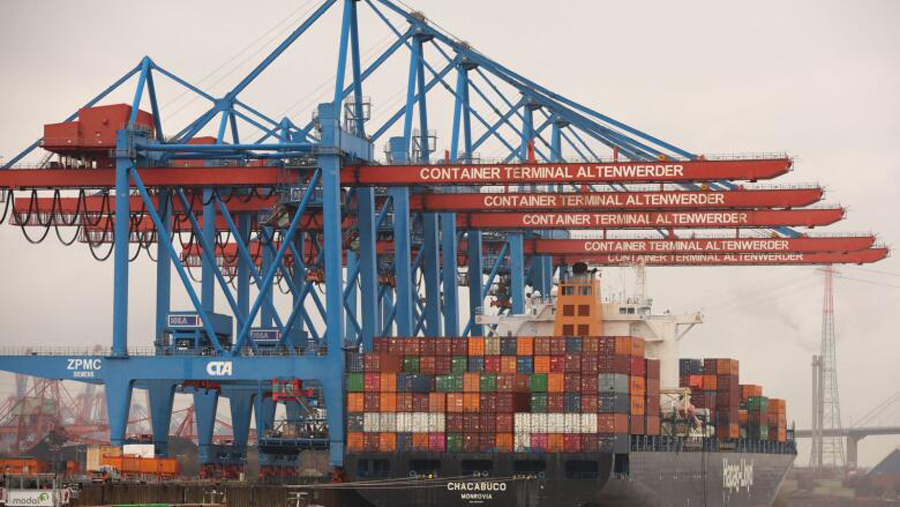
According to the IMF, “The long-term cost of trade fragmentation could be as high as 7 per cent of global GDP” or 12 per cent with the addition of “technological decoupling”. But it is developing countries that are going to bear the brunt of these economic losses. Developing countries in Asia would incur a relatively large portion of these losses. It is estimated that the Asia-Pacific region is likely to lose up to 1.5 per cent of total GDP due to their greater dependence on trade. Developing countries are likely to fall further behind instead of catching up to advanced economic income levels.
Therefore, income disparity between developed and developing countries and the rich and poorer members within those societies will further increase as a result of slower economic growth, technology fragmentation, as well as unequal access to many profitable markets resulting from geo-economics fragmentation.
muhammad.mahmood47@gmail.com