
Transforming humans into human resources
Md Jahid Hasan | Saturday, 1 November 2014
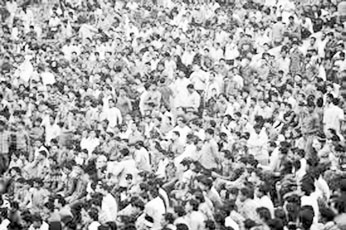
Human resources are the most potent propeller of a country's economic growth and development. Human Resource Development (HRD) is concerned with improving the aptitudes, skills, abilities, knowledge, understanding and attitude of the employees of an enterprise (Jucius, 1993). People are the real wealth of a nation. An educated, trained and healthy population can play a pivotal role in improving the quality of life, reducing poverty and attaining sustainable economic growth. However, these three - education, basic training for developing skills set and proper nutrition for health - are the core rudiments of human resource development. Sports and cultural development can also remarkably contribute to the HR developing process. Importance of education, health and social welfare programmes in human resource development cannot be overemphasized. We have slightly more than 160 million people against only 147,570 sq km area in Bangladesh. We always find our overpopulation as a burden. Majority of our population can be better titled as just humans; not human resources because of their lack of education, absence of proper technical knowledge and skill and finally poor health due to suffering from malnutrition. Since bulk of the population are women, children and youths, identification of problems and hurdles in those areas, and then taking appropriate measures can help turn them into human resources. The measures are more or less known to us. Ensuring proper education is the prerequisite for developing human resources and will ultimately contribute to poverty alleviation and socio-economic development. It facilitates to cope with the pace of changing world and to make constructive modification.
Besides general education, time has come to brace up the people in the direction of technical and vocational education. These sorts of education will allow us to export manpower to advanced countries and add to the volume of remittances. Alternatively, those who are not alacritous to work abroad, vocational education will stimulate them to set up own factories at home. This will afford us a safeguard not to see them slothful though we've a frustrating number of unemployed people. There is a pressing need to ripen a large part of the population into productive workers through the coordination and interaction between people, educational institutions, training programmes, technology and finally confirming proper nutrition. The current government in their immediate previous term aimed and declared in election manifesto to ensure 100 per cent enrolment of children by 2011 and to eradicate illiteracy by 2014. In this endeavour we see country's education sector received the highest allocation of Tk 292.13 billion for fiscal year 2014-15 and also received uppermost portion in last several years. If the government becomes unable to achieve their manifesto in time, we expect that it will be attained in nearest promising future. It may be a piece of news for momentary hope for us that after Sri Lanka, Bangladesh has earned a rare distinction among the least developed countries in the field of education at primary and secondary levels by ensuring gender balance. But we want that we should achieve more significant milestones involving technical and higher education.
The health sector is another vital one for spending the budget to develop human resources by addressing family planning indices; such as reducing fertility rate, child and maternal mortality rates; decreasing the spread of contagious diseases including TB and AIDS and increasing average life expectancy. According to the HDR (Human Development Report) - 2013, Bangladesh is one of the 40 developing countries that have done better than expected in human development in recent decades. The other noteworthy countries are Brazil, China, India, Indonesia, Mexico, South Africa, Turkey, Chile, Ghana, Mauritius, Rwanda, Thailand and Tunisia. Economic growth alone cannot ensure human development progress; rather pro-poor policies and significant investments in human's capabilities - through a focus on education, nutrition and health, and employment skills - can expand access to decent work and provide for sustained progress. Most of the economists argue that it is the human resources of a nation, not its physical capital or its natural resources that ultimately fix the character and velocity of its economic and social development.
World War II had left Japan as a dying country whose history comes to us with the scenario of destruction occurring due to blast of two atomic bombs -Fat Man and Little Boy. But the country didn't take too long to bounce back. Within few decades the country achieved economic solvency and started moving to become a developed one. It has been possible through its people's self-initiating efforts to develop themselves that ultimately led the countrywide human resource development and economic prosperity indeed. Now it is one of the largest economic giants of the world. In 1988 as a partnership between the Government of Japan and the World Bank established the Japan Policy and Human Resources Development Fund (PHRD) to finance technical assistance and other grant activities in respect of the formulation and implementation of HR development policy projects and programmes and activities to develop human resources in the country. This fund has a great contribution behind the Human Resource Development of Japan. It's just an example we can follow. Now is the time to stand around. Our government should make this type of contract with the world's leading financing organizations and pursue them to expand their helping hand so that we can collect the fund and grasp the opportunity and assistance from their end in developing our human resource. Side by side it's true that no governmental initiative will reach attainment unless the stimulus to develop ourselves, to make us valuable human resources and to change our own fate emerges from every individual of us.
We have no dearth of humans but we have lack of human resources. We have the main raw material that is our people and just need to transmute them through a developing process starting from the first day after being born ensuring nutrition for sound health, then education, then proper work-related training till being a wealth, better called human resources. Ensuring the development of this bulk of people will put us to undergo a constant national economic success in the long run and improve people's quality of life.
The writer is HRM post-graduation fellow in Comilla University.
E-mail: hasanxaheed@gmail.com