
Rana Plaza collapse
Trial lingers 13 yrs after tragedy
FE REPORT | Saturday, 25 April 2026
Victims were remembered and calls for justice renewed on Friday as the nation observed the 13th anniversary of the Rana Plaza collapse in Savar.
The eight-storey building, which housed several apparel factories, collapsed due to structural flaws on April 24, 2013, killing 1,134 people and injuring 2,438 others.
Different organisations and rights bodies marked the day with a range of programmes, including the placing of floral wreaths, rallies and seminars in memory of the victims.
The tragedy drew global attention to workplace safety conditions in Bangladesh, particularly in the ready-made garment sector, prompting reforms and increased scrutiny from international stakeholders.
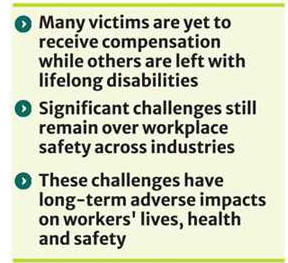
Many victims are still yet to receive adequate compensation, while others, having lost vital limbs, have been left permanently disabled and remain without employment for the rest of their lives.
However, the trial of the murder incident in which more than 1,000 workers were killed has not yet been completed.
As part of the observance, a photography exhibition titled "Still Standing: Industrial Disasters, Workers'
Lives and the Value of Memory in Bangladesh" was inaugurated on Friday at the Bangladesh Shilpakala Academy, organised by the Bangladesh Institute of Labour Studies (BILS).
The exhibition, which will continue until Monday at the National Art Gallery, showcases images depicting major industrial accidents over the past two decades, including the Rana Plaza disaster.
It highlights workers' risks, losses, suffering and their struggle for recovery through powerful visual documentation.
Danish Ambassador to Bangladesh Christian Brix Møller, International Labour Organization (ILO) Country Director Tuomo Poutiainen and BILS Executive Director Syed Sultan Uddin Ahmed were present at the inaugural ceremony.
Organisers said that although some progress has been made over the past decade in ensuring workplace safety across industries, including the garment sector,
significant challenges remain.
These include structural deficiencies, inadequate monitoring and inspection, weak enforcement of laws and persistent environmental risks.
They noted that such challenges continue to have long-term adverse impacts on workers' lives, health, safety and overall well-being.
Speakers at the event observed that major industrial disasters like Rana Plaza are not only national tragedies but also stark reminders of the limitations in safety systems and accountability mechanisms within the industrial sector.
saif.febd@gmail.com