
Tripartite approach can help create 'inclusive' labour market for PWDs
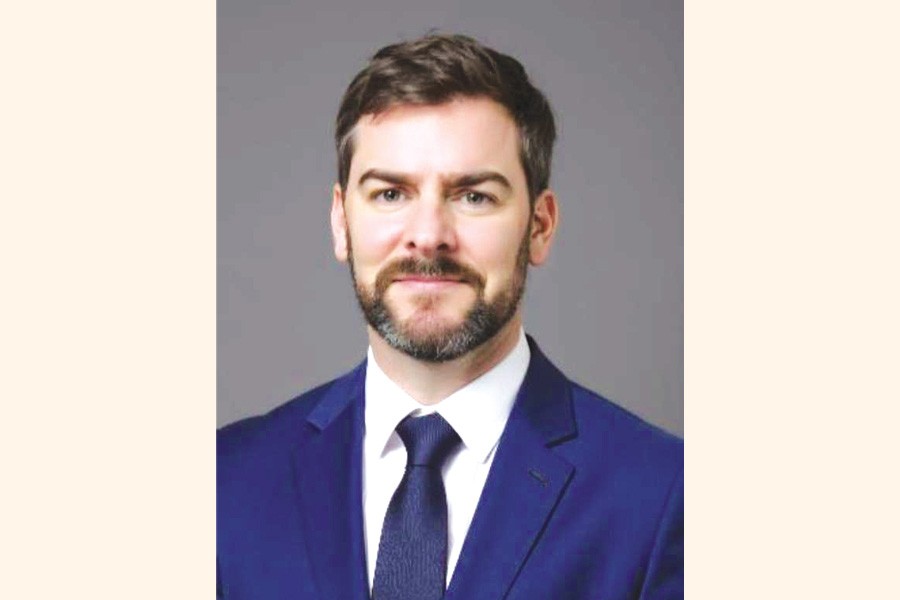
ILO disability specialist Jurgen Menze opines in an interview with The Financial Express
MONIRA MUNNI | Monday, 17 November 2025
A shared responsibility from government, companies and trade unions can help create an 'inclusive and conducive' labour market for persons with disabilities (PWDs).
In that case, government can identify legal barriers and coordinate among all legislation to address the challenges to enable a legal environment while private sectors especially big companies can play a role model by implementing those and create a conducive workplace for them. Trade unions, on the other hand, can raise the issues of people with disabilities to the table of discussions, dialogues with government and employers to align the rights movements to that of people with disabilities.
Jurgen Menze, disability inclusion specialist in the Gender, Equality, Diversity and Inclusion Branch of the International Labour Organization (ILO), made the remarks during an interview with the Financial Express.
He was talking at the sideline of a conference titled 'Empower Ability 2025: Powering Every Ability', aiming to accelerate Bangladesh's transition toward disability-inclusive growth.
The conference was jointly organiSed by BRAC Bank under its flagship CSR initiatives 'Aporajeyo Ami', in collaboration with the Bangladesh Business and Disability Network (BBDN) held in a city hotel on Tuesday.
Mr Menze coordinates the ILO Global Business and Disability Network that links more than 40 multinational enterprises and national networks to promote employment for persons with disabilities in the private sector.
Terming enabling legal environment for persons with disabilities 'key responsibility of government' Mr Menze said laws not only labour law but also others including those related to care work, marginalised groups are good on papers while their implementation needs a push from all stakeholders.
The government has recently ratified the ILO Convention 190 on violence and harassment, which is good, he said, raising question as to how it relates to people with disabilities who are already in employment.
Bangladesh is yet to ratify the ILO Convention 159 on employment and vocational rehabilitation of PWDs and he stressed that ratifying the convention would help strengthening social dialogue among government, employers and trade unions and help build more inclusive labour market.
He further noted the UN Convention on the Rights of Persons with Disabilities (CRPD) as a key guide for Bangladesh that has already made notable progress by adopting strong domestic laws and action plans.
Mr Menze said real progress depends on collective action saying, "It is not only one labour market actor working alone but involves companies, government, trade unions, or organisations of persons with disabilities. And they must learn from each other."
People with disabilities know what they need at work while companies should innovate and bring required changes rather waiting for policy reform to be truly inclusive, he noted.
Lauding the activities of Bangladesh Business and Disability Network (BBDN), the ILO specialist suggested companies joining the network.
Citing companies' plea of absence of right skills among person with disabilities, he termed it discrimination of people with disabilities in education and the labour market.
He stressed the need for affirmative action by companies to overcome the systemic barriers by acknowledging that people's disabilities might need some additional support to get the level of scaling that people without disabilities already have.
"Companies must incorporate this reality into programmes for such people or marginalised groups," he said, stressing a labour market that works for all with accessibility and responsive to individual needs.
munni_fe@yahoo.com