
Trust deficit, corruption, bureaucratic inefficiency and growth erosion in Bangladesh
Serajul I. Bhuiyan | Monday, 10 November 2025
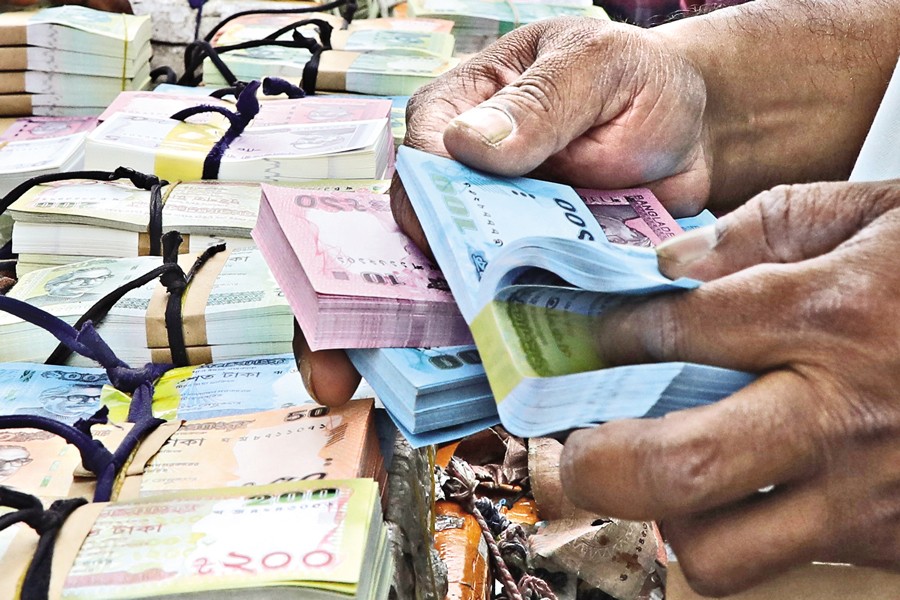
 It is a sticky morning in Dhaka when a young entrepreneur goes to a government office, hoping to extend her trade licence. She employs twenty people, making local garments for export, and can double production effortlessly if it were easier. Rather, she is told to come back next week, and then the week after, shaking the hand of each "officer," each offering that a small fee wills "fast-track" the process. Then comes the bribe, the final indignity to purchase that which otherwise was routine. Red tape, no, it's not that for her, nor for the thousands like her, but the invisible cost of mistrust that leeches the country's talent. Corruption and incompetence in the Bangladeshi government have essentially been a 'tax' on growth, a 'tax' on 'optimism and creativity.' This 'tax' constructs a cost structure for businesses that inhibits honest competition and tears apart from the moral fibre that weaves through the fabric of governance. This affects not only the economy but also has ramifications well beyond that. Although Bangladesh has made tremendous progress in gross domestic product (GDP) growth, export diversification, and poverty reduction, its challenge still lies in governance. The level of trust deficit, 'the difference between the citizen's vision of justice and the experience of inefficiency and arbitrariness,' has already touched a critical point.
 This article will examine how exactly such a shortage affects the system by acting as an invisible drag on growth, exploit its origins from corruption and red tape, its implications for investment and for human well-being, and the absolute need for trust itself to become a state priority, side by side, and equally important, as GDP or exports.
VISIBLE AND INVISIBLE COSTS OF CORRUPTION: Corruption in Bangladesh is not a theory it is part of everyday life. Transparency International's 2023 Corruption Perceptions Index ranked Bangladesh 149th out of 180 countries, suggesting continued governance problems. Surveys show that over 70 per cent of families have encountered corruption in some shape or form when obtaining public services. The visible cost can actually be calculated: bribes for contracts, for electricity hookups, for fast passports, or for land registration. It is an unjust tax that weeds out honesty and propels the well-connected. The World Bank estimates that corruption costs developing countries 2 to 5 per cent annually, and Bangladesh is not exempt from that toll.
But the hidden costs are the poisonous bit. Corruption leads to a breakdown in confidence in institutions, deters foreign investment, and forces companies to compete on reach rather than ingenuity. With every bent rule and every bribe that changes hands, another strand of civic trust is snapped. The trouble adds up without anyone realising it: delays in construction, inflated costs, government contracts for contractors who can't get it right.
This leads to a growing, albeit imbalanced, economy, an economy that shifts from merit, effectiveness, and achievement to patronage and proximity. Trust deficits, in such a context, are not merely moral issues; they also pose developmental problems. THE POLITICAL ECONOMY OF CORRUPTION - A SYSTEMIC CHALLENGE: To fully grasp the level of Bangladesh's trust deficit, it is necessary to look beyond the wrongdoing to the system instead. Corruption prospers in terse, politicised administrations where accountability is difficult to establish and monitor. Institutions lack autonomy. Since independence, the bureaucratic culture has been primarily influenced by the colonial legacy in its system, with 'control' rather than a 'service' orientation. This has resulted mainly from 'politicisation,' whereby recruitment, appointment, and advancement opportunities in the administrative services largely depend on 'partisan' commitment rather than 'performance.' The Anti-Corruption Commission (ACC) in the country, regardless of its independence, has remained vulnerable primarily to 'political' meddling.
The political economy of corruption thereby perpetuates itself in a reinforcing spiral, whereby politicians depend on bureaucratic support, bureaucrats depend on politicians, and so on, while citizens bear the cost. Such a reinforcing phenomenon affects priority setting in governance.
The consequences are stark: national budgets swelled by cost overruns, procurement systems designed for insiders, and regulatory agencies that too often represent special interests rather than the public interest. As a Transparency International report cited, corruption in public procurement alone can increase project costs by 20 to 30 per cent an astronomical loss in a developing economy striving for fiscal sustainability. The trust deficit, then, is institutional, not default. Citizens and investors alike feel, correctly sometimes, that the system is stacked against openness, that merit is trumped by patronage.
BUREAUCRATIC INEFFICIENCY- WHERE RED TAPE IS A ROAD: But along with corruption comes its less vocal sibling, inefficiency. Bureaucratic inefficiency in Bangladesh goes beyond slow paperwork; it also reflects structural weaknesses, unclear priorities, and ineffective administration. A World Bank estimate found that at least nine procedures and 20 days are still required to set up a company in Bangladesh, compared with five days in Vietnam and two days in Singapore. The time spent waiting for customs can take up to 1 week, compared to 24 hours in Malaysia. Such bottlenecks also incur costs, as exporters lose market share, importers incur higher demurrage costs, and business people operate in an unquantifiable environment.
The inefficiency is further exacerbated by uncoordinated operations across ministries, overlapping functions and bureaucratic reporting systems. In an inspirational country that dreams of becoming a developed country citizens still stand in queues for several hours for basic services. This creates a type of structural inequality: the powerful pull strings, using their influence, while the powerless wait. If trust is oil in the well-functioning modern economy, the Bangladeshi bureaucracy could well be sand in the gears.
BUSINESS AND INVESTMENT FALLOUT: This lack of trust has a clear cost when it comes to investment, both foreign and domestic. Investors seek predictability, fairness, and a level playing field, which inefficiency and corruption destroy. The World Bank Ease of Doing Business Indexes (latest revisions in 2020) ranked Bangladesh 168th, placing it behind all but one country in South Asia. The major problems were delays in contract enforcement, tax collection, and trade logistics. Foreign investors typically cite the lack of regulatory predictability and the inconsistent application of regulations as major discouraging factors. Land acquisition and access to utility services, for instance, in industrial zones, are often slowed by red tape or local business people's discretion. Companies that used to rely on simplified procedures in Vietnam or Indonesia find it time-consuming in Bangladesh.
The cost of capital also increases when there is suspicion. Both banks and lenders will require higher collateral, there will be an accumulation of credit risk, and the issue of hidden costs will creep into business operations. Trust, in this case, is not a moral virtue; it is a resource for economics. Countries that generate it will attract investment, while those that squander it will see capital flight and unbalanced industrial growth.
THE HUMAN TOLL - SOCIAL INEQUALITY AND DISTRUST: Corruption and inefficiency affect not only the economy but also shape people's daily lives. When health services require "tips" to see a doctor or receive basic treatment, and recruitment in the education sector is rigged, it is the people experiencing poverty who are denied access.
Studies conducted in Bangladesh's health sector found that around 40 percent of admitted patients in government-run hospitals had unofficially paid for entry. The politicisation of recruitment, teacher absenteeism, and resource misallocation have also undermined the quality of education. This is not an isolated example; the system itself is betraying people's trust.
This erosion of trust further perpetuates inequality. Those with "networks" or assets become adept at exploiting the system, while the rest remain trapped. As Feldstein writes, "Inequality becomes normalised, and the belief in the possibility of justice erodes." When people lose faith in their institutions, even well-intentioned policies become less credible. Trust-deficient societies exhibit limited cooperation, lower tax compliance, and slower social progress. Ultimately, the social compact, the unspoken bond between citizens and the government, begins to unravel.
DIGITAL GOVERNANCE AND EARLY REFORMS - FLICKERS OF HOPE: Despite all that, Bangladesh has not remained idle. The government's "Digital Bangladesh" project, introduced in 2009, aimed to digitise services, reduce corruption, and increase transparency. Sparks of improvement can still be found. Currently, in almost every government transaction, whether it is bill payments or passport renewals payments can be made online. The government's National E-Government Procurement system, handled by the Central Procurement Technical Unit, has processed more than 1.2 million tenders totaling billions of dollars without any human interaction that could result in corruption. Equally, the land documents are undergoing digitisation, and the National Board of Revenue (NBR) has introduced an online system to encourage compliance.
They are not merely enhancements they are a shift in the architecture of trust that centres on traceability and transparency. But the impact is asymmetrical. Cyber portals sometimes replicate offline inefficiencies with new tools and no new responsibility. Without institutional autonomy and human agency, digitisation can be a better-looking veneer on an unchanged culture. However, these developments mark a turning point. Bangladesh is building the scaffolding of trust incrementally, one data system, one e-service, one portal at a time.
INSTITUTIONAL REFORMS - THE CREATION OF TRUST THROUGH POLICY: To compensate for its lack of trust, trust itself has to become deliberate policy, something that can be gauged, tracked, and institutionalised. To start, there has to be openness, and not exception. The government's budget, contracts, and procurements are supposed to be shared with everyone. Open data helps citizens hold institutions accountable. Estonia and South Korea are leading by example, using technology to restore people's confidence. Second, the meritocratic system ought to supersede patronage. The bureaucracy, in turn, that comprises the heart of policy implementation, has to remain insulated from politics. The process of appointments, transfers, and promotions has to be guided by rules that emphasise merit and are readable for all to see.
Thirdly, corruption-fighting institutions must also be strengthened. The Anti-Corruption Commission (ACC) needs to enjoy actual autonomy, budget, and shielding from politically motivated punishment. The head must also be appointed by mutual bipartisanship, with complete reporting to Parliament. Then, citizens' report cards on investigations, from major ones, will demonstrate accountability, not just commitment.
Fourth, digitisation has to remain human-cantered. Online services can include traceability, redressal websites, and anomaly analysis. Citizen feedback can also identify service bottlenecks. Anomaly detection in government spending using artificial intelligence software is also possible and has already begun in various countries, such as Indonesia and Chile.
Finally, citizen participation must also become institutionalised. Citizens can become stakeholders, not subjects, when trust can be aroused. The experience in Bangladesh, through microfinance and social businesses, shows that citizens can become financially accountable when that responsibility is institutionalised and fulfilled. Municipal participation in budget allocations, social audits of local government programmes, and civic monitoring of development schemes can also establish social responsibility. If adopted on a widespread basis, the steps will help translate trust from a fragile feeling into a quantifiable national resource that will appreciate rather than depreciated over time.
RISKS, REALITIES AND THE ROAD AHEAD: The path to regaining trust will not always be straightforward. Some vested interests, spawned by corruption and a lack of transparency, will resist. Red tape and capacity constraints also introduce complications. Even technology can fail if it is harnessed to view or exclude people, rather than for transparent objectives. Additionally, the trust deficit cannot be compartmentalised. Civic education, economic policies, and politics coexist. Citizens need to be made aware of their civic rights; civil servants need to incorporate ethics into their line of duty; and, for that matter, politicians need to lead by example.
Bangladesh is also buffeted by its vulnerability to climate change, global trade patterns, and population shifts, and needs sensitive, responsive governance to address them effectively. An ineffective governance system, lacking a strong basis for people's trust, will neither coordinate nor effectively mobilise people during a crisis. The danger of inaction is grim: a nation that loses trust can still grow numerically but not spiritually. Economic development without institutional trust is brittle prosperity vulnerable to shocks and to disillusionment.
However, the challenge also holds immense possibilities for Bangladesh. The country stands at a critical juncture, when the next level of growth from the low-cost producer to the knowledge economy requires not talent or technology, but honest governance. Honest governance would encourage domestic, overseas, and civil participation. This, therefore, means that the path to prosperity lies through the trust corridor.
CONCLUSION - RECLAIMING THE MORAL INFRASTRUCTURE OF GROWTH: The Bangladesh success story from famine to food independence, from poverty in the countryside to the world's garments giant - is correctly celebrated. The next chapter, however, requires a shift of a different kind: from procedure to principle, from secrecy to openness, from intimidation to confidence.
This lack of trust has become its costliest invisible expense. It saps efficiency, drives away investment, and fuels scepticism. But for Bangladesh to restore the moral foundation for growth, it has to inject the notion of trust through its policymaking DNA. It has to build institutions that not only discourage corruption but also establish structures that inhibit it through their openness, balance, and civic engagement. If government officials are honest, if rules are clear, and if people feel that their rights will be protected, then economic effort multiplies. Trust is the productivity multiplier no one can see, with revolutionary power.
Bangladesh's past has never been one of vulnerability. The same resilience that rebuilt it after war and catastrophe can rebuild the trust behind its next quantum leap. If corruption is the disease of despair, then the vaccine of development is trust. Trustless growth is soulless growth. Bangladesh stands at the threshold of a trial by fire to prove its adulthood, to translate from an economy driven by ambition into a society founded upon integrity. The solution will lie neither in figures nor in rebirth from the only currency that every country can't manufacture, that of 'trust.'
The writer is professor of Journalism and Mass Communications at Savannah State University, Savannah, Georgia, USA. He can be reached at sibhuiyan@yahoo.com