
UN resolution urges Myanmar to drop identity plan
Sunday, 2 November 2014
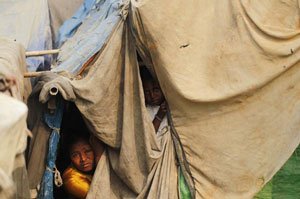
UNITED NATIONS, Nov 1 (agencies): Draft resolutions urges 'access to full citizenship on equal basis' for Myanmar's Rohingya Muslims.
A new UN draft resolution takes aim at Myanmar's aggressive campaign to have its Rohingya Muslims identify as a term they reject, urging "access to full citizenship on an equal basis."
The European Union-drafted resolution, obtained Friday by The Associated Press, puts pressure on the Southeast Asian country to change its campaign, preferably before world leaders including President Barack Obama arrive for a regional summit in less than two weeks.
Myanmar's 1.3 million Rohingya have been denied citizenship and have almost no rights. Attacks by Buddhist mobs have left hundreds dead and 140,000 trapped in camps. Others are fleeing the country.
Authorities want to officially categorise the Rohingya as "Bengalis," implying they are illegal migrants from neighbouring Bangladesh.
The Rohingya counter that many of their families have been in Myanmar for generations. Effectively stateless, they are wanted by neither country and say the Myanmar government's campaign feels like an effort to have them systematically erased.
The vast majority of Rohingya live in the state of Rakhine. President Thein Sein, a former general, is considering a "Rakhine Action Plan" that would make people who identify themselves as Rohingya not only ineligible for citizenship but candidates for detainment and possible deportation.
The resolution now before the General Assembly's human rights committee is nonbinding, but a strong vote in its support would send a message that international opinion is not on Myanmar's side.
The resolution expresses "serious concern" about the Rohingya's status. It calls on the government to "allow freedom of movement and equal access to full citizenship for the Rohingya minority" and to "allow self-identification."
Myanmar's plan worries some in the Muslim world, and the Organization for Islamic Cooperation pushed for strong language in the resolution.
The Rohingya have emerged as a sensitive issue as Myanmar, a predominantly Buddhist state, tries to move away from decades of repressive military rule toward democracy.
This week, Myanmar's ambassador to the United Nations, Tim Kyaw, told the General Assembly's human rights committee that his country is not "targeting a religion." He warned that "insisting on the right to self-identification will only impose obstacles to finding a lasting solution" to ethnic tensions.
Vijay Nambiar, the UN secretary-general's special adviser on Myanmar, told AP this week that Myanmar's government is facing increasing pressure to allow the Rohingya to identify as something other than Rohingya or Bengali. But, Nambiar said, "In the immediate future, the government says that's not possible."
Meanwhile: The United States Friday imposed sanctions on a prominent lawmaker and businessman in Myanmar for undermining economic and political reforms in the country, ahead of US President Barack Obama's planned visit next month.
The US Treasury Department said Aung Thaung, who was industry minister under the former military government and is now a member of Myanmar's lower house of parliament, has been involved in attacks on the democratic opposition.
Concern has grown in Washington about the country's lagging progress on human rights abuses and political reforms and peace talks with ethnic rebels.
"By intentionally undermining the positive political and economic transition in Burma, Aung Thaung is perpetuating violence, oppression, and corruption," Adam Szubin, the Director of Treasury's Office of Foreign Assets Control, said in a statement.
The action freezes any assets Aung Thaung has in the United States, and prohibits Americans and U.S. firms from dealing with him. Many international banks also adhere to the US sanctions list to avoid dealing with enemies of the United States.
"Serious allegations have been made against Aung Thaung both for his complicity in past crackdowns and for his abuse of government posts for personal and familial gain-including in business ventures involving human rights abuses like land grabs and forced labor," said John Sifton, Asia Advocacy Director of the US-based Human Rights Watch.
On the eve of Obama's trip, the sanction sent the message that Washington was "not satisfied with the transition process in Burma and that there are still too many members of the military-linked elite standing in the way of reform," he said.
Aung Thaung has served in leadership positions in the ruling Union Solidarity and Development Party and was considered a hardliner in peace negotiations with ethnic rebel militias in Kachin State.
Myanmar launched widespread economic and political reforms in 2011, convincing the West to suspend most sanctions on the country, though keeping individuals and others on the U.S., blacklist. Critics say the changes are now starting to unravel.