
Unleashing the youth dividend in Bangladesh
Serajul I Bhuiyan | Saturday, 15 November 2025
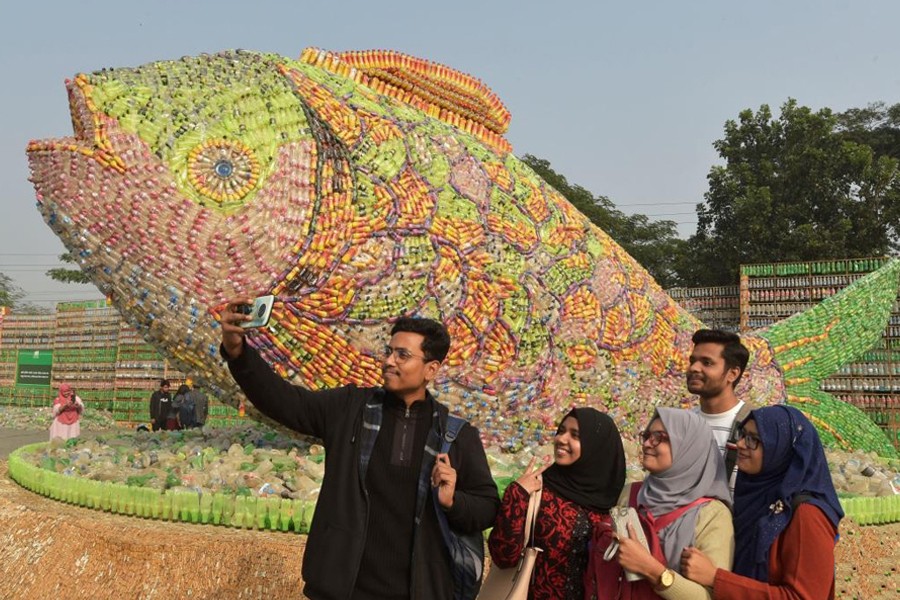
Despite these challenges, it is clear that this is a momentous point in Bangladeshi history. This is because it is a country which is situated at a critical point in its national journey. Indeed, with a significant percentage, which is nearly 65 per cent of its population aged below 35, it is one of the youngest nations on earth. This is a young, energetic, and imaginative generation saturated with unrealized potential which can launch this great nation into a bright new era where inclusivity and prosperity will flourish. This is because this is known generally as “the youth dividend.”
However, this is where the paradox arises: it is this demographic advantage which can easily translate to disenchantment and unrest if it is not sustained. Youth unemployment above 10 per cent is only surpassed by underemployment in lower-paid and informal sectors. Thus, it is not only the young demographics on which the future of Bangladesh will hang, but rather it is on the opportunities which these demographics will have access to.
Never before have stakes been so high. The Fourth Industrial Revolution (4IR) will radically transform economies via AI, automation, robotics, and big data. However, it is important for Bangladesh to ready their young generation not only for participation in this epoch but for charting a course. This is not merely about economics but is a matter of civilization.
A Generation in Transition: The young generation of Bangladesh is coming of age in a reality fraught with contradictions. They are better educated, more connected, and have bigger aspirations than any preceding generation, but what they face is a job market that is not prepared to meet their aspirations. Every year, about two million young individuals enter that job market, but only a select few are gainfully employed.
This situation has been made worse by the dynamic global change, with automation now making many traditional jobs redundant, global employment opportunities limited, and even the Bangladeshi garment industry, which used to be a source for employment, now looking for only fewer but more tech-savvy individuals. The Covid-19 epidemic has made it clear that all is not well with the job market.
However, in this midst, a new and radical opportunity is on the cusp. Today’s young generation is tech-savvy, entrepreneurial, and socially conscious. If properly funded and strengthened with education and institution-building, this generation could be on the cutting edge of innovation in areas such as fintech, agri-tech, sustainable energy, and creative industries.
Digital Literacy: Literacy in the 21st century is more than reading and writing. Digital literacy is part of one’s ability to comprehend and participate in digital environments. Digital literacy is no longer a choice but is now considered the foundation for citizenship, society, and economy.
Indeed, there have been several important developments in this regard by the government of Bangladesh in programs such as Digital Bangladesh Vision 2021, which encompasses digitisation, broadband growth, and awareness. Despite this, fluency levels in digital technology are uneven. Reliable internet, technological, and properly engineered learning environments are anything but out of reach for rural areas and disadvantaged students.
What is required for Bangladesh is a closing of this gap by focusing on making sure that each and every graduating student, from Dinajpur to Dhaka, is equipped with skills on digital platforms, programming, security, and data skills. This will happen by focusing on experiential education and challenging these students to think critically instead of mastering rote memory.
Scaling up the Digital Skills Development Project initiated by the government through public-private collaborations can accelerate progress. Collaboration between tech firms, start-ups, and universities can help create Digital Learning Hubs across each district. If children in remote villages can create apps, launch an electronic business, and work for clients overseas, then digital inclusiveness will mean opportunities for upward mobility.
Start-up Ecosystems: The Bangladeshi startup scene is on the move. The indigenous startups such as Pathao, Shohoz, ShopUp, 10 Minute School, and iFarmer have demonstrated that innovation is absolutely possible even in challenging environments. These startups have created new markets, disrupted several traditional sectors, and demonstrated that Bangladeshi youths have what it takes to produce top-class entrepreneurs.
However, for every success story, many startups founder because of a lack of exposure to funds, guidance, and supportive policies.
If it is to realise its entrepreneurial prowess, then a comprehensive and robust startup ecosystem is required. This would mean working on improving access to funds for early-stage businesses via venture funds and angel investing, with a focus on impact financing that streamlines regulations.
An important but often-neglected area is mentorship. Pairing young entrepreneurs with experienced business leaders, both local and in the global diaspora, could be a great way to learn about strategy, scaling, and all-important resilience. Universities must change their incubation centres into innovation hubs where students can work on prototyping ideas, business coaching, and solve real-world problems.
It is imperative for such ventures like Startup Bangladesh Limited to be beneficial to more than Dhaka and Chattogram. Hubs for innovation can be created in Khulna, Rajshahi, Barisal, and Rangpur. These would allow for innovation opportunities to be spread out across regions, and ideas for issues related to these regions can thus be created.
However, alongside investment in infrastructure, it is necessary to effect a cultural change. The brightest and best careers for young people have long been government service or moving elsewhere in the world. This message has got to change. Entrepreneurial activity must become a respected and aspirational route, not one for those with nowhere left to turn. Education must prepare young entrepreneurs to take informed risks, develop sustainable businesses, and see failure as part of the process towards success.
The media is playing a similar transformative role: by highlighting stories about local entrepreneurs and problem-solvers, it can encourage a new generation to believe in enterprise as a force for change. If it is possible for a country such as Bangladesh to produce job creators instead of job seekers, then it will produce a generation of economic leaders and grassroots change-makers.
Vocational and Technical Education for 4IR: Due to automation, traditional types of work will vanish, while other types will require advanced levels of technological know-how. The current education system for students in Bangladeshi schools, which is centered on rote learning and performance in examinations, is not geared towards this.
Vocational and Technical Education and Training, or TVET, needs to be made a focal point in development policy. TVET is no longer a second choice but now is a foremost avenue for skills and employment.
The curriculum has to be updated with topics such as robotics, digital manufacturing, renewable energy, logistics, and AI-related services. Industry collaborations, especially in textiles, construction, information and communication technology, and renewable energy, would help prepare graduates for what is required in reality.
Lessons can be drawn for Bangladesh from such global models: for example, Germany’s dual apprenticeship scheme, which involves both classroom education and work experience, and Singapore’s “SkillsFuture” initiative, which shakes off any negative perception related to a job involving technical education and sustains public trust in it.
These globally renowned certification programs improve overseas employment opportunities for Bangladeshi workers. More than 13 million Bangladeshi citizens work abroad. If a smart human resource export policy is adopted, it can easily turn out to be the catalyst for remittances, growth, and national pride.
Social Dimension: The dividend of youth is not merely economic—it is fundamentally moral and civic. Young Bangladeshi generations are coming of age in a world that is polarised and politicised, saturated with misinformation and fractured conversations. The most tech-savvy young folks could easily drift aimlessly without moral direction.
As such, education must play a role greater than merely producing talented human resources; it must engender empathetic, socially engaged, and morally grounded individuals. Media literacy is one area that must be incorporated in all core curriculum subjects.
Young individuals have to realise that they are both economic entities and citizens who are change agents in society towards creating a more compassionate, just, and integrated society. Young parliaments, civic groups, and volunteer associations are platforms that will help young individuals transition from passive observers to change agents in nation-building.
Conclusion: The demographic dividend in Bangladesh is a price-less, one-time opportunity. As regards 2040, this young majority will then enter old age. What happens now will shape the destiny of this country for several centuries to come.
If Bangladesh can advance digital empowerment, promote entrepreneurial aspirations, and reform education to meet Fourth Industrial Revolution talent needs, this demographic dividend can easily turn out to be a story for all seasons. Otherwise, this same young momentum might create problems for this young country.
Winning this young dividend is not easy and will require this country’s young generation’s bold investment, visionary planning, and bold dreams for visionary change. The young generation is ripe. Are we ready?
Ultimately, it is not natural resources, nor is it going to be global diplomacy or global alliances that will shape this young country’s destiny. It will be this young generation’s collective ability to design their own destiny where every voice is counted, every voice matters, and every young dream will have the bridge it will require to reach reality.
Dr Serajul I Bhuiyan is professor of Journalism and Mass Communications at Savannah State University in Georgia, USA. sighuiyan@yahoo.com