
Urban upper-middle class's Eid trend
Travels, staycations, resorts, airbnbs feature latest shift in festival vacationing
Khalid Saifullah Khan | Monday, 2 March 2026
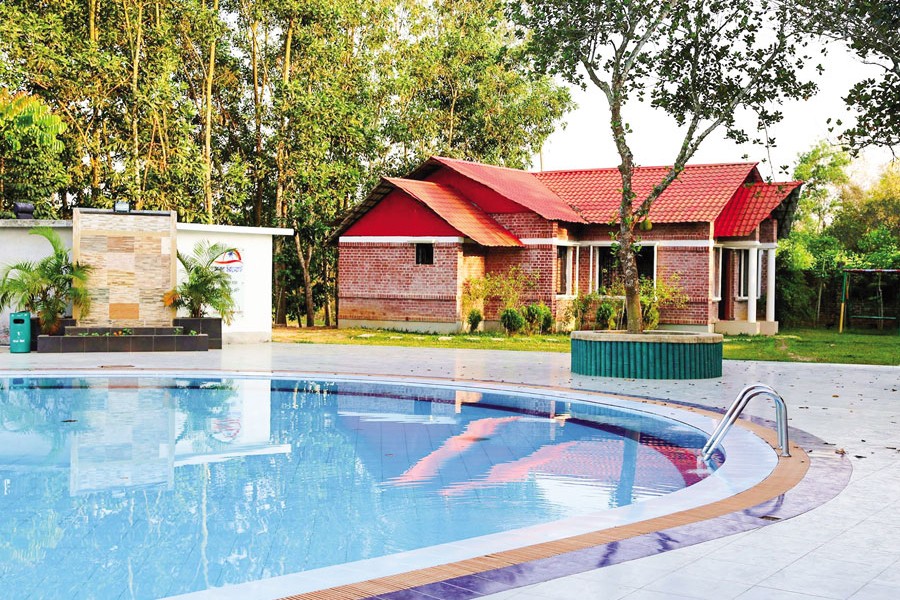
With Ramadan well underway and the city already beginning to hum with the quiet anticipation that builds in its latter half, thoughts are turning - as they always do - towards Eid. For millions of Bangladeshis, the breaking of the fast each evening is not only a daily ritual but a reminder that the grandest celebration of the year is drawing closer. And for the urban upper-middle class of Dhaka, the question of how to spend those precious Eid days is one that is answered quite differently today than it was even a decade ago.
Eid has definitely been the most hyped - and reasonably so - festival of the year since forever in Bangladesh. On the morning after Eid, Dhaka no longer feels like a city catching its breath. Dhaka seems so empty on Eid days that poets might even call it lonely. Most people from Dhaka are out of the city during this festival, a tradition that has been around for a long time, although their destinations have changed quite a bit.
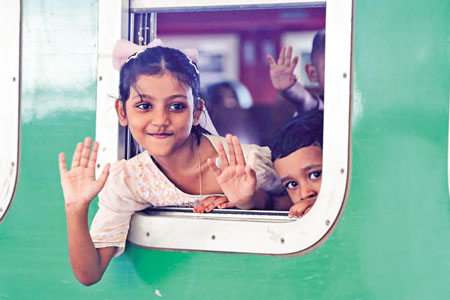 In the early 2000s, the two Eids of the year used to be marked with the whole joint family who live apart the rest of the year but choose to be at the same place and strengthen familial bonds. Cousins who probably had forgotten each other's names - because life happens - used to relearn everything about each other in these weeks. However, in this so-called post-modern era, a new scenario is emerging: nuclear families choosing resorts and staycations on Eid days to feel relaxed and comfortable. It is still a festival, but in a quieter way.
Earlier, it was once the only holiday when the urban middle class would go to their roots - the villages, the grandparents' homes - and that went on for ages. However, the need to meet with one's roots during Eid has been on the wane gradually over the years, partly shaped by the rising technological infrastructure in Bangladesh, since people can now communicate with their loved ones on a regular basis without even commuting. As Ramadan draws towards its close and the prospect of ten or more consecutive days-off looms for many professionals, the appeal of a well-planned, restful escape feels stronger than ever. This makes the urban upper-middle class want to relax during the Eid holiday, more so during the Eid-ul-Fitr one. They now choose resorts, villa houses, staycations, and comfort over hassle.
Staycations on Eid have been a global phenomenon lately, from the Middle East to South Asia and even beyond Asia. In Bangladesh, however, this transformation towards choosing comfort and luxury on Eid is not universal. It is shaped by income, occupation, and exposure. The urban upper-middle class, which is often composed of dual-income households, professionals, and entrepreneurs, has both the means and the mindset to prioritise experience. Global travel culture, even when consumed indirectly through media, has influenced expectations. Holidays are no longer just breaks for them, but rather opportunities for curated living.
During Eid holidays, hotels and resorts across Bangladesh routinely report near-full occupancy. Already, as Ramadan progresses, resort-and hotel-booking platforms are showing significant activity, with many popular destinations expected to fill up well before the Eid night itself. Coastal destinations like Cox's Bazar and Saint Martin's Island see booking rates approaching capacity, whilst Sajek, Bandarban, and other hill-tracts and tea-garden regions experience similar surges. However, some hidden gems have been showing their faces in recent years-- some of them became very trendy quite quickly, such as Tanguar Haor and Nijhum Dwip. Others, which are still a bit niche, are gradually catching tourists' eyes.
In Sylhet, locations like Niladri Lake and China Clay Hills have gained attention for their unusual landscape: a stunning, serene pastoral setting featuring a blue lake and surrounding reddish-orange hills. This is especially appealing to young travellers who seek aesthetics and solitude. Further into the Sylhet region, Bichnakandi offers a different kind of setting, where shallow, clear water flows over beds of stone carried down from the hills.
In the haor regions, Nikli Haor presents a vast, open waterbody that is still unhurried, unlike the more visited Tanguar Haor. Boat rides here are slow and contemplative - not unlike the pace of Ramadan itself - making it an increasingly attractive option for those seeking calm over a crowded festive experience.
Meanwhile, coastal alternatives like Monpura Island are drawing attention for their relative isolation. With mangrove stretches, open skies, and limited commercial development, it speaks to people who are less interested in being in a box and more interested in adventure. An alternative to more crowded island destinations, Sonadia remains relatively untouched. Its wide beaches and limited infrastructure make it suitable for travellers seeking isolation over convenience.
Even within more familiar regions like Bandarban, travellers are beginning to move beyond popular routes. Areas around the Sangu River, often combined with trips to Boga Lake, provide a multidimensional experience with river journeys, elevated terrain, and a degree of remoteness that contrasts sharply with resort-based holidays.
In Moulvibazar, a stunning waterfall standing between 135 and 160 feet - named Ham Ham Waterfalls - was discovered not too long ago. Reaching Ham Ham requires trekking through forest trails, making the journey itself part of the experience. This effort-based travel attracts younger groups looking for more engaging alternatives to passive leisure.
However, a large portion of people do not plan to go quite that far. Instead, they are looking towards proximity-based locations for relaxation. Resorts in Gazipur, Purbachal, and other peri-urban areas have seen a sharp rise in demand, often booking out days in advance. These locations offer something increasingly valuable: proximity without compromise. A two-hour drive can deliver greenery, privacy, and curated comfort - without the logistical stress of long-distance travel.
Resorts, boutique hotels, and even event planners now offer curated "Eid packages" that include everything from traditionally Eid-themed dishes like Shemai and Payesh, to live music, private barbecues, and guided nature activities. The spirit of Eid feasting - so central to the days that follow the long Ramadan fast - is being transported to resort lounges and lakeside decks, where the iftar table is set to give way to a leisurely brunch spread and the sound of water nearby. What was once an unstructured yet lively and spontaneous holiday is increasingly being packaged into a planned experience, where leisure itself is pre-designed and commercialised. A very positive side of this shift is that workplaces are being created for the youth - something of significant importance in Bangladesh's current economic climate.
Alongside resorts, another quiet but significant shift is the rise of short-term rental platforms like Airbnb. In Dhaka, the number of active listings has been steadily growing, with several hundred properties now operating on the short-term rental market. These spaces are often fully furnished apartments in neighbourhoods like Gulshan, Banani, or Bashundhara, and offer something that traditional hotels and even resorts sometimes cannot. Privacy, flexibility, and a sense of "home away from home" are the reasons the upper-middle class often opt for this option during long holidays, including Eid vacation.
Especially for young professionals and small groups, Airbnb-style stays are becoming an attractive Eid option, enabling intimate gatherings, self-curated experiences, and shorter, more spontaneous trips. In Bangladesh's conventional social structure, where privacy and autonomy can be limited, these rentals also open up new forms of leisure. As a result, Eid travel is no longer confined to destinations like the sea or the hill tracts, it is increasingly defined by how one chooses to stay.
This commercialisation reflects another transformation of the urban upper-middle class. For them, the holiday is no longer only about reunion or ritual. It is now also about consumption - they consume space, service, and experience on Eid days. This mirrors broader global patterns in many ways, where festivals gradually evolve into lifestyle events shaped by markets as much as by tradition.
However, economic pressures, particularly inflation, have made travel less accessible for some, even within the upper-middle class, which is why suburban resorts or Airbnbs have become more popular than ever. This transition from going to village homes to choosing resorts and staycations has been very gradual. Even before COVID-19, this was not as popular an option as it is today. And speaking of COVID-19, the two years of lockdown, closure of schools and colleges, and the shift to online living in the metaverse helped shape a great many urban trends - including different ways of spending the Eid holiday.
Looking at the different generations, the boomers may never quite understand the appeal of spending Eid days at a resort instead of the village home. The millennials, however, are the ones who are shifting the traditions, as they have done with many conventional practices in this country. Generation Z has seen the early 2000s Eid as children and is now living this new trend - and as this Eid-ul-Fitr approaches at the end of another Ramadan, one wonders whether they will eventually reshape it into something new altogether. And how will Generation Alpha - children spending these very Ramadan evenings in tablet-lit rooms, breaking their first fasts - come to define the festival for themselves in the decades ahead? We are in for quite a ride, as far as the urban upper-middle class's Eid choices are concerned.
What remains, and perhaps will always remain, constant is that Eid continues to reflect the society around it - quietly adapting, year after year, to changing lifestyles, aspirations, and the ever-evolving ideas of belonging. This Eid, as the last fasts of Ramadan are observed and suitcases are quietly pulled out from under beds across Dhaka, that reflection is clearer than ever.
khalidsaifullahkhanjuel@gmail.com