
US, Iran trying to revive broader talks
Washington asks Tehran to stop selling drones to Russia
Thursday, 17 August 2023
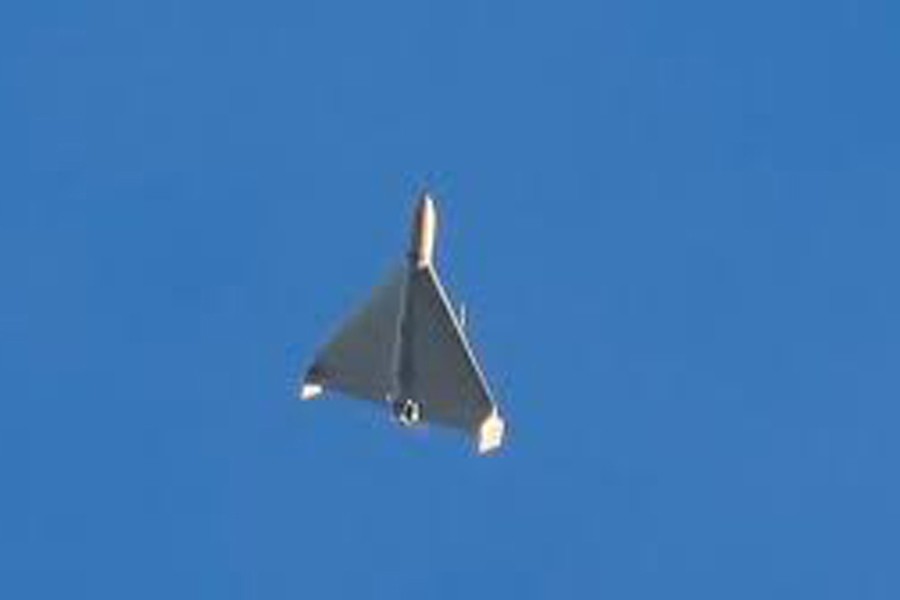
NEW YORK, Aug 16 (Reuters/AP): US is pushing Iran to stop selling armed drones to Russia as part of discussions on a broader unwritten understanding between Washington and Tehran to de-escalate tensions, the Financial Times said on Wednesday, citing people briefed on the matter.
The US is pressing Iran to stop selling armed drones to Russia, which Moscow is using in the war in Ukraine, as well as spare parts for the unmanned aircraft, the report said, citing an Iranian official and another person familiar with the talks.
The White House and Iran's foreign ministry did not immediately respond to a Reuters request for comment.
The news comes as Washington and Iran are trying to ease tensions and revive broader talks over Iran's nuclear programme. US Secretary of State Antony Blinken said on Tuesday that he would welcome any Iranian steps to de-escalate its "growing nuclear threat."
Last week, sources told Reuters that Iran may free five detained US citizens as part of a deal to unfreeze $6 billion in Iranian funds in South Korea.
Under the tentative agreement, the U.S. has given its blessing to South Korea to convert frozen Iranian assets held there from the South Korean currency, the won, to euros.
That money then would be sent to Qatar, a small, energy-rich nation on the Arabian Peninsula that has been a mediator in the talks. The amount from Seoul could be anywhere from $6 billion to $7 billion, depending on exchange rates.
The cash represents money South Korea owed Iran - but had not yet paid - for oil purchased before the Trump administration imposed sanctions on such transactions in 2019.
The U.S. maintains that, once in Qatar, the money will be held in restricted accounts and will only be able to be used for humanitarian goods, such as medicine and food. Those transactions are currently allowed under American sanctions targeting the Islamic Republic over its advancing nuclear program.
Some in Iran have disputed the U.S. claim, saying that Tehran will have total control over the funds. Qatar has not commented publicly on how it will monitor the disbursement of the money.
In exchange, Iran is to release the five Iranian-Americans held as prisoners in the country. Currently, they are under guard at a hotel in Tehran, according to a U.S.-based lawyer advocating for one of them.
Iran does not want the frozen assets in South Korean won, which is less convertible than euros or U.S. dollars. U.S. officials say that while South Korea is on board with the transfer it is concerned that converting $6 or $7 billion in won into other currencies at once will adversely affect its exchange rate and economy.
Thus, South Korea is proceeding slowly, converting smaller amounts of the frozen assets for the eventual transfer to the central bank in Qatar. In addition, as the money is transferred, it has to avoid touching the U.S. financial system where it could become subject to American sanctions. So a complicated and time-consuming series of transfers through third-country banks has been arranged.