
Used car import soars 15pc in H1
Mohammad Wazed Ali | Sunday, 5 February 2017
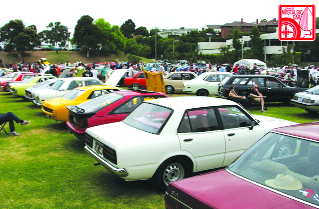
The import of reconditioned cars has increased by around 15 per cent in the first half (H1) of the current fiscal year (FY), 2016-17, over the corresponding period of the previous fiscal, importers have said.
Some 7,455 reconditioned cars were imported in July-December period of the current FY, compared to 6,510 in the same period of the FY 16.
The growing demand for cars among the middle and upper class people coupled with a stable socio-economic condition in the country contributed to the import growth of such vehicles, importers said.
In the FY 2015-16, the reconditioned car import witnessed around 11.6 per cent growth with import of around 19,000 such vehicles, according to the figures from the Bangladesh Reconditioned Vehicles Importers & Dealers Association (BARVIDA).
The BARVIDA's figures show that after a massive decline in FY 2011-12 and FY 2012-13 the sector registered around 96 per cent, 18 per cent and 11.5 per cent growth in FY 2013-14, FY 2014-15 and FY 2015-16 respectively.
In FY 2009-10, FY 2010-11, FY 2011-12, FY 2012-13, FY 2013-14, FY 2014-15 and FY 2015-16 the number of imported reconditioned cars was 32,225, 19,823, 9,588, 7,353, 14,427, 17,055 and 19,000 respectively.
About 90 per cent of the reconditioned cars are imported from Japan. The rest are imported from South Korea, China, Germany, India and other countries.
According to Bangladesh Road Transport Authority (BRTA) statistics, around 9,224, 10,472, 14,699, 21,062 and 20,304 private cars were registered in 2012, 2013, 2014, 2015 and 2016 respectively.
The BRTA statistics also shows that majority of the private cars were registered in Dhaka city, as 8,187, 9,231, 12,972, 18,422 and 18,010 such vehicles were registered in the capital in 2012, 2013, 2014, 2015 and 2016 respectively.
"The demand of car has been increasing, which is mainly driven by the country's emerging middle class steady economic growth and political stability," said BARVIDA president M A Hamid Sharif.
Besides, some other factors including rapid industrialisation, upgradation in people's standard of living, and offering of favourable financial schemes by different banks and financial institutions have been playing significant roles in the rapid pick up of import, he added.
"After experiencing growth in three consecutive years, we expect a sound growth in this year too."
He further said the country still needed a significant number of cars to meet the increasing demand, fuelled by rapid industrialisation, growing economy and changing lifestyle.
Mr. Sharif, however, urged the government to be cautious and adopt a rigid policy regarding import of new cars, especially the non-brand and low-quality ones, which are entering the country mainly from India, and are not good for the country's future.
"As brand new cars get some tax benefits, the importers of various non-brand cars are taking this advantage and bringing low-quality products to the country."
The BARVIDA president said if the government had granted some tax benefits to the importers under the association, which the brand new car importers enjoy, the demand and supply for the reconditioned cars would have been much higher.
"Our tax rate is much higher than that of the brand new car importers. In case of reconditioned cars, the tax rate is 131 per cent to 841 per cent, whereas the rate for new cars is around 61 per cent."
He said such discriminatory tax system had been responsible for the declining market share of reconditioned cars.
"The sector is growing, but our share in the market has been declining over the last couple of years because of such arbitrary tax system," he added.
BARVIDA assistant secretary Shahidul Hoque said four-five years ago, the share of reconditioned cars was approximately 95 per cent of the total market, which had gradually declined to around 75 per cent now, as new Indian cars were getting tax benefit.
He noted that despite a discriminatory tax policy, the growth of the sector was well, which shows its potential.
He also said there were five tax slabs in importing reconditioned cars, and imposition of tax varies according to the slabs. But if the government provides some slab-wise tax benefits, the sector may grow faster than now.
The total tax incidence (TTI) is 131.31 per cent for import of cars up to 1,500 cc, it is 217.17 per cent for 1,501 cc to 2,000 cc, 373.26 per cent for 2,001 cc to 2,750 cc, 607.39 per cent for 2,751 cc to 4,000 cc, and 841.52 per cent for more than 4000 cc.
"We believe if the government offers certain tax benefits to the sector, it will register more growth than now. If 131.33 per cent TTI is offered for up to 2,000 cc cars instead of up to 1,500 cc, the growth rate will significantly increase," he added.
The sector is significantly contributing to the government's revenue earning, as in FY 2015-16, the sector provided Tk 25.91 billion (2,591 crore) to the public exchequer, emerging as the country's second-largest tax payer.
In FY 2014-15 and FY 2013-14, the sector contributed around Tk 23.63 billion and Tk 18.85 billion respectively to the exchequer.
wazeddu@yahoo.com