
Water scarcity hampers retting jute plants in N-region
Wednesday, 6 August 2014
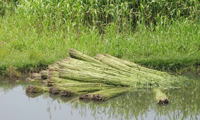
RANGPUR, Aug 5 (BSS) : Acute scarcity of rainwater, caused by prevailing drought-like situation, has been severely hampering the process of retting harvested jute plants frustrating the farmers almost everywhere in the northern region.
According to the officials and experts in the Department of Agriculture Extension (DAE) and Bangladesh Jute Research Institute (BJRI), uncertainty has now gripped the farmers following no rainfalls in recent weeks at this peak hour of the rainy season.
Talking to the news agency Tuesday, Principal Scientific Officer of Rangpur Regional Station of BJRI Dr Mohammad Ayub Khan said the drought-like situation has occurred following global climate change affecting every sector including agriculture.
He suggested the farmers to adopt the lowest-cost and easiest ribbon- retting method for retting harvested jute plants under drought like situation, as it will significantly improve the quality of the fibre and help them in getting its higher market price.
Additional Director of the DAE for Rangpur region Kamal Kumar Sarker Tuesday said all officials and employees of the DAE have already been directed to assist the farmers in using ribbon-retting method for rotting jute plants amid scarcity of rainwater.
Both the experts suggested the farmers for rotting harvested jute plants through creating temporary artificial water reservoirs at lower places and low-lands by providing irrigated water till adequate rainfalls come down.
According to the DAE sources, the farmers have cultivated jute on about 0.20 million hectares land this season in the northern region, about 28,000 hectares or 13 per cent less than the fixed target of bringing over 0.23 million hectares land under jute cultivation.
Horticulture Specialist of the DAE Khondker Md Mesbahul Islam said the fixed jute farming target could not be achieved this season as farmers faced hurdles in sowing seed due to drought-like situation at the initial stages, crop diversification and other reasons.
The farmers have cultivated 'Tosha' variety jute on over 0.18 million hectares of land, 'Deshi' variety on 13,635 hectares, 'Mechhta' variety on 4,607 hectares and 'Kenaf' variety jute on 2,275 hectares of land this season.