
OPINION
What is happening to hilsa?
Syed Fattahul Alim | Tuesday, 30 September 2025
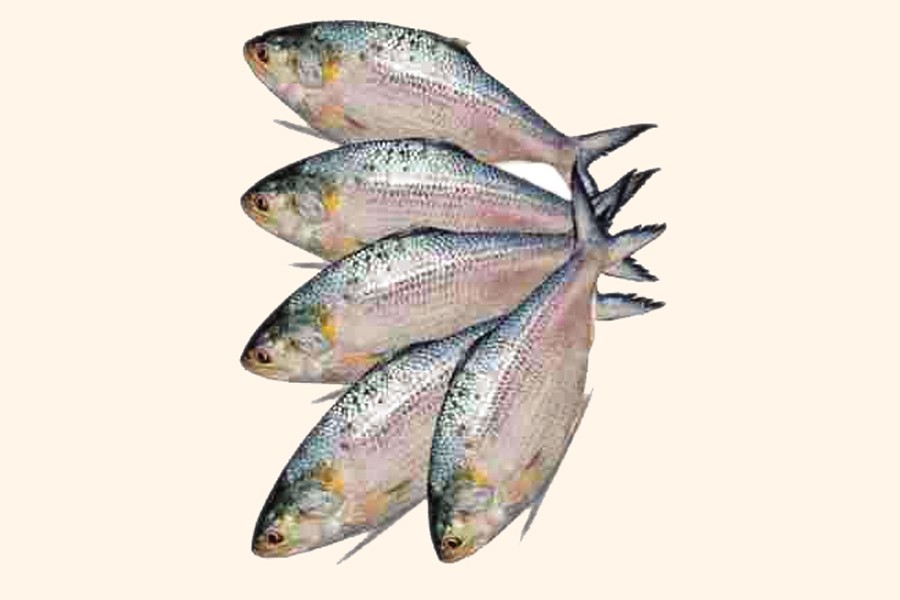
Is hilsa really leaving the shores of Bangladesh? Reports of constantly falling hilsa catch during the peak monsoon breeding season (July to October) is indeed concerning. Though hilsa's share of the nation's total fish production is only 12 per cent, yet hilsa, which is Bangladesh's national fish and a culinary delight, has a unique place in Bengali cuisine and culture. Major national events like Pahela Boishakh are unthinkable without hilsa. However, of late, this fish is beyond the reach of the common, middle-and-low-income consumers due to its exorbitant price. Even so, Bengali people love this fish so much that a local fish market without hilsa, especially in its breeding season, is inconceivable. But what the figures of the government's Department of Fisheries (DoF) say about the recent state of hilsa production is anything but heartening. The amount of catch during the peak months of July and August this year, according to DoF, was around 29,500 tons. Last year's catch during these two peak months was slightly over 40,200 tons. That means during the height of hilsa season, the catch this time has been 26.61 per cent less than previous season's. This marks a significant fall in hilsa production, especially during the peak season. Small wonder that there are fewer hilsas in the market and their prices, too, have gone sky-high. Experts are of the view that fewer hilsa catch this season is nothing fortuitous, but it marks the end of the era of its abundance. Production of hilsa is clearly on the decline and the reasons for that are also not hard to understand.
Hilsa grows naturally and fishermen catch them from the rivers and the sea. But the natural conditions under which hilsa breed and grow are under threat from both humans and nature itself. The temperature of the sea, the Bay of Bengal, to be particular, is rising due to climate change. The warmer Bay is definitely not good news for hilsa. Hilsas spend major part of their life cycle in the sea before migrating to the sources of sweet water in rivers like the Padma, Meghna and Brahmaputra where they lay eggs. The fertilised eggs then float downstream to the mouth of the large rivers like Meghna to hatch and grow into juveniles. The young hlsas stay there until they mature into adults and live in the river before they again return to the sea until the spawning time when they swim upstream to the rivers. But the rise in sea temperature is also raising temperature of rivers. The ideal temperature for breeding of hilsa is between 26 degrees and 28 degrees celsius. But global warming is causing the temperature of river water to rise above the ideal temperature. All these factors are definitely not helpful for protecting the ecosystem that supports hilsa's life cycle. In fact, higher temperature kills hilsa fry. The development of sandbanks at the mouth of the Meghna is reducing the river's navigability which hinders hilsa's upstream migration. Pollution from industrial waste, insecticides, plastics, etc., is causing the amount of dissolved oxygen (DO) in water to decrease.
The River Research Institute has conducted tests to discover that over the past five years, DO level in the Padma waters has come down from 8.70 to 5.41. Add to that the rise in salinity in both the rivers and the coastal region. Water control and diversion structures like dams, sluice gates built upstream across, especially the transboundary rivers in India, Sikkim and Nepal are causing water flow in major rivers like Padma to diminish markedly during the dry season. Worse, silting in the rivers has also increased, thanks to those upstream dams, barrages groynes, etc., rendering the rivers shallow. And, shallow waters are not suitable for hilsa to grow and thrive.
So, what can the hilsa do under these hostile circumstances? They might well be changing their migratory routes in search of a better environment to survive. Who knows?
sfalim.ds@gmail.com