
What is insurance all about?
Chandra Sekhar Das | Tuesday, 28 January 2014
Life insurance provides financial security to the clients. It also facilitates creation of long-term capital in the market. Insurers need to develop new customer-oriented and innovative products to meet the customers' need.
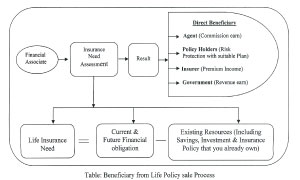
A needs assessment is a systematic process for determining and addressing needs, or 'gaps' between current conditions and desired conditions or 'wants'. The discrepancy between current condition and wanted condition must be measured to appropriately identify the need. The need can be a desire to improve current performance or to correct a deficiency. Need assessment information has the quality of reliability when it is free from material error and bias.
As a result of need assessment, one knows how life events impact his/her insurance needs, whether he has enough coverage etc. This process is not intended to provide a detailed analysis of a prospective policy holder, but has been designed as a guide to determine the amount of life insurance he/she may need.
INSURANCE AGENT: An insurance broker (also insurance agent) sells, solicits, or negotiates insurance for compensation. A life insurance agent's commission depends on factors such as rate of commission and how much life insurance the agent is selling. But, agents do make a substantial difference in commission on different plans.
POLICY-HOLDERS: A policy-holder is a person or a corporation who owns an insurance policy. An individual can own a life insurance policy on him/herself, or another individual, such as a spouse, child, parent, grandchild, etc.
INSURANCE COMPANY: A specified amount of payment is required periodically by an insurer to provide coverage under a given insurance plan for a defined period of time. The premium is paid by the insured party to the insurer, and the insurer is primarily compensated for bearing the risk of a payout should the insurance agreements coverage be required. Various types of policies require different premiums based on the degree of risk that the situation presents.
Premium rates also depend on characteristics of the insured. For example, a person with a risky profession generally has to pay more premium than a person with a less risky profession.
Furthermore, insurers are free to deny policies to persons who present an unacceptable risk. For example, most insurance companies do not offer life or health insurance to persons who have been diagnosed with a terminal illness.
GOVERNMENT: As per Section I 1A of the Stamp Act 1899, notwithstanding other provisions of this Act or any other law for the time being in force, the government may, by notification in the official Gazette, direct that where the stamp duty payable on an insurance policy exceeds the amount specified in the notification, the entire stamp duty shall be paid only by treasury chalan or account-payee pay order or account-payee bank draft in the manner prescribed by such notification or by rules.
POSSIBLE ACTION PLAN:
Insurance company:
* To recruit quality agent,
* To provide adequate training,
* To monitor agent activities on regular basis,
* To comply with relevant rules and regulations,
* To be honest in behaviour, transactions,
* To maintain commitment, and
* To develop innovative and customer-oriented products
Regulator:
* Regulators will monitor the activities of insurers,
* All update rules/guideline need to be circulated as early as possible, and
* Regulator may give recognition (by certification or awarded) to compliance insurers,
The writer is the Assistant Managing Director (F&A), Pragati Life
Insurance Ltd.