
When all roads for refugees lead to Europe
Shihab Sarkar | Friday, 18 September 2015
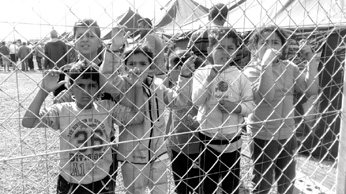
The chaotic and, at times brazenly shocking, spectacles of refugees entering Europe have lately been turning grimmer with every passing day. They are miserably devastated, at the end of their tethers, and are desperate for reaching what they view as peaceful lands. The streams of these hapless people continue unabated. In the meantime, Germany, Serbia and Slovakia have put in place 'border controls' late last week.
Hungary has sealed its border with Serbia. The country is the cherished goal of the migrants and refugees in order to reach their final destinations of Germany and other countries in Europe.
As buck-passing over giving asylum to these mostly Syrian and Iraqi refugees bedevils Europe, their plight keeps deteriorating. There is little sign of any abatement in the frenzied influx. Following Hungary's step, many countries, especially those in the former East Europe, may be mulling harsh measures to check the streaming-in. German Chancellor Angela Merkel has by this time emerged as a great saviour as her country opened its borders wide open to the migrants and refugees. Along with the Chancellor, the ordinary Germans too spontaneously welcomed the ill-fated people. Germany has already accommodated 450,000 refuge-seekers this year. Lately, it has taken in 20,000 in a single week. Yet disenchantments on the part of Europe began setting in. Overwhelmed by the galloping number of the refugees, Hungary has decided to keep a tighter leash on refugee movement in its territory. Desperate Europe-bound people are now stopped from advancing further at designated points in Macedonia, and some other countries along the passage to Germany. With people still making hazardous voyages to its coasts, cash-strapped Greece has lately adopted a lukewarm attitude towards the Europe-bound 'boat people'. The seemingly endless flow of refuge-seekers into it by hazardous water routes has not stopped.
Although still undaunted in providing food, clothing and accommodation to the refugees, Germany, too, appears to have begun expressing unease. They might be bracing for the much-dreaded spectre: spiralling-out of the crisis. A disillusioned Germany has eventually hinted at controls at its borders. Observers found the idea to be an infringement on the concept of Schengen (free movement)), so ardently followed by the members of the European Union (EU), except the UK and Ireland. The United Nations High Commissioner for Refugees (UNHCR) estimates around 80,50,000 people are poised to cross the Mediterranean into Europe in 2015-2016 for taking refuge. Almost all of them are fleeing armed conflicts and civil war in their countries, which include mainly Syria, Iraq and some northern African nations. Keeping the grim prospects in view, the UN refugee agency has called for more cohesive asylum policies to deal with the crisis. Germany realised the gravity of the situation quite earlier, when it proposed the idea of sharing the burden of refugees by all the member-countries. There has also been the talk of mandatory distribution of the load, in accordance with abilities, among all European countries. The idea does not seem to be getting off the ground, as frenetic refugees' flooding of European borders threatens to get out of control.
The way the refugee episode is unfolding in some European countries, even a stop-gap solution to the crisis does not seem to be at hand. However, with Europe divided over the ways to tackle the refugee deadlock favourable response from far-away countries comes as pleasant surprise. Australia and Canada have shown their eagerness to stand by the migrants and refugees. The gesture reminds one that the wandering refuge-seekers have not been left in the lurch.
The Europe-bound refugees have already had to pay heavy prices for their desperate journeys by leaving their future to fate. To many, the attempt proved to be getting out of the frying pan into the fire. With thousands of people fleeing violence and atrocities in their war-torn countries, the processions at one time took the form of persecuted humanity on the move. Many drowned in the Mediterranean en route to Greece and Italy; hunger, disease and exhaustion afflicted others; many families disintegrated. A few months into the beginning of the refugee influx, Europe realised that the continent was on the verge of getting caught in a big crisis. It was then that their initial empathy and compassion began wearing thin.
The European Union (EU) member-countries are now veritably in a fix. People of conscience in the other regions are anxiously watching the hardship and ordeals that have been besetting the lives of the refugees. However, many point to the predicament of the European nations, both rich and poor. A feeling of dread has been allegorically expressed by Angela Merkel. The other day she spoke of her fear that Germany was experiencing something that would occupy and change her country in the coming years.
The misgivings of the German Chancellor are not unfounded. Dubbed the biggest refugee crisis after the Second World War, the mass exodus of the western Asian migrants into the currently peaceful Europe may not remain limited to their resettlement in foreign lands. Many Europeans may dig deep into the crisis to identify some of its disturbing aspects. The premier one among them relates to ethno-cultural assimilation or, to speak bluntly, clashes. Angela Merkel has alluded to it quite eloquently when she said the crisis "would occupy and change" her country. Few can assert that the absorption of the refugees in Europe will not lead to social angst and restiveness. Pessimists may also start bracing for new types of racial and cultural conflicts and hostilities that might occur in Europe in the future. Many larger countries in the continent may no longer remain purely based on monoculture, and are likely to emerge eventually as heterogeneous nations. That's how history progresses through evolutions, the school of futuristic sociologists might observe.
In spite of all these premonitions, the refugees' urgent need for host countries cannot be downplayed. It is due mainly to global and regional politicking that the citizens of some Arab countries have been forced into fleeing their lands.
The great exodus of German Jews during and after the Second World War has had multi-layer politico-cultural ramifications. The setting-up of the Jewish state of Israel in 1948 and the eviction of the Palestinians from their ancient land are inextricably linked to the Diaspora. One may feel inclined to point the finger at Adolf Hitler's anti-Semitism and Jew persecution for all the murky developments in the Middle East in the following decades. Series of Arab-Israeli wars broke out centring on the establishment of the Jewish state, which had sucked in almost all regional countries. The Middle East has remained a powder keg since then.
In the eighties in the last century, the Balkans witnessed ethnic unrest coupled with racial profiling. It triggered exodus of Bosnian and Albanian Muslims to Turkey.
History is filled with the sagas of refugees trekking thousands of miles to reach the places of their choice. Many also opted for sea routes. In the earlier times, it was political and economic refugees who used to dominate the scene. Environmental refugees have lately been added. In a world torn by clashes of political and economic interests, the environment lies in the back burner.
On the European soil some developments are conspicuous already, and many lie dormant to be manifested in the future. How the European ethos and socio-political implications for the refugees coalesce is worth waiting for to see happen.
shihabskr@ymail.com