
Who are the Danes?
Thursday, 5 June 2014
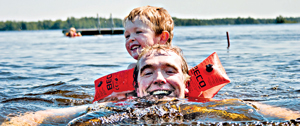
Like the other Nordic countries, Denmark is characterised by universalwelfare services such as free healthcare and free education. The Danes also get lots of fresh air by being oneof the most bicycle-friendly populations on the planet. Modern designand architecture are part of their daily lives, they consume a greaterproportion of organic produce than any other people and their interest in sustainability, nature and food has resulted in the New Nordic foodmovement.
The Nordic model
The small Nordic country has one of the world's most flexible labourmarkets as it is based on a 'flexicurity' system where the employers withrelative ease can dismiss the workers. Workers in turn are secured by high levels of unemployment benefits, a result of decades ofcooperation between employers and unions. An active labour marketpolicy is another important aspect in the model. The Danish workforceis characterised by having one of the world's highest levels of educationand being very mobile. There is also a great deal of equality in theDanish job market and society as a whole, as 78 per cent of Danishwomen work outside the home, and in total men and women workalmost the same number of hours. Combined with virtually non-existent corruption, a strong focuson innovation and one of the world's best business climates, thisprovides reasons as to why many companies decide to invest in andestablish themselves in Denmark.
A green nation
Denmark has a long tradition of ambitious and active energy and climatepolicies based on broad consensus in the Danish Parliament, e.g.energy and environment often play a key role when new buildings andurban districts are planned, designed and built. The energy policyobjectives of Denmark are to create security of supply, to reduceemissions of greenhouse gases and air pollution and ensure energyefficiency while creating a basis for commercial development both athome and abroad. The ambition is to significantly increase theharnessing of sustainable energy sources.As the first country in the world, Denmark is leading the transition to agreen growth economy by introducing a clear vision of becoming independentof fossil fuels by 2050. That'swhy Denmark dares to call itself State of Green. But as global resourcesare scarce, reaching this goal requires a broad range of innovative technologiesand an ambitious policy framework to support them. Denmarktirelessly works with other states, in the EU and through developmentassistance to push for the transition towards a global green economy.
Denmark in the world
Maps of the world can be drawn in several ways.Generally, area measurement is used and,represented in this way, the Kingdom of Denmark - notcounting the Faroe Islands and Greenland - with its43,000 square kilometres (26,700 sq. miles) is approx. 3.5 times smaller than Bangladesh.However, if measured by the share spent on developmentassistance, Denmark is placed very highinternationally - the country is one of few in theworld that live up to the UN target of granting 0.7 percent GNI to development assistance. The sameapplies if the yardstick is the number of Danish policeand military forces sent out on peacemaking andpeacekeeping missions.