
Who profits from Bangladesh's FIFA madness?
SAIMA NUR | Wednesday, 10 June 2026
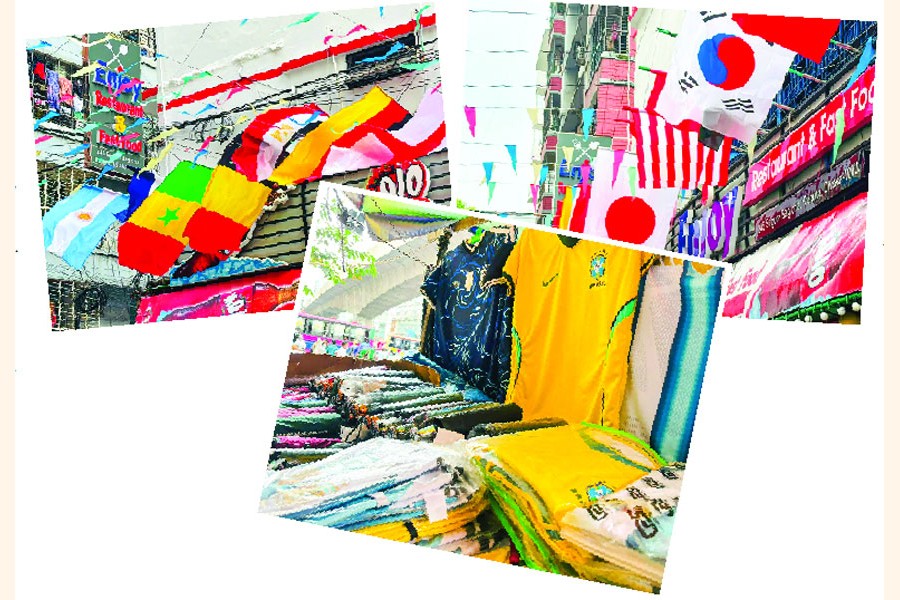
The football World Cup is not just a sporting event in Bangladesh. It is a massive national festival. Millions of passionate fans stay awake until midnight to watch their favourite teams. This collective obsession creates a powerful economic wave across the country, from a village in a distant part of the country to the busiest streets of Puran Dhaka.
Many distinct businesses make remarkable profits from this football madness. From major broadcasting networks to tiny neighbourhood hotels and restaurants, the tournament's financial impact is visible everywhere. Research on global sports economies shows that sports commercialisation rapidly builds a vast financial pyramid fueled by highly concentrated growth in sponsorship and broadcasting revenues.
The last-minute television rescue
A few weeks ago, millions of viewers faced a stressful situation. The initial local broadcasting deal collapsed very close to the tournament date.
This sudden disruption threatened to leave the entire country without access to the matches.
Fortunately, a unique partnership saved the local television screens. A new consortium of public and private media networks stepped in to buy the rights. This group included the state-run network, as well as private sports and news stations.
The financial structure of this emergency agreement is highly interesting. The public broadcaster did not spend any state funds on the acquisition. Instead, a group of private corporate partners and major telecom companies covered the total bill.
This massive corporate deal is valued between 36 crore and 49 crore taka.
Big wins for digital streaming and corporate advertisers
The commercial strategy for FIFA World Cup 2026 highlights a major shift toward digital entertainment.
Corporate organisers discovered highly profitable revenue streams in the mobile internet sector.
The largest telecommunications operators in Bangladesh are investing heavily in live media.
Fans no longer rely solely on traditional televisions. They now stream live matches directly on mobile applications and over-the-top streaming services.
Corporate brands are spending heavily on advertising campaigns during these digital streams. Electronics manufacturers, consumer beverage brands, and mobile financial services compete fiercely for public attention.
The tournament attracts the highest concentration of viewers of the year. Companies willingly increase their marketing budgets because families and friends watch the screens together.
This intense competition for ad space allows digital platforms and networks to charge premium rates, turning the media drama into a highly profitable venture.
A massive boom of flags and jerseys
The informal economy of Bangladesh receives a major boost during this sporting season.
Traditional clothing factories and local wholesale markets are working around the clock. Streets are crowded with buyers who want to purchase foreign team jerseys, matching athletic gear, and national flags. The intense rivalry between supporters of South American teams drives the majority of these retail sales.
Local garment merchants are experiencing a huge increase in daily transactions and direct profitability during this World Cup season.
"We started preparing our factory lines three months before the first match," says Md. Aslam, a wholesale sportswear manufacturer at Gulistan.
"The financial demand is unprecedented this year. We are running double shifts to keep up with orders for the 2026 team kits. Thanks to the almighty, because of the occasion, we can boost our business and expand further."
Other retailers are noticing a direct shift in consumer purchasing habits.
"Fans do not just buy one jersey anymore," explains Tasnim Ahmed, owner of a retail sports shop in Bangabandhu National Stadium Market. "They buy the home kit, the away kit, and even matching training gear for their children. The enthusiasm for the 2026 tournament has completely cleared out our inventory. This season is a goldmine for independent clothing traders."
The marketplace caters carefully to all income levels.
Standard locally produced jerseys are affordable for the general public, while high-quality replica uniforms are available for dedicated collectors.
Street vendors also make a steady living by selling small flags and wristbands to children, providing a vital seasonal income for thousands of independent traders.
Midnight matches drive neighbourhood profits
The humble neighbourhood tea stalls, hotels, and restaurants are the true cultural heart of this football frenzy.
Small business owners across the country set up television sets or digital projectors directly on the sidewalk.
Large crowds of neighbours gather at these stalls to watch the late-night matches in the open air. This collective viewing habit creates an immediate sales surge for small-scale food vendors.
Economic studies on small enterprises demonstrate that micro-entrepreneurs heavily rely on local community spaces and cultural immersion to build resilient business models and drive immediate social consumption. During large-scale sporting tournaments, this effect is magnified.
Instead of closing down at midnight, vendors stay open until dawn to serve the football crowds.
Fans consume multiple cups of hot tea, biscuits, and chips while debating the match strategies.
This extra activity can easily double a small shop's daily profits. Similarly, urban restaurants and local community halls host ticketed watch parties with special food menus, transforming public passion into direct commercial success.
The Electronics and appliance surge
Many families upgrade their home entertainment systems before the tournament. Electronics showrooms see a massive increase in sales of large LED televisions.
Consumers also buy advanced sound systems for a stadium-like experience at home. Brands offer special discounts and easy instalment plans to attract buyers.
The banking and MFS transaction
The tournament triggers a massive wave of digital financial transactions. Fans use Mobile Financial Services (MFS) for quick payments. They make instant digital transfers to buy streaming subscriptions on mobile apps. Clothing shoppers pay online for their favourite jerseys to avoid long store lines.
Social media content creation
Local content creators capitalise heavily on the intense online rivalry between football fans. Vloggers and meme page administrators produce daily videos about the tournament.
These digital videos attract millions of views on platforms like Facebook and TikTok.
Large corporate brands sponsor these popular creators to reach younger audiences. Creators earn substantial revenues from direct brand placements and digital advertisement payouts.
A national obsession that fuels the economy
The financial reality of the World Cup proves that sports passion is a powerful economic driver in Bangladesh. The festive atmosphere directly supports thousands of micro-entrepreneurs, including street hawkers and roadside sellers. The actual games take place thousands of miles away. Still, the tournament's economic heartbeat is felt deeply in every neighbourhood of Bangladesh.
saimathenur2003@gmail.com