
Why mother language matters in critical pedagogy?
Pamelia Khaled | Saturday, 25 February 2017
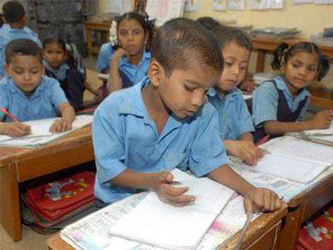
Language matters! But why does the mother language matter in learning? For, it offers imagination, ideas and a deep insight and assists a child to be creative. Gandhi believed: "A proper and allround development of the mind...can take place only when it proceeds with the education of the physical and spiritual faculties of the child."
Facing the struggles a child needs an order; however, it is better not to impose anything on a child. For a child, freedom is necessary for learning. The mother tongue helps to be powerful and creative. At heart I believe that freedom and happiness are the precondition for a child's disposition, developing the child's inherent qualities of mind and character. Krishnamurti also writes: "where there is order, there is always freedom".
Sensational pedagogies make learning meaningful and personal and connected to mind, body and soul. Complementary to holistic pedagogy, sensational pedagogy is a cooperative form of learning that can contribute to whole-child development. And we know only the pure sensation develops perception. Therefore, a sensational pedagogy helps learners experience learning effectively. The assumption is that learning takes place in the feeling, sentiment and movement of the body.
There is a deep connection between the learning process and the relationship between sensation and pedagogy. Story telling is the central part of holistic education and critical pedagogy. Let's cite an example of creative learning that connects a learner to the nature, the environment.
It was a beautiful dawn! I heard some noises in my attic, I didn't think they were ghosts or thieves. I rather thought it was MistySugar, our little cat Freddie, maybe, he was scratching sofa or carpet instead of his scratching pads, thumping and bumping on the stairs. I was lazy to open my eyes. Closing my eyes I just hushed him and whispered: Fredu, Fredu, Freddie please stop. But he did not. So I got off from the bed to find our cat, MistySugar, to see what was really going on. I found him standing on the corridor with erected ears and a tensed facial expression. He looked at me carefully and tried to say something softly, mew.., mew... As if he was trying to say: Squirrels! Squirrels out there! Mommy, mommy, go and check them!
He was very alert about the noise, squirrel's chirps. Then, I thought there was a good chance that I had squirrels in my attic.
I looked outside the bedroom window and found a young lighter-brown squirrel chirping on the sunshade. I asked him: What happened to you? Are you hungry? The baby squirrel looked at me and started talking to me: chirps, chirps! Yes I am! It seemed the little squirrel was trying to understand my language, what I was talking to him, and felt attracted to my conversation.
He made a series of chirps!!! I really needed nuts: Some nuts, please! And he started running on the window sunshade. He chirped and walked back and forth a few times. Then, he ran away finally.
He reminded me Bengali National Poet Kazi Nazrul Islam's "Khuku O Kathberali", an excellent rhyme. It seems squirrels moved the poet too to write a wonderful rhyme for children.
In this rhyme a little girl is asking in her mother language to a squirrel what he loves to eat the most: Squirrel, Squirrel, do you like to eat guava?
I find squirrels are most active in the morning and evening, they love to play in our backyard, sometimes at the front. They are so beautiful, some of them are black and some of them are lighter-brown.
Our cat Freducinno enjoys these animals most, their each body movement he likes. They run very fast as they are light. I saw our MistySugarFreddie loved to talk to them, khakk.., khakk... I am not sure though he likes them or not. Perhaps, MistySugar scolds them sounding Khakk…khakk…hey why you are in my home?.. Go away..., as they often break the rules of his kingdom/ his Lakeridge home, his territory, the lovely Riviera.
They make so much of the noise, sounds like fast scurrying and running. They run usually outside the attic, sometimes near the edge of the roof. Sometimes, I find them they are rolling off nuts and playing in the garden.
I often hear squirrels, seagulls and birds chirping together in the backyard garden. During the evening, I also found some beautiful brown rabbits playing in the backyard. Sometimes, the rabbit sits face to face with our MistySugar quietly. I watch them with much interest, they must stay here the entire day! It is wonderful to see these beautiful creatures playing and running everywhere, all day long. They are entering, taking exit and re-entering our Lakeridge home, the Riviera!
"The Riviera" is just besides the Ontario Lake, West Rouge. This place is really a sweet animal home, a natural heaven on the earth. Like all animals, squirrels, rabbits and birds have to go outside to eat and drink. There are many ecosystems all over the world and this West Rouge, Lakeridge area is one of them. Many living creatures are living in the Ontario Lake and roaming around it with a great safety, freedom and pleasure.
I wonder! Where is heaven? Who says that it is too far! When I tell this story in a classroom I could see the wonder in children's eyes. They rhyme with me as if they were present at the Riviera, Lakeridge home.
"Squirrels and birds are still shining, like a lightning in the dark!
I hear a white blue lightning, Freddie is keep calling them darling, darling"!
Miller, a holistic educator, also believes that "students awake to the processes of life by connecting to the earth. The curriculum teaches students not only about environmental problem-solving, but more importantly, how we are fundamentally embedded in the earth's natural processes." In the primary years, holistic education can emphasise the connection with the earth through gardening and farming programmes, science and math outdoor projects, guided nature walks to local conservation areas and other activities as a part of an environmental and community-building programme. Holistic educators think that earth connections can revitalise children to the natural processes of life. For example, the wind, the sun, the trees, and grass can help children be alive and awaken them. Along similar lines, I suggest that informal education starts with the sweetness of mother language, and it includes other creative forms such as written stories, indigenous stories, narratives, visual art and oral recitation, major events and crises, and sensational pedagogies - smell, taste and sound. To unlock children's creative mind it is important to have other ways of knowing, thinking and doing. Thus, to be a voice, an agency in the classroom or community power of language matters, as it offers a way of looking at how pedagogy is constituted by the learner's language, nature and its surroundings. We need to teach our children in natural and informal ways so that their minds are challenged and their horizons are broadened.
The writer is an Anthropologist and Environmentalist. Currently she is conducting her PhD research in Curriculum Studies and Teacher Development at Ontario Institute for Studies in Education (OISE), University of Toronto.
Email: Pamelia07@hotmail.com