
Women need to have equitable access to assets, services
Selima Ahmad | Wednesday, 8 March 2017
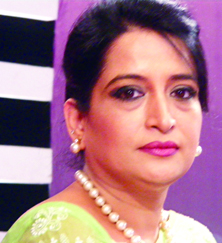
Entrepreneurship has been regarded as one of the most important determinants of any economy's growth both in the developed and in the developing countries. Despite this emergence of women entrepreneurship is a new phenomenon all over the world. It's no secret that women have historically faced greater barriers than men when it comes to fully participating in the economy. As they face many socio- cultural attitude, legal barriers, lack of education and personal difficulties, they are rarely financially independent and often more vulnerable members of society. Business women in Bangladesh do not have their own national business agenda, although participation is found all over Bangladesh historically fighting to develop as entrepreneurs in a highly male dominated socio-economic, cultural and political structure.
From the thirst of developing women entrepreneurship in Bangladesh, Bangladesh Women Chamber of Commerce and Industry (BWCCI) exclusively works on women's economic and social empowerment. Through its relentless struggle to overcome the obstacles, a better business environment for women included in the first ever women's national agenda in Bangladesh to unleash their potentiality. As its founder, I believe passion and commitment in business is must to achieve success. From facing obstacles in getting license for BWCCI to working for female upliftment, the struggle took for several years to get a recognition for working for women entrepreneurs.
Our journey towards women's development in the private sector with an aim to bring women beyond micro enterprise was not easy. I had to continuously advocate for their issues and facilitate access to market and finance and build their capacity through training. This is engaging, exciting, exhilarating, enabling and at the same time empowering. I grew into my business from start-up and made it into a corporation with several businesses. I took upon myself to get into totally male dominated trade bodies to voice my needs and the needs of women. Women's need is huge and so is their expectation as entrepreneurs. This is because women entrepreneurs have much less resources and far less informal support. There a helping hand from women's Chamber is essential.
From the experience working with UN Women, Islamic Chamber of Commerce, Confederation of Asia-Pacific Chambers of Commerce and Industry (CACCI), Asian Development Bank, CIDA, USAID, CIPE, WDN, DANIDA, Netherlands Government, EU, Common Wealth Secretariat and several others organization, BWCCI has become richer in activities.
It continuously advocated with the policy makers to have new policies and for a gender friendly environment. This was important for ensuring access of their products to market through value addition and participation in domestic and international trade fairs. The BWCCI also do the networking by taking them to different conferences and events around the world where they can showcase their product, gain exposure and learn from other people. I really believe that giving support to all grassroots entrepreneurs to participate in global conferences like the Global Summit of Women, Conferences organized by Islamic Chamber of Commerce has made them more confidence.
Training is another important focus of BWCCI to develop leadership in women. Till now, 27,000 women were trained on business development and capacity building and around 8,000 women entrepreneurs participated in different types of trade fairs both in national and international level. These I hope will play significant role in women's social and economic empowerment.
Bangladesh is to be a middle income country by 2020. In that context, focus on Bangladeshi women in entrepreneurship development has also become mandatory to participate in the country's graduation., empowering women in business through innovations has also become necessary as a prerequisite for sustainable development and pro-poor growth. Achieving women's economic empowerment requires sound public policies, a holistic approach and long-term commitment and gender specific perspectives must be integrated at the design stage of policy and programming.
Women must have more equitable access to assets and services to enhance their productivity as the difficulties in collateral free loan are not still over. Women need access to the full range of credit, banking and financial services and facilities, essential to fully develop their productive assets, their land and their businesses. Design programs to facilitate women's and girls' access to formal and non-formal education, their skills development and their transition to paid work are needed to incorporate with the national level. State responsibilities also lie on investing in infrastructure and labor-saving technologies, especially in rural areas, to reduce time-consuming aspects of women's mobility and education and participation in self-employment opportunities. empowering women in business through digital connectivity also will help them get new ides, new market and platform for resource development and sharing.
Finally, For better participation and ultimately for empowerment of women, we is must to eliminate dropout from schools, child marriage, practice of dowry, etc. from society, establishing women's equal dignity. Internet is playing a vital role in placing campaigns around women's rights at the centre of public debate
The Global Findex, a comprehensive database measuring how people save, borrow, and manage risk in 148 countries, reveals that women are less likely than men to have formal bank accounts.
International Finance Corporation (IFC) also estimates that women own more than 30 per cent of registered businesses worldwide. But only about per cent of those female entrepreneurs have access to the capital needed to grow their businesses.
In developing economies women are 20 percent less likely than men to have an account at a formal financial institution and 17 percent less likely to have borrowed formally in the past year. Even if they can gain access to a loan, women often lack access to other financial services, such as savings, digital payment methods, and insurance. Financial inclusion like providing them opening bank account, financial literacy for lower to upper income rural households needs to be focused.
The writer is the President of BWCCI (Bangladesh Women Chamber of Commerce and Industry). She can be reached through email
selimaahmad@gmail.com