
World food prices rise
Saturday, 7 February 2015
ROME, Feb 6 (Reuters): World food prices are unlikely to rise much from their four-year slump as long as high production, low oil prices and limited import demand continue, a senior economist for the United Nations food agency said on Thursday.
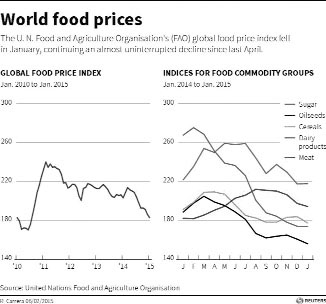
The United Nations Food and Agriculture Organisation's (FAO) global food price index fell in January, continuing an almost uninterrupted decline since last April.
"Supply keeps being revised up, and on the import demand side, there really isn't much activity simply because many importing countries themselves have very good supply," said FAO economist Abdolreza Abbassian.
FAO's forecast for world cereal production in 2014 hit a new record high of 2.534 billion tonnes in January, marginally above its December estimate.
The lower oil price could favour production, Abbassian said, as farmers can still make a decent margin on their produce thanks to lower input costs.
"The (oil price) decline keeps agriculture healthy ... At a time of surplus, increased production could even mean further downward pressure on prices, in the absence of a major drought or catastrophe," Abbassian said, adding that food prices could simply stabilise instead.
Cheaper crude oil also knocked FAO's vegetable oil index to its lowest level since October 2009 in January by eroding the price difference between the two for use as biodiesel feedstock.
Overall food price declines and stability have not applied everywhere, Abbassian said. Currency fluctuations have affected trade patterns and prices in countries that have experienced higher currency volatility, "from India all the way to China".
In the European Union, a weaker euro has given a fillip to exports. Its 28 member states together are one of the world's biggest cereals producers.
At the same time, import demand from China is shrinking, Abbassian said, contributing to surplus supplies of cereals.