
Yemen thrown into turmoil as president resigns
Saturday, 24 January 2015
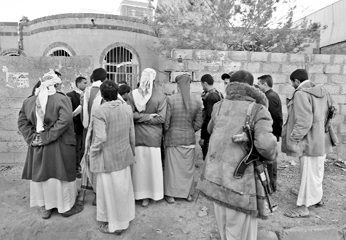
SANAA, Jan 23 (agencies): Yemen drifted deeper into political limbo Friday after President Abd-Rabbu Mansour Hadi resigned in exasperation at a Houthi rebel takeover of the country, a move that appeared to catch the Iran-backed group off balance.
Hadi, a former general, blamed the Houthis' control of the capital Sanaa for impeding his attempt to steer Yemen toward stability after years of secessionist and tribal unrest, deepening poverty and U.S. drone strikes on Islamist militants.
His resignation on Thursday startled the Arabian Peninsula country of 25 million, where the Shi'ite Muslim Houthis emerged as the dominant faction by seizing Sanaa in September and dictating terms to a humiliated Hadi, whom they had held as a virtual prisoner at his home residence clashes with security guards this week.
Chanting "we are the revolution", a small group of activists gathered at Change Square, the focus of 2011 pro-democracy protests which forced long-ruling President Ali Abdullah Saleh to step down under a Gulf power transfer deal.
Yemeni leader Abdrabuh Mansur Hadi has offered to resign following a standoff with a powerful Shiite militia in control of the capital, throwing his country deeper into political turmoil.
In his letter of resignation on Thursday, Hadi, a key US ally in the fight against Al-Qaeda, said he could no longer stay in office as the country was in "total deadlock".
"I believe that I have not been able to achieve the goals for which I took up my duties," he said, adding that Yemen's political leaders had failed "to lead the country to calmer waters".
Prime Minister Khalid Bahah also tendered his resignation, saying he did want to be part of the collapse of the country.
A senior official told AFP that Yemen's parliament had rejected Hadi's resignation.
"Parliament... refused to accept the president's resignation and decided to call an extraordinary session for Friday morning," the official said, speaking on condition of anonymity.
The shock announcements came after the militia, known as Huthis, tightened their grip on Sanaa this week after seizing almost full control of the capital in September.
They had maintained fighters around key buildings on Thursday and continued holding a top presidential aide they kidnapped on Saturday, despite a deal to end what authorities called a coup attempt.
The potential fall of Hadi's Western-backed government will raise serious concerns of strategically important but impoverished Yemen collapsing into complete chaos.
The country is an important power base for Al-Qaeda in the Arabian Peninsula (AQAP), the Yemeni and Saudi branch of the international jihadist network.
AQAP is considered Al-Qaeda's most dangerous affiliate and claimed responsibility for this month's deadly attack on French satirical weekly Charlie Hebdo.
Yemen has allowed the United States to carry out repeated drone attacks on Al-Qaeda militants in its territory.
Hadi is from Yemen's formerly independent south and in recent days southern officials have taken steps to back his rule, including closing the air and sea ports in the main city of Aden.
The security and military committee for four of south Yemen's provinces, including Aden, said in a statement late Thursday it would not take orders from Sanaa following Hadi's resignation.
UN Secretary General Ban Ki-moon was "seriously concerned" by the developments and called on all sides "to exercise maximum restraint and maintain peace and stability", his spokesman said in a statement.
In Washington, State Department spokeswoman Jen Psaki said the United States was assessing the fast-moving events.
"We continue to support a peaceful transition. We've urged all parties and continue to urge all parties to abide by... the peace and national partnership agreement," Psaki told reporters.
A senior State Department official said staffing at the US embassy, already thin after most of the diplomatic personnel were ordered to leave in September, would be further reduced.
After heavy fighting between government forces and the Huthis this week that killed at least 35 people, the UN Security Council and Yemen's Gulf neighbours had all voiced support for Hadi's continued rule.