
Yoon for strong security ties with US, Japan
Wednesday, 16 August 2023
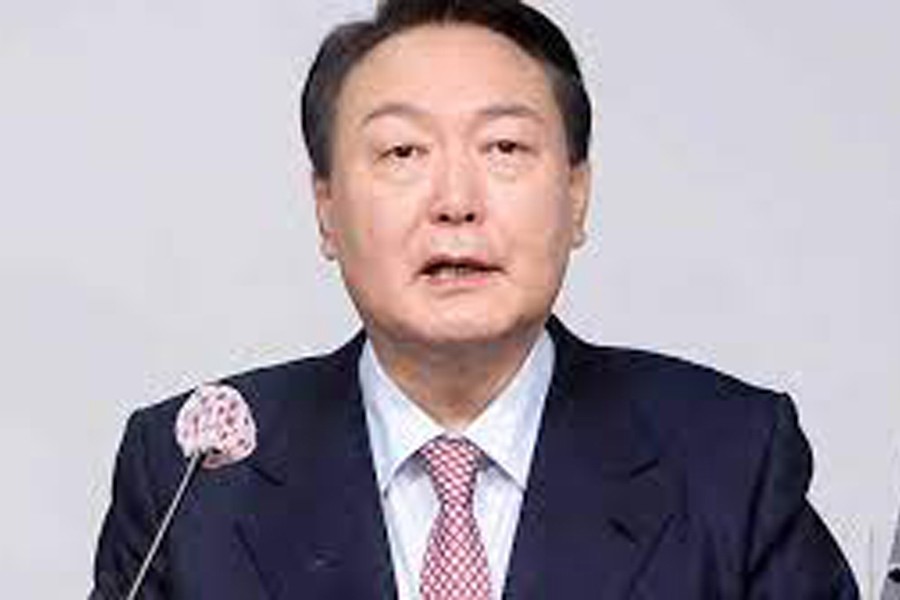
SEOUL, Aug 15 (AP): South Korea's president called for deeper security cooperation with the U.S. and Japan to address North Korean nuclear threats, saying Tuesday that his upcoming summit with the U.S. and Japanese leaders at Camp David will "set a new milestone in trilateral cooperation."
It will be the first time for the leaders of the three countries to gather entirely for a trilateral summit, rather than on the sidelines of international meetings. This suggests they are serious about boosting their ties in the face of North Korea's advancing nuclear arsenal and China's increasingly assertive foreign policy.
In their summit Friday at the U.S. presidential retreat in Maryland, President Joe Biden, South Korean President Yoon Suk Yeol and Japanese Prime Minister Fumio Kishida are expected to announce plans for expanded military cooperation on ballistic missile defenses and technology development, according to two senior Biden administration officials.
"The ROK (Republic of Korea)-U.S.-Japan summit to be held at Camp David in three days will set a new milestone in trilateral cooperation contributing to peace and prosperity on the Korean Peninsula and in the Indo-Pacific region," Yoon said in a televised speech in Seoul on Tuesday.
South Koreans rally in Seoul against Japanese plans to release treated nuclear wastewater into sea
Yoon's speech marked the 78th anniversary of Korea's liberation from Japan's 35-year colonial rule in 1945. Past South Korean presidents commonly used Liberation Day speeches to ask Japan to make fresh apologies over its colonial wrongdoing. But Yoon, a conservative who has pushed to resolve the historical grievance as a way to boost Seoul-Washington-Tokyo cooperation, didn't do so and rather explained again why improved ties with Japan were needed.
Yoon said the seven rear bases provided to the U.S.-led U.N. Command by Japan serve as "the greatest deterrent" that keeps North Korea from invading South Korea. He said a North Korean invasion would trigger an immediate, automatic intervention by the U.N. Command and that the bases in Japan have the necessary land, sea and air capabilities.