
Zero tariffs, new horizons
Bangladesh's garment industry at a defining crossroads
Serajul I Bhuiyan | Friday, 20 February 2026
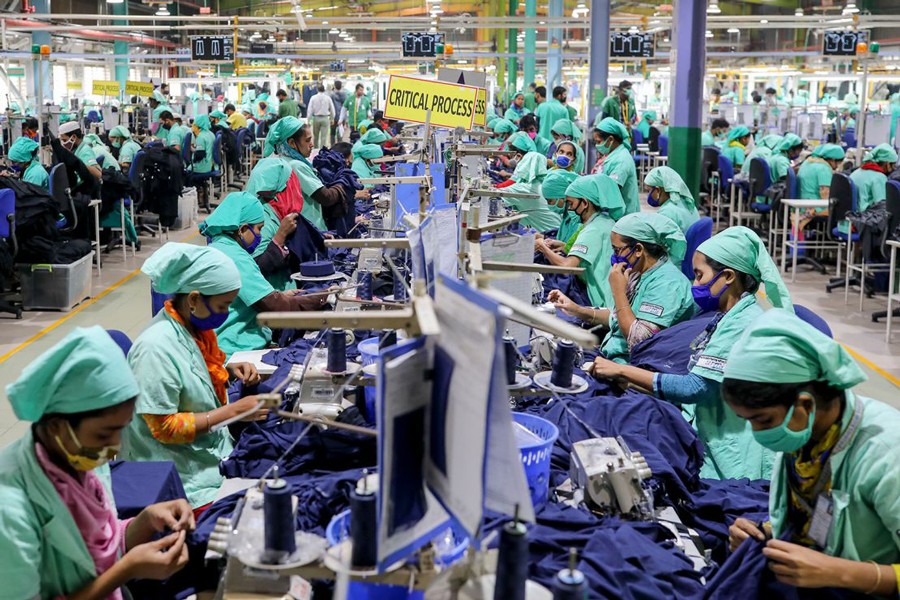
The recently negotiated reciprocal trade agreement between Washington and Dhaka is more than just a tariff adjustment. It is a strategic shift in Bangladesh's economic path. Bangladesh, a country where the ready-made garments (RMG) industry plays a major role in export earnings, employment, and foreign exchange, has gained a strategic economic advantage amid growing international competition.
Under the new framework, the United States (US) has agreed to reduce the reciprocal tariff on exports from Bangladesh to 19 per cent. This is from the original 37 per cent level that came into force in April 2025 under Executive Order 14,257 and is further lowered from the 20 per cent level that came into force in August 2025. More importantly, however, is the identification of the products that qualify for the zero per cent reciprocal tariff rate under Annex III of Executive Order 13,436.
Bangladesh's textile, apparel, and footwear industry, which is an important segment of the country's economy, will benefit from the partial removal of tariffs.
WHY ZERO TARIFFS MATTER: Bangladesh's textile industry is critical, as more than 80 per cent of its export earnings come from the ready-made garment industry, which provides employment for millions of women workers in the country. A change in tariff levels, however marginal, can have major implications for sourcing decisions of major retail groups in the country. The zero per cent tariff will have major implications in the highly competitive textile industry, particularly for the use of US-origin cotton and synthetic yarns.
This agreement offers zero per cent tariffs to textile and apparel products made of US-origin cotton and synthetic fibers. This creates a vertically integrated competitive environment. The textile, apparel, and footwear sectors of Bangladesh will be benefited by this agreement. The US raw materials sector will also benefit from this agreement.
The volume quota mechanism ensures duty-free access with greater predictability. This enables Bangladeshi exporters to plan their production cycles with greater predictability. American policymakers also maintain their safety nets to prevent market distortions.
ZERO-TARIFF QUALIFICATION AND THE COTTON EQUATION: Of far greater significance, however, is the specification of products that qualify for the zero per cent reciprocal tariff rate under Annex III of Executive Order 13,436. This aspect of the agreement may appear to be of minor significance in its form, but in its content, it has far-reaching implications. The fact that specific product categories qualify for zero-duty access to the American market does not just imply that tariffs are being reduced, it implies that specific product categories enjoy preferential treatment in terms of their relative competitiveness in accessing that market.
The textile, apparel, and footwear sector of Bangladesh-arguably one of the most vital pillars of this national economy-has much to gain from this partial removal of tariffs. However, the strategic significance of this aspect of the agreement runs far deeper than that when one considers the source of raw materials that form an integral part of this process.
The fact that textile and apparel products made with US-origin cotton and synthetic fibers qualify for duty-free access to the American market represents a significant shift in terms of sourcing strategy. Traditionally, Bangladesh has sourced considerable quantities of cotton from neighboring India due to geographical proximity. However, textile products made with Indian cotton do not qualify for the zero-duty incentive.
At first glance, the cost of US cotton might appear slightly higher than the rest due to shipping costs. However, if the zero tariff advantage is included in the equation, the cost dynamics take a clear turn in favour of the US market. This is because the elimination of import duty on finished products made from US cotton can potentially offset, or in many cases exceed, the cost of shipping the cotton in the first place.
US cotton is also renowned for its high-quality fibres, which can enhance fabric quality, reduce the risk of defects during production, and create a premium positioning for brands. In the context of the global retail market, sourcing US cotton can also enhance supply chain transparency.
In the context of geopolitics, the move also has strategic implications, as the zero percent tariff advantage is tied to US inputs, thereby encouraging Bangladesh to diversify its raw materials away from traditional regional sources. This reduces the overall supply chain threat, thereby strengthening the overall interdependence between the US and Bangladesh.
In the context of the Bangladesh garment industry, the real benefit lies not in the zero per cent tariff advantage, but in the smart play of aligning its sourcing strategy with the overall policy incentives to create the lowest production cost advantage in the market.
STRATEGIC EDGE OVER COMPETITORS: In this highly competitive textile industry with low profit margins, Bangladeshi exporters need to keep their costs low to compete with other countries. US exporters need to keep their costs low to compete on price with other countries. The 19 per cent tariff advantage, coupled with duty-free access, will definitely create a positive impact.
This advantage will help Bangladesh create a strong edge over its competitors in several ways. The US exporters will be attracted to source products from Bangladesh. The US textile sector will also be attracted to invest in high-end textile products that use US-origin raw materials. The reputation of Bangladesh will also be enhanced with this agreement.
Moreover, this agreement will create interdependence between Bangladesh and the US. This will only have a positive impact on Bangladesh.
MACROECONOMIC IMPLICATIONS: The timing of the agreement couldn't be better for Bangladesh, as the country has been busy in recent months rebuilding its foreign exchange reserves, stabilising its volatile currency, and improving investment sentiment, which had suffered due to the country's economic woes. In such a scenario, the entry into the US market, the largest consumer market in the world, can only add to Bangladesh's economic strength.
This increase in the number of exports, which is being earned as a result of the improved market access, is also likely to have a multiplier effect in the overall economy.
This increase in exports to the USA also implies an increase in foreign exchange reserves, which, in turn, is likely to have a stabilising effect on the country's monetary situation. This, in turn, is likely to affect the country's fiscal situation, as the government can operate with greater fiscal stability.
In addition to the macroeconomic variables, the effect of the agreement is also likely to have an impact on the employment and development of the country's industries. Increased exports are also likely to create employment in the garment sector, as export demand is set to grow further. At the same time, sustained export demand is likely to affect the development of the country's industries, as exports are set to improve further.
However, the full potential of the agreement can be realised only if the agreement is backed by complementary policies in the country. Such policies, in turn, are likely to affect the next phase of the country's industrial development, as exports are set to improve further.
POLICY RECIPROCITY AND DIPLOMACY: Bangladesh, under this agreement, has also committed itself to providing the USA with preferential market access for its industrial and agricultural products. This, in turn, is likely to impact the overall trade relationship between the two countries, as the agreement is also likely to have matured into reciprocity in trade policies, rather than Bangladesh's traditional reliance on the USA in this sphere.
The nine months of dialogue indicate that Bangladesh is gradually becoming capable of defending its economic interests through patient diplomacy, rather than reacting to situations.
THE ROAD AHEAD: Zero tariffs are strategically important, but they alone do not guarantee prosperity. Preferential access to a large market is an opportunity, and this opportunity must be turned into a sustainable advantage. The real challenge facing Bangladesh today is not tariff concessions, but operationalising them.
Firstly, it is apparent that Bangladesh will have to strengthen its compliance with labour rights and environmental regulations. Today, global buyers are looking for ethical sourcing, transparency, and sustainability. Strengthening compliance with labour rights and environmental regulations is a key area Bangladesh must address to enhance its image as a reliable and trustworthy manufacturing hub. Compliance today is not just about compliance; it is now a competitive advantage.
Secondly, investment in textile industry innovations and backward linkages is a key area that will be critical in determining Bangladesh's future. Bangladesh must expand its domestic capacity in spinning, weaving, dyeing, and synthetic fibres. Innovation in technical textiles and sustainability is a key area that Bangladesh must develop to move beyond a volume-driven export market.
Another equally important area is improving transparency and customs efficiency. Improvements in port efficiency and customs procedures, along with the overall reduction of bureaucratic procedures, result in cost savings and more reliable delivery times, which are vital to global supply chains. Trade facilitation can synergize with the impact of tariff reductions.
Lastly, the need to diversify products beyond basic apparel cannot be overstated. Diversifying products into other areas, such as premium clothing, performance wear, fashion wear, footwear, and other industrial textiles, will make this country less susceptible to the threat of price compression in basic apparel products. Diversifying products will make this country more resilient and better able to withstand market risks and shocks, especially as the global market is characterised by significant change and volatility.
If managed properly through the collective efforts of the government and private sector, with the implementation of reforms, the agreement can mark the beginning of a new era for Bangladesh. The agreement can open the door for Bangladesh to shift from an export-driven to a value-driven economic strategy.
A MOMENT OF STRATEGIC INFLECTION:
Trade agreements can be murky, with their details buried in annexes or executive orders. Yet, their consequences can play out on factory floors, at ports, or in people's homes.
The new reciprocal trade agreement between the US and Bangladesh is not just about moving from 37 per cent to 19 per cent tariffs. The new agreement gives Bangladesh an opportunity to build a zero-duty trade corridor, strengthen its supply chain, boost investor confidence, and gain a competitive advantage in the global textile market.
In the highly competitive global marketplace, policy advantage is the new currency, and Bangladesh has just negotiated more of it.
Dr Serajul I Bhuiyan is professor and former chair of the department of Journalism and Mass Communications at Savannah State University, Savannah, GA, USA.
sibhuiyan@yahoo.com