
Zia's role in the flourishing of our freedom
Syed Ali Ahsan | Thursday, 26 March 2026
What is freedom? This question has been asked for ages by the people of different countries. Immediately before the French revolution, the French philosopher Rousseau had said: "Man was born free, but everywhere he is in chains". That means, the environment in which people are born and brought up during childhood is free, clean, and without shackles. But as he grows older, he develops bonds with his family. The ties of society grow stronger and he has to obey the rules and regulations stipulated by the state. We speak about personal liberty of man, which is articulated very strongly in the present era. But we are enchained in different ways by our history, society, and lifestyle. This enchainment was explained during the Greek era by a hypothesis. They used to say: 'No one is liable for what happens in his fate. It happens because of the active expression of predetermined providence'. This notion of predetermined providence has undergone change in the present-day world. Now we say: Man determines his own destiny. Man has mobility, spontaneity, and the power to judge. So, the course of his life is in his own hands.
A nation has general agreement on some points. The first is the need for a comfortable life within a geographic boundary, mutual cooperation for the flourishing of one's culture, joy and enthusiasm, and reflection of people's will in politics. We Bangladeshis are flourishing for hundreds of years within the same geographic confines. There have been unrests galore, as well as disorder due to external invasions and stagnation of our self-identity. But we kept up our mobility by overcoming those bouts of indiscipline.
It is an established fact that there was indiscipline in the land of Vanga before the rule of Pala dynasty. Peace and discipline were restored after the establishment of Pala empire in this land. It started a new chapter of cultural renaissance, and justice and pragmatism got a firm foothold in society. After the exit of the Pala dynasty, we noticed the rise and fall of some Hindu dynasties. One of the dynasties were the Barmans; then there was the Chandra dynasty, and lastly the Sena dynasty. After settling down in this land of the Vanga, the Sena dynasty preached Hinduism. This period was an era of confusion in the Vanga. The solidarity and good fortune that we witnessed during the rule of the Palas was totally absent during the Sena rule. The mark of progress that was imprinted in the fields of education, language, literature and arts by the Pala rulers was completely missing during the rule by the Senas.
The demise of the Senas occurred in the year 1203. The Turkish General Mohammad Bin Bakhtiar Khilji came to the Vanga that year and captured Luxmanabati - the capital of Gour. After this Turkish conquest, Islam took its roots in Bangladesh at the state level and a complete transformation occurred in the cultural tradition of Vanga. Islam made its entry into a territory where there had been once a strong influence of the Hindu and Buddhist culture. The Palas were Buddhist inhabitants of Vanga, but the Senas were outsiders - hailing from Karnataka. They had asserted their domination over Vanga in the process of advances made out of greed for conquests. Therefore, the common people of this land harboured intense hatred towards them. So, it was no surprise that Ikhtiar Uddin Mohammad Bin Bakhtiar Khilji could conquer Vanga with the help of only 17 cavaliers. That was because, the repressed lower caste Hindus welcomed the arrival of Ikhtiar Uddin and they opened the iron gate of the capital for him. Ikhtiar came as the saviour of the ordinary people. The culture of Bangladesh then underwent radical changes and the form of Bangla language also got transformed because of the influence of the Farsi language.
In determining the national identity of Bangladesh, the first source that we derive from history was the refined forms of Buddhist culture and thought. The emotions that have been adopted and forcefully pronounced from this culture and thought were: firstly loyalty to democracy; secondly, equality of people and elimination of class distinction; thirdly, humanism and tolerance of other people's views; fourthly, an eagerness to embrace whatever was beautiful and beneficial. We can discover these truths if we review the rise and gradual flourishing of the Pala rule. Although the immigrant Senas tried to introduce their religion and caste system here, those did not take roots. The main hunting ground of the Brahmins during the Sena period was West Bengal. Most of the Sanskrit tols (schools) and campuses were located in West Bengal. If we look at the history of Sanskrit education in the Bangla-speaking areas, Nadia-Shantipur belt of West Bengal stands out as the main centre of Sanskrit teaching. The sphere of cultural influence of the Senas could not be extended to the region of Bangladesh. The presence of Senas in this country was for a few decades. The Palas ruled this country for 450 years, the Senas for 75 years, and then the Muslim rule lasted for 450 years - similar to the Palas.
A sweeping change took place in the cultural arena of this land during the Muslim era. Class distinction was abolished in the religious and cultural fields, the countrymen were motivated to adopt and get habituated with two new languages, architecture got a new dimension, and massive changes occurred in dresses and eateries. Although Buddhism underwent a decline, their initiatives in faith intermingled with the culture brought in by the Muslims. If we are to determine the national identity of Bangladesh, this chronology of history has to be kept in mind.
Although the geographical status of the land called Pakistan was politically determined during the British era, it could not be assimilated by all. Its geographic status was considered secondary, as it was claimed to be an ideological state. Besides, the ingredients that were needed to shape a geographical entity were also not present in it in their entirety. For example, the regions lacked congruity, there was no linguistic unity, and the cultural heritage was different. Unity existed only in religion and administration. If we look at the history of Pakistan, it becomes apparent that these two elements were not sufficient to forge a national identity. Whereas, despite linguistic and religious unity, the Arabs were divided into numerous nation-states, how could Pakistan emerge as a nation on the basis of common religion and administrative set-up? Cracks developed in this unrealistic unity since 1952 and ultimately Bangladesh seceded in 1971 through a liberation war. We identified ourselves as Bangalis and the country as Bangladesh. At that time, these two were not linked together. That meant, we were labelled as Bangalis, but its basis or source was not clearly spelt out.
The emergence of Pakistan was linked to the independence of India. It was then considered a necessity to determine the national identity and realize the distinctiveness of Muslims. But that Pakistan could not remain united. The main reasons were its geographic dispersion, linguistic differences, and above all cultural incongruity. It was not possible to forge a one-dimensional cultural coherence after overcoming all these differences. Besides, the region of Bangladesh was discriminated against through the establishment of a single central authority for both the regions of Pakistan. As the higher officials of administration resided in West Pakistan, East Pakistan got psychologically alienated gradually. The people of Bangladesh also could not be involved extensively with the administrative process of Pakistan. Another major issue was the fact that our language and culture could not be assimilated by the Pakistani ethos. Due to all these factors, unrest erupted in our region. The movement for upholding the distinctiveness of Bangladesh gradually intensified and we finally got an independent Bangladesh.
The liberation war of 1971 was a conscious effort to discover our distinctiveness. All segments of the country's populace took part in the war, some from within and some from outside the country. This war of liberation was not organized by any single political party. The common people of the country provided the inspiration and support for the war. Especially, the Bangali soldiers, EPR, and other military outfits had taken preparation for the war in advance. They drew inspiration from the spirit and determination of the general masses. Some political parties tried to use the war to their own advantage, but they did not succeed.
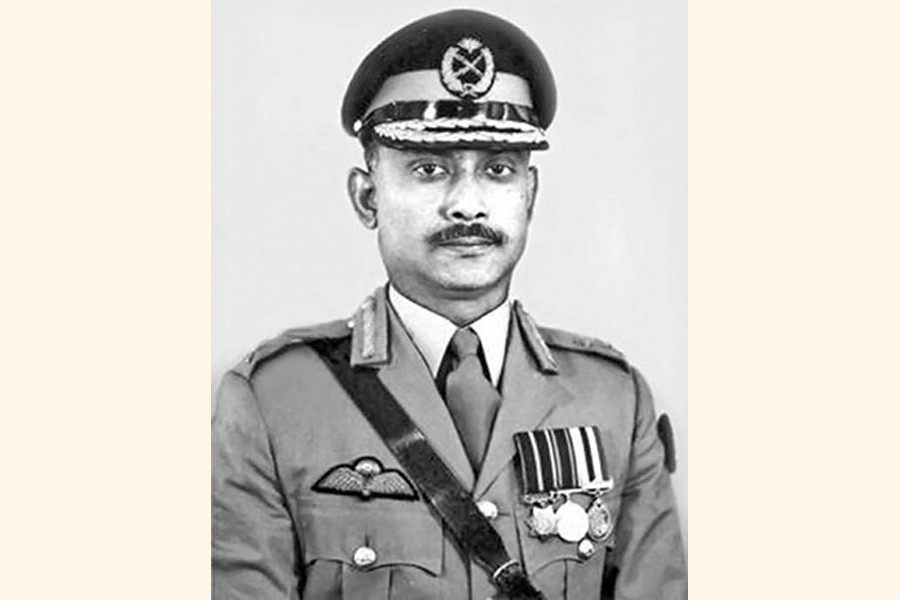
Basically, the process of getting united on the issue started with the declaration of independence by Shaheed Ziaur Rahman on 26 March 1971 - which proved to be the principal inspiration for preparing for the war. There have been numerous attempts to prove untrue the resolve and pledge of Shaheed Zia. But 26 March was my birthday. My children and sons-in-law were assembled at my residence in Chattogram on that day. The famous artist Rashid Chowdhury was present with his wife and two daughters. Renowned artist Debdas Chakrabarty was also present with his wife. On that day, Zia's voice could be clearly heard over the radio. It was he, who first informed that we were fighting for an independent Bangladesh, and we would continue to fight until Bangladesh got liberated.
Thus, the liberation war had started at the call of Shaheed Zia. He left the Pakistan army and established himself as a resolute hero of our independence. There have been many attempts, which continue even now, to belittle Ziaur Rahman in different ways. It is even claimed that Ziaur Rahman was not the proclaimer of independence; a party has also supplied some other unfamiliar names. But time has proved that Ziaur Rahman was morally strong; he could always uphold his ideologies and was forever committed to independence. It can be claimed without any doubt that our liberation war would have turned into chaos if there were no Ziaur Rahman. He brought with him courage, firmness of resolve, vision and determination - all of which inspired us greatly. When we were all perturbed and many people were fleeing the country to escape the onslaught of the enemy, at that very moment it was Ziaur Rahman who brought home the hope of a new life to the people. Whatever distortions our history may be subjected to, whatever attempts may have been made to prove untrue the courage and determination of Ziaur Rahman through imaginary tales, the truth remains known to all that when the leaders and workers of a political party were fleeing the country or were giving themselves up to the Pakistanis on their own, then it was only Ziaur Rahman who held aloft our longing for freedom and took the country gradually to the path of independence struggle.
Sixteenth December is the day of our freedom. We were once the inhabitants of a land many years ago, when the ideologies of the state were: equality of all, readiness to discharge responsibility, and humbleness. Now, we have to safeguard the freedom which has come our way, through truthfulness, resolve, will-power and a determination that combines all free impulses. What is needed today most is to establish truth through neutrality and objectivity, self-reliant economic growth, individual honesty, and punctuality in everything we do.
Many days have elapsed in the meantime. Today, we have got a unique country within a specific boundary. Like other countries of the world, that boundary has given shape to our national identity. Just as other nations of the globe found their national identity within the confines of their geographic boundaries, we also shall flourish our national ethos inside our very own geographic landscape.
The writer was a national professor and leading poet cum litterateur of Bangladesh. He had served in the cabinet of Shaheed President Ziaur Rahman. [The piece is translated from Bangla to English by Dr Helal Uddin Ahmed, a retired Additional Secretary and former Editor of Bangladesh Quarterly. hahmed1960@gmail.com]