
'BSRM fuels development' in Bangladesh
Tuesday, 30 September 2025
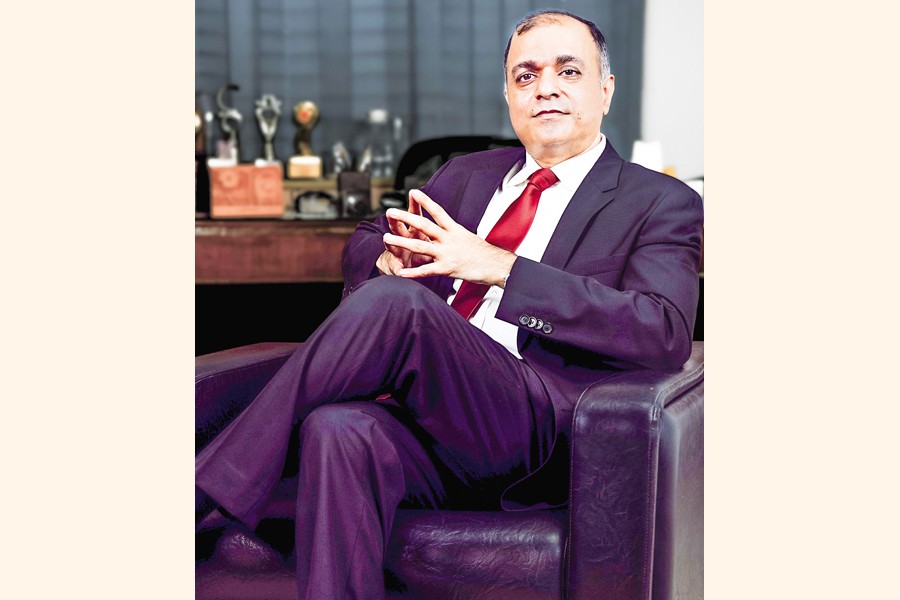
FE: Could you please give an introduction to your company?
Aameir Alihussain: BSRM started its journey in 1952 thru the hands of Late Akberali Africawala and Late Taherali Africawala, the rise of the first 12” steel hand-rolling mill. Later, Mr Alihussain Akberali FCA, the Guru of Steel, with over five decades of leadership took manufacturing process from semi-automation to automated process and introduced graded steel and innovative construction solutions. Today BSRM holds a market share of more than 25 per cent, leading the industry, present all over the country and opting to ensure quality in all aspects. BSRM today has a wide range of products – billets, rebars, square bars, angles, wires, electrodes, fences etc. all complying the national and international standards. BSRM believes in ensuring safety for the people. It is not only about selling quality products, it is about looking into the community. The group has more than 60 projects in various sectors that create an impact in the life of people all over the country. Directly and indirectly the group brings smile to around one lakh through its voluntary services. The group is guided by strong corporate governance, dedicated employees and sustainable development goals.
BSRM doesn’t only meet the demand, it fuels the development. From individual home builders to infrastructure development of the country, BSRM is serving. BSRM saga is about resilience, strength and innovation.
FE: How do you evaluate your company’s contribution to Bangladesh’s construction and infrastructure sector? Could you mention a few megaprojects of the country which your brand was involved with?
Aameir Alihussain: BSRM doesn’t just meet the demand – it also supports the development of the country. For more than seven decades, it has been contributing in fulfilling the needs of various large infrastructure projects. We are proud to say that, BSRM manufacturing process has the capabilities to meet the needs of national and international contractors’ requirements in terms of standards, sizes and quantity. So far we have been able to comply with ten global standards and we are also capable of complying further if required. We also have proven earlier, for Padma Bridge by manufacturing 50mm dia rebar, when no one else could do it. We are the first manufacturer to introduce Customised Service Centre that provides fabricated rebars as per the need of the design. Major national landmarks, including the Padma Bridge, Padma Bridge Rail Link Project, Rooppur Nuclear Power Plant, Dhaka Elevated Expressway, Chattogram Elevated Expressway, Karnaphuli Tunnel, Dhaka Metro Rail, Zillur Rahman Flyover, Mayor Hanif Flyover, Shah Amanat Bridge and many more have used BSRM steel significantly.
FE: What is your current production capacity and market share? Do you have Are there any plans for expansion or upgrading facilities?
Aameir Alihussain: BSRM currently has an annual production capacity of 2.4 million metric tons and holds over 25 per cent of Bangladesh’s steel market share. BSRM is expanding its innovation in BEZA, Mirrsaharai.
FE: What technologies and quality assurance practices do you employ to meet international and national standards?
Aameir Alihussain: BSRM is about advancement in technologies, activities and deliverables that will ensure sustainable quality and practices. Over the years we have initiated: (a) European steelmaking technology in its factories, combining modern automated mills with advanced equipment to ensure precision and consistency. (b) Maintaining certified Quality Management System under ISO 9001:2015, ensuring processes meet both customer expectations and regulatory requirements. (c) The only manufacturer to conduct Fatigue Test of its rebars on regular basis. (d) In its laboratories, BSRM carries out rigorous chemical and mechanical testing of every production batch. (e) The company’s Quality & Health, Safety, Environment (HSE) policy underpins its operations, ensuring that quality assurance is integrated with safe working conditions and environmental protection. (f) Implementing air pollution control and water recycling systems to minimise environmental impact and promote sustainability. (g) Solar power installations at our factory sheds help reduce energy consumption and support our commitment to renewable energy. (h)To ensure the practices, we have introduced TPM (Total Productive Maintenance) initiative, where safety, health, and environment are integral components. TPM helps our employees organize their workspace better and identify potential breakdowns before they occur.
FE: Substandard rebars are often a concern in Bangladesh. How does your company ensure authenticity and build trust among buyers?
Aameir Alihussain: BSRM ensures high-quality steel by strictly following national and international codes. Every batch undergoes rigorous chemical and mechanical testing in our advanced laboratories to guarantee strength, ductility, and consistency. This commitment to quality and precision has built lasting trust among customers and it is our promise ensure sustainable quality. To ensure high quality products we ensure importing scraps authenticated global sources.
FE: What steps has your company taken toward energy efficiency, reducing emissions, or adopting sustainable steelmaking practices?
Aameir Alihussain: BSRM has a longstanding institutional culture where we actively encourage invest in and strive to implement environmentally friendly practices. As a group we devote our time, effort and mindset to develop such practices.
Our environmental policy aligns with national laws as well as the UN’s SDGs. At our production centres we have installed modern air pollution control systems and invested in state-of-the-art water treatment plants. The facilities treat used water for reuse, thereby reducing water wastage.
We emphasis on waste management generated from our production processes. Instead of dumping or landfilling the waste, we invest in ways to reuse and recycle the waste. Our dedicated waste management processing plant, is a pioneering initiative in the industry. We are close to zero wastage.
We are also implementing rooftop solar installations as part of our strategy to mitigate carbon emissions. We already have two rooftop solar systems in place, and more projects are in the pipeline. This initiative will continue to reduce our carbon footprint. With solar energy, our electricity consumption from the national grid will decrease and benefiting the country.
We also regularly conduct environmental risk assessments and take measures to mitigate any potential hazards. This is a continuous process for us.
BSRM is among the lowest consumers of electricity, gas, and water – not just in Bangladesh but even when compared to internationally recognised companies operating at high standards. We maintain minimal consumption through smart technology choices and an operational culture that emphasises efficiency. That’s how we manage to produce every tonne of steel with very low utility consumption.
From our air pollution control system, we collect dust particles. From the dust particles we recover zinc through our system. We export the particles which is processed abroad to extract and produce zinc.
FE: How do fluctuations in global price trend affect your business, and how do you manage those risks?
Aameir Alihussain: Global price of commodity especially steel raw materials is inevitable. Moreover, container freight and oil price fluctuation have great impact on price of raw materials. Sometimes it is very hard to adjust domestic finished price in line with raw materials price due to sluggish demand.
FE: What challenges do you face in transporting and distributing iron rods across the country, and how do you overcome them?
Aameir Alihussain: We are not facing any major challenge regarding transportation. Only constraint is unavailability of berthing facility at Chittagong Port that creates huge challenge to unload raw materials on time.
FE: Where do you see Bangladesh’s steel and iron rod industry in the next decade, and how is your company preparing for that future?
Aameir Alihussain: We have very strong network with renowned scrap yards across the world with which we have very warm and trust worthy relationship despite change in price time to time. Since we remain in this business for last 74 years and we want to remain in this business in future, we always prefer long term and sustainable business relationship with them to maintain our supply chain.