
OPINION
Dengue in coastal districts
Syed Fattahul Alim | Tuesday, 21 July 2026
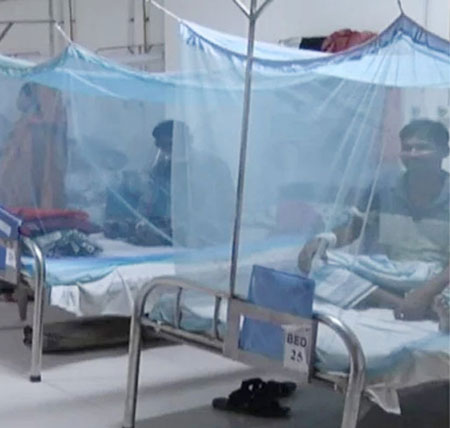
The heavy monsoon rains since early July that caused flash floods and paralysed life in some southeastern and coastal districts are not the entire story of sufferings that the public will have to endure. That is because the monsoon rains also provide the Aedes aegypti, the dengue vector, an ideal environment to breed and proliferate. Meanwhile, concerning reports are coming. Data from the Directorate General of Health Services (DGHS) show a cumulative total of 10,485 cases and 34 dengue-related deaths indicating an earlier and more intense surge this time than previous years. While the big cities like Dhaka and Chattogram still remain the major historical epicentres of dengue, the virus has widely dispersed across the country, with cases detected in 58 out of 64 districts. But the worst part of the story is that the coastal districts including Khulna, Barishal and Chattogram, where the level of salinity in water is high, have become the new breeding grounds of the dengue vector. How? Can the Aedes mosquitoes survive in salty water?
 No, they are yet to evolve into that phase. But they have found there new sources of stored fresh water as breeding ground. It is the rainwater that the coastal people harvest and store in concrete reservoirs, plastic drums and various kinds of plastic and earthen containers for drinking, cooking and meeting other needs including farming that require fresh water. As climate change-triggered sea-level rise has caused salinity to make deep inroads into the coastal districts depriving their resident of freshwater sources, they are now heavily dependent on stored rainwater as the only source of potable water. But since the village people store rainwater in whatever kind of containers they can manage, the female Aedes mosquitoes find there an opportunity to breed. Uncovered or loosely fitted drums and pots allow mosquitoes to easily enter, lay eggs, and allow larvae to mature rapidly. Because dry seasons or periods of saline intrusion require communities to preserve water, these containers hold water for extended periods. When left unsealed, they become continuous incubators for mosquito proliferation. Small wonder that dengue has aggressively spread into rural coastal districts in recent years.
Health authorities report that a significant majority of national dengue cases and hospitalization that take place during the monsoon season now originate from these coastal divisions. According to the DGHS, of the recorded nationwide hospitalizations and deaths due to dengue this year, more than 90 per cent of the infections, except Dhaka, were reported from the three coastal divisions, namely, Barishal, Chattogram and Khulna. This is undoubtedly a major shift in disease geography. As the reports go, between January and June 18, the three coastal divisions recorded more than 5,500 hospitalizations and 10 deaths, while the other non-coastal districts—Mymensingh, Rajshahi, Rangpur and Sylhet—recorded 833 hospitalizations and six (6) deaths. Though in the past, the Aedes mosquitoes were rarely found in the costal districts, the situation has changed, according to virologists, after 2023’s record dengue outbreak, which was also the most severe and deadliest in history that claimed more than 1700 lives and infected over 321,000 people. Some entomologists believe the vector spread to the coastal regions through human mobility, especially during religious festivals when dengue-carrying patients, larvae-containing water containers travelled to those places. Climate change that triggered the rise in temperatures and humidity has also played its part in making coastal areas highly suitable for Aedes breeding. Now that the Aedes mosquitoes have found their new habitat in the coastal districts, for whatever reasons, the question now is to find ways to combat this menace in coastal Bangladesh. To that end, emphasis should be on increasing awareness of the coastal people so they may keep their rainwater containers properly sealed to combat and control the spread of dengue in their areas.
sfalim.ds@gmail.com