
Govt adopts cluster-based dev planning, says Saki
FE REPORT | Monday, 8 June 2026
The government plans to introduce a cluster-based programme approach, moving away from implementing multiple standalone projects with similar objectives, State Minister for Planning Zonayed Abdur Rahim Saki said on Sunday.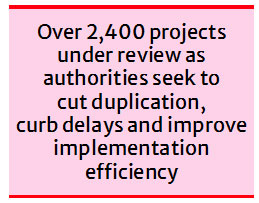 Under the new initiative, complementary projects will be grouped together to ensure more effective and coordinated outcomes, he said.
Projects aligned with the same development goals will also be integrated into broader programmes to minimise duplication and ensure more efficient use of resources.
The state minister made the remarks while speaking to journalists at a briefing held in a conference room adjacent to his office at Sher-e-Bangla Nagar in the capital.
He said the government had launched a far-reaching reform programme to overhaul the way development projects are planned and implemented, aiming to curb chronic delays, cost overruns and wasteful spending through a more coordinated and accountable project management framework.
Education, health, employment generation, social protection, investment and energy security have been identified as top priorities in the country's future development planning, he added.
To support the transition towards an investment-driven economy, the government is also working to reduce unnecessary regulatory complexities and introduce a "single-window" system for investors.
The state minister said more than 2,400 ongoing and proposed development projects are currently under review and are being reorganised in line with government priorities, electoral commitments and actual development needs.
Expressing concern over the slow pace of project implementation, he said that extending project completion periods inevitably increases costs and, in many cases, leads to the wastage of public resources.
To identify the causes of repeated delays and cost overruns, the government has assigned the Implementation Monitoring and Evaluation Division (IMED) to investigate such cases, he said.
Projects that have already achieved 60 to 70 per cent physical progress are being reviewed on a priority basis, while the scope of many projects is also being revised and restructured where necessary.
The state minister further noted that many projects in the past had been undertaken without adequate planning, while successive five-year plans often failed to function as effective policy instruments.
To address these shortcomings, the government is preparing a realistic and actionable strategy paper, which is expected to be made public by 1 July.
He said the document would serve as a "living instrument", allowing for regular revisions and updates in response to changing realities.
Referring to project directors (PDs), the state minister said implementation bottlenecks frequently arise when officials are assigned multiple projects or additional responsibilities simultaneously.
To address this issue, the government has taken steps to establish a dedicated "PD pool" and plans to appoint full-time project directors from the project formulation stage to ensure continuity, accountability and more effective implementation.
On statistics and data management, Saki said the government is committed to ensuring that official data are not manipulated or influenced by political considerations.
He said initiatives have been taken to transform the Bangladesh Bureau of Statistics (BBS) into a more independent, science-based and technology-driven institution, alongside efforts to introduce real-time data collection, greater automation and forensic reviews of past statistical data.
jahid.rn@gmail.com