
Land scarcity makes housing property costlier
Jasim Uddin | Tuesday, 30 September 2025
Dhaka's skyline tells a powerful story of ambition and urban growth. Arrays of high-rises stretch across the horizon-some with gleaming glass facades, others with simple brick-and-cement finishes. Inside these towers are millions of lives, dreams, and struggles. These structures are not merely concrete and steel--they represent the aspirations of people seeking a secure home.
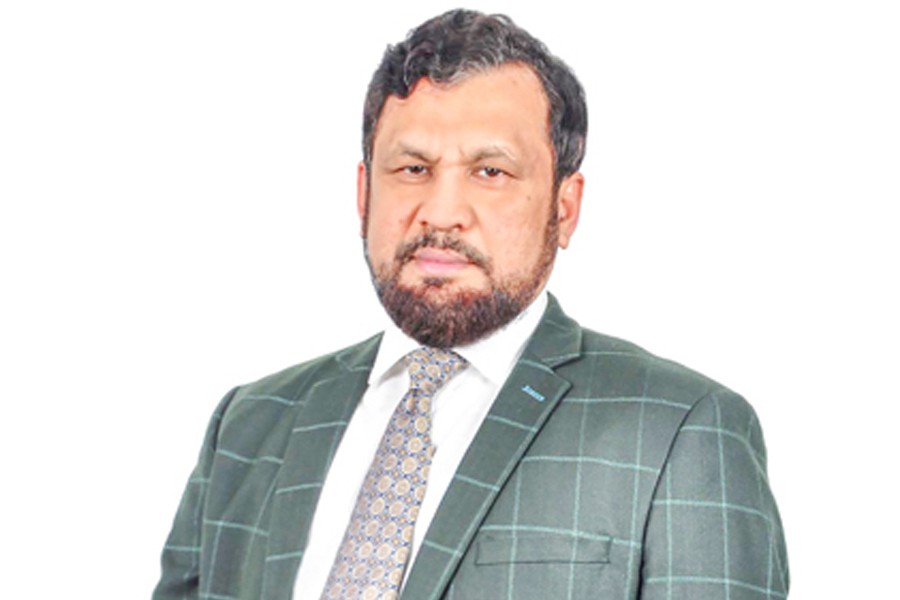
Bangladesh's housing sector has evolved remarkably over the past four decades, growing from modest beginnings into one of the country's most dynamic and vital industries. According to Md Wahiduzzaman, President of the Real Estate and Housing Association of Bangladesh (REHAB), the industry's roots trace back to the 1980s when Dhaka's population began to surge, and individual land plots became increasingly scarce.
"At that time, a handful of developers introduced the concept of multi-storey-apartment living," Wahiduzzaman recalls in an exclusive interview with The Financial Express. "Initially, people were hesitant, but over time they realised that apartment housing not only saved land but also offered security and a modern lifestyle."
Today, nearly 900 companies operate under REHAB's umbrella, making real estate a central part of Bangladesh's urban development. The sector is no longer about just constructing buildings, it plays a pivotal role in shaping entire communities and influencing the way cities grow.
The housing-and real-estate sector now stands as a major contributor to the national economy, accounting for around 15 per cent of the country's gross domestic product or GDP. Nearly five million people are directly employed in this industry, while an additional 270 linked sectors-including cement, steel, timber, tiles, and sanitaryware-depend heavily on its growth.
"Behind every building are countless workers and skilled craftsmen whose livelihoods are tied to this sector," the sector leader goes on telling the human tales and toils shaping up dream homes of the townsmen. "It is a vast economic ecosystem that sustains millions of families and fuels industrial growth."
For Bangladesh's expanding middle class, homeownership remains a defining goal. Purchasing an apartment symbolises not only a place to live in but also security, dignity, and stability. Many families spend their entire life savings-and often take out high-interest bank loans-to make this dream come reality.
Despite its significance, the housing sector is left to faces serious challenges. Dhaka's limited land supply has caused property prices to skyrocket, making it increasingly difficult for developers to secure plots and for buyers to afford homes.
Obtaining project approvals poses another set of major hassles. The Rajdhani Unnayan Kartripakkha (Rajuk) and city corporations often require lengthy, bureaucratic processes for construction permits. These delays, Zaman notes, sometimes drive developers toward unauthorised construction to keep projects moving.
The Detailed Area Plan (DAP), intended to guide sustainable urban growth, has introduced strict rules on building heights and land usage. While well-intentioned, these rigid regulations have slowed project implementation and, in some cases, created incentives for irregular practices.
Financing remains a pressing issue. Housing loans are expensive and inaccessible for much of the population, as interest rates remain far beyond the reach of middle- and lower-income families.
Even though strong laws exist, weak enforcement has allowed dishonest developers to exploit loopholes, undermining trust in the sector and harming consumers.
The association chief shares insights into the sector's current state, the impact of Rajuk's Detailed Area Plan, rising construction costs, and the pressing need for policy reforms to revitalise growth.
He reveals that sales of flats and plots have dropped by almost 40 per cent, while new investments have slowed dramatically. "Complications surrounding DAP, a sharp rise in construction-material prices, and high interest rates on loans have deepened the crisis facing the sector."
The implementation of DAP has emerged as a major challenge for developers and prospective homeowners. Wahiduzzaman explains that the process of obtaining construction approvals has become lengthy and complex, with additional constraints on building heights and stricter land-use rules.
"These rigid policies are making it difficult for projects to move forward smoothly," he notes. "The end result is that middle-class families are finding it increasingly difficult to afford or access housing."
He acknowledges that the government has taken positive steps, including reducing capital-gains tax in the 2025-26 budget. However, he notes with concern that the benefits are not reaching developers or buyers as intended.
"The tax has been fixed according to specific areas," he says. "In some locations, the tax burden has actually gone up, which is discouraging buyers instead of encouraging them."
He has also raised alarm over the proposal to impose an additional tax on undeclared income, warning that it could undermine investor confidence.
"This creates uncertainty for investors, preventing new capital from entering the market and causing further contraction of the sector," he explains.
The housing sector directly supports around four million jobs, making it one of the country's most significant sources of employment.
With new projects on hold, Wahiduzzaman warns, there could be a potential ripple effect on the economy. "The slowdown is already threatening livelihoods," he says. "If this persists, it will not only lead to widespread job losses but also negatively affect Bangladesh's overall economic growth."
REHAB is working closely with the government and relevant authorities to push for a practical revision of DAP.
"We are actively encouraging our members to consider housing projects outside Dhaka. Decentralising development through satellite towns and suburban housing will reduce the pressure on Dhaka while making homes more affordable and accessible," he suggests.
Wahiduzzaman has emphasised that the housing challenge is not only about constructing apartments but also about creating complete, livable communities.
Currently, around 70 per cent of Dhaka's residents live in rented housing. Those who manage to purchase apartments often face a new set of problems, including water shortages, poor drainage, and inadequate waste management.
"Many housing projects lack basic facilities such as roads, schools, hospitals, and playgrounds," he says. "Without these, a housing project is just a cluster of buildings, not a community."
Recognising the sector's importance, the government has identified housing as a priority industry and launched several initiatives to promote affordable housing.
However, despite these initiatives, demand for affordable housing-particularly for middle- and lower-income groups-remains far from satisfied.
Wahiduzzaman sees tremendous untapped potential for the sector, particularly through decentralisation and sustainable development.
"Developing satellite townships outside Dhaka could ease the unbearable pressure on the capital while promoting more balanced urbanisation," he suggests.
The future lies in green and energy-efficient housing, featuring sustainable designs like solar-energy systems, rainwater harvesting, and eco-friendly construction materials. Non-resident Bangladeshi investments could also provide a significant boost, injecting much-needed capital into the sector.
Affordable financing will be crucial. "If banks can provide long-term housing loans at single-digit interest rates, middle-class families will become sector's largest customer base," Wahiduzzaman says. "This will have a multiplier effect on the broader economy."
Dhaka has undergone a dramatic transformation over the decades. Once a city of tin-roofed houses and narrow lanes, it is now rapidly becoming a modern concrete metropolis.
Major infrastructure projects-such as the metro rail, elevated expressways, and new flyovers-are reshaping the city's housing market. Future housing developments will increasingly depend on connectivity and accessibility, influencing wherein people live and invest.
Wahiduzzaman stresses that government intervention will be critical to reviving the housing sector.
REHAB also plans to expand initiatives focused on regional housing solutions, ensuring quality living spaces in other parts of the country and driving balanced urban growth.
"With these measures, the government can restore stability to the sector and reignite investor confidence," Wahiduzzaman states.
Highlighting the sector's role in national development, he emphasises that housing is more than just bricks and mortar. "The housing sector is a key driver of Bangladesh's economy," he reminds. "It supports millions of jobs and sustains hundreds of related industries, from cement and steel to tiles and sanitaryware."
He concludes on a note of optimism that, through collaboration between the government and the REHAB, the sector's challenges can be overcome.
"With realistic policies and proper planning, affordable housing for middle-class families can become a reality, ensuring sustainable urbanisation and a stronger economy for Bangladesh's future," Wahiduzzaman adds.
"Our vision is to build a Dhaka where skyscrapers are not just symbols of height, but symbols of people's hopes and aspirations."
While the potential is vast, Wahiduzzaman warns that sustainable growth depends on three key factors: (1)Transparency in transactions and project execution.
(2)Effective urban planning to balance growth with environmental sustainability.
\(3) Strict enforcement against unauthorised construction and unethical practices.
"If we move forward with proper planning and accountability, the housing sector will not only shape our cities but also fulfil the dreams of millions," the sector leader hopes.
He notes as Bangladesh continues its journey toward becoming a middle-income country, the housing sector stands at a critical crossroads. Its ability to expand sustainably and inclusively will determine not just the look of the nation's skylines but also the quality of life for generations to come.
newsmanjasi@gmail.com