
Lesson from China: transitioning from selling labour to ideas
M Rokonuzzaman | Monday, 6 July 2026
A country like Bangladesh can benefit from China in many ways—through defence cooperation, geopolitical engagement, long-term project financing, foreign direct investment, and preferential trade agreements. These avenues are widely discussed and actively pursued. However, far more important than leveraging these opportunities is understand and internalise the lessons behind China’s development trajectory.
In the early 1980s, both China and India liberalised their economic policies to integrate with the global value chain. At that time, China’s per capita gross domestic product (GDP)—approximately $270—was slightly lower than India’s. Yet, in a striking reversal, China’s per capita GDP is now nearly five times higher than India’s. Furthermore, there are strong indications that China is on a path to transcend the middle-income trap and move toward high-income status.
This transformation raises a critical question: what lessons should Bangladesh and other developing countries draw from China’s remarkable ascent?
During the early 1980s, Western companies began outsourcing information technology (IT) service jobs to India’s English-speaking graduates. In contrast, due to language barriers, China concentrated on blue-collar, labour-intensive assembly and manufacturing. Similarly, Bangladesh found its entry point in the global value chain through cutting, stitching, and finishing services for international apparel brands.
Because value addition in IT services was significantly higher than in manufacturing, there was widespread speculation in the 1990s that India would gain far greater economic benefits from global integration than China. Influenced by this perception, Bangladesh sought to replicate India’s path to prosperity through knowledge-based IT service exports. Consequently, the country invested heavily in tertiary education, internet connectivity, and the development of high-tech parks—largely without achieving the expected outcomes.
Contrary to earlier speculation, and to the surprise of many, China has achieved far greater economic prosperity than India, Bangladesh, and numerous other developing countries. Moreover, having moved beyond the middle-income trap, it is now on a path towards becoming a high-income economy. This reality raises a fundamental question: why? To discover underlying facts, let’s look into a few examples.
To support its export-oriented manufacturing economy, China needed to upgrade its physical infrastructure. However, unlike Bangladesh and many other developing countries, China did not rely heavily on external borrowing or on awarding contracts to foreign firms for turnkey delivery. Instead, it focused on building national capacity—empowering its own engineers and firms to design and construct world-class infrastructure. The development of the world’s largest high-speed rail network, for example, offers a powerful lesson from China’s approach.
In 1978, Chinese leader Deng Xiaoping was deeply impressed by Japan’s Shinkansen—the world’s first high-speed rail system. This inspired China’s “high-speed rail dream.” However, unlike many developing countries, China did not rely solely on foreign contractors. Instead, it launched domestic programmes to design and build its own system. Although early attempts by Chinese engineers failed, these failures built a strong foundation for learning, experimentation, and capability development. China strategically awarded limited contracts to foreign firms for small segments, ensuring that its engineers were deeply involved in understanding the technology, why they had failed, and how to improve. As a result, China eventually developed its own high-speed rail systems with comparable or superior performance. Today, it has built over 50,000 km of high-speed rail and competes globally with Japan’s Shinkansen.
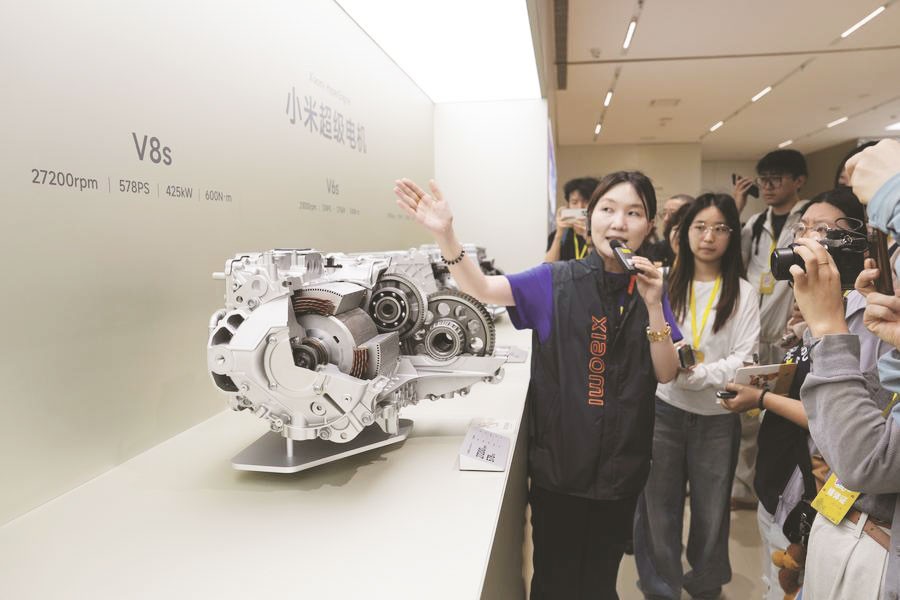
At one time, many analysts predicted that China’s growth would stall due to an aging workforce. Yet China proved them wrong. Instead of remaining dependent on low-cost labour, it moved up the value chain by leveraging ideas. While countries like Bangladesh continue to seek low-wage labour opportunities, China has long transitioned beyond them. As opposed to competing on factory floor wages, China focused on how-grown automation making labour advantage increasingly irrelevant, while creating high-paying R&D jobs for robotics and automation. Let’s examine China’s journey in the automobile sector. By 2008, China had emerged as the world’s largest automobile assembler and manufacturer, as Western companies increasingly adopted the “Made in China” label to capitalise on low-cost labour advantages. However, China did not remain confined to labour-based value addition. Instead, it deliberately pivoted towards idea-driven value creation. By strategically positioning itself across the emerging electric vehicle value chain—from mining and processing rare earth materials to advancing battery technologies and vehicle innovation—China has opened a new pathway for value addition. This shift towards idea-based capabilities offers far greater depth, resilience, and scale of economic prosperity.
Besides, it focused on advancement of robotics and automation, resulting in deploying half of the global deployment of factory robots in 2024.While countries like Bangladesh continue to pursue low-wage labour opportunities, China has already transitioned beyond them, creating high-paying, innovation-driven jobs. As a result, conventional theories of the industrial economy have been fundamentally reshaped.
Here are the basic lessons from China’s continued rise. Although China entered the global industrial value chain by leveraging low-cost labor—much like Bangladesh—it did not follow the same path as Bangladesh or India. Instead of merely selling labour, China focused on adding and selling ideas, whether through incremental improvements in products and production processes or by reinventing products in ways that rendered existing Western intellectual property bases obsolete.
In contrast, although India gained an early advantage through IT service exports, it has struggled to translate that into broad-based economic prosperity driven by innovation. Likewise, unlike Bangladesh and many other less-developed countries, China did not rely on awarding infrastructure contracts to foreign firms. Instead, it built globally competitive, homegrown capabilities in infrastructure development by systematically strengthening its own firms and engineers.
As a result, there is a stark contrast between the development approaches of China and Bangladesh. It is time for Bangladesh to draw lessons from China’s trajectory—shifting from labour-based value addition to an idea-driven economy, while simultaneously developing globally competitive local firms to lead infrastructure development.
M. Rokonuzzaman, Ph.D is academic, and researcher on technology, innovation and policy. Zaman.rokon.bd@gmail.com