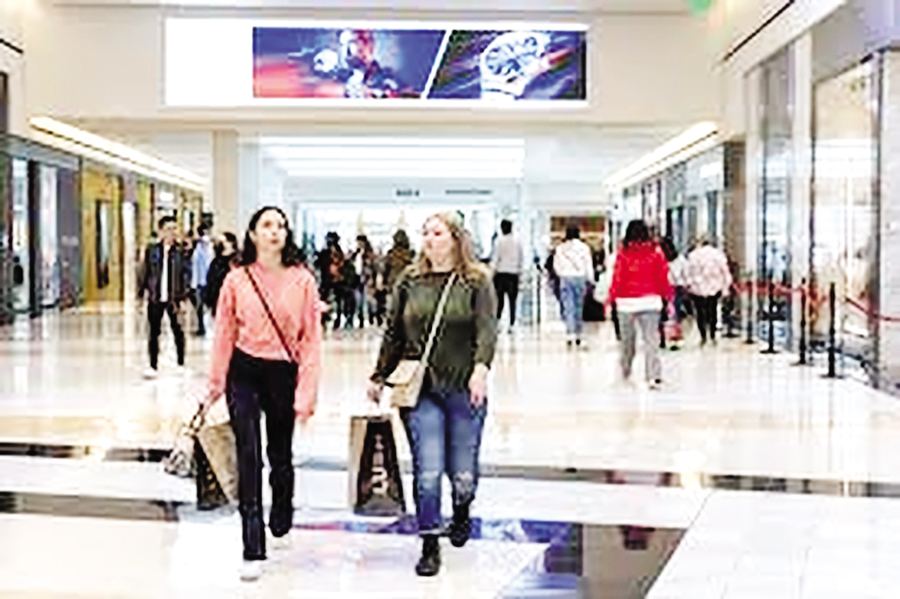
 WASHINGTON, Feb 15 (Reuters): US retail sales dropped by the most in nearly two years in January, likely weighed down by frigid temperatures, wildfires and motor vehicle shortages, suggesting a sharp slowdown in economic growth early in the first quarter.
But the larger-than-expected and across the board decline in retail sales reported by the Commerce Department on Friday probably does not reflect a material shift in consumer spending as it also followed four straight months of hefty increases.
A sharp upward revision to December's sales took some of the sting from the report. Economists also noted that it was difficult to strip out large seasonal swings from the data at the turn of the year, which was also evident in the January consumer inflation report.
They continued to expect the Federal Reserve would not resume cutting interest rates before the second half. Some of the policies of President Donald Trump's administration, like broad tariffs on imports, have cast a shadow over the economy.
"The drop was dramatic, but several mitigating factors show there's no cause for alarm," said Robert Frick, corporate economist at Navy Federal Credit Union.
Retail sales dropped 0.9 per cent last month, the biggest decrease since March 2023, after an upwardly revised 0.7 per cent increase in December, the Commerce Department's Census Bureau said. Economists polled by Reuters had forecast retail sales, which are mostly goods and are not adjusted for inflation, dipping 0.1 per cent. Retail sales increased 4.2 per cent year-on-year in January.
Much of the country was blanketed by snowstorms and freezing temperatures last month while wildfires scorched entire neighborhoods in Los Angeles.
"The wildfires in Los Angeles, the second-largest metro area in the US, and severe winter weather in other parts of the country, may have limited face-to-face shopping activity," said Jay Hawkins, a senior economist at PNC Financial.
Some economists speculated that rising prices and confusion over tariffs could have impacted sales.
Pre-emptive buying in anticipation of tariffs that would raise prices for goods helped to boost retail sales in recent months. But consumer sentiment has deteriorated, with one-year inflation expectations hitting a 15-month high in early February as households perceived that "it may be too late to avoid the negative impact of tariff policy," a University of Michigan survey of consumers showed last week.
"Maybe people are getting confused on the tariff story and think they are happening immediately and are therefore not even considering a purchase," said James Knightley, chief international economist at ING.
"We will need to wait until the February data to see if this is the start of a more cautious consumer trend or indeed whether it was simply a weather-related pull back."
A 25 per cent tariff on Mexican and Canadian goods was delayed until March. An additional 10 per cent levy on goods from China went into effect this month. Trump this week tasked his economics team with devising plans for reciprocal tariffs on every country that taxes US imports.
Stocks on Wall Street were muted on Friday, while the dollar eased against a basket of currencies and US Treasury yields fell.
© 2026 - All Rights with The Financial Express

