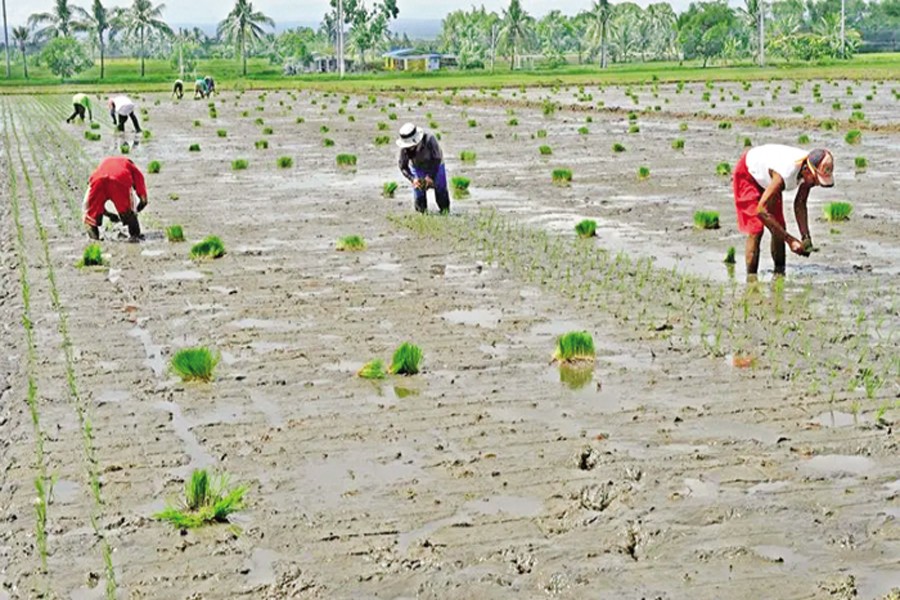
SINGAPORE/BANGKOK, April 30 (Reuters): Rice supply is expected to fall this year as farmers cut planting acreage across Asia because of fertiliser shortages and soaring fuel costs from the Iran war, with an emerging El Nino also set to squeeze output of the world's most consumed staple.
Rice is central to global food security, and even modest supply disruptions can ripple through countries, lifting prices and straining household budgets, particularly among price-sensitive consumers in Asia and Africa. The UN Food and Agriculture Organization in April forecast rice output would expand by 2 per cent to a record high in 2025/26.
The effects of the Iran war are impacting farmers in top exporters Thailand and Vietnam as well as the import-reliant Philippines and Indonesia, growers and traders said. The war has cut fuel and fertiliser flows through the Strait of Hormuz, a key chokepoint that connects the Gulf to global markets.
Southeast Asia's mainly smallholder farmers also face mounting stress as the El Nino weather phenomenon is set to usher in hotter, drier conditions for the region in the second half of the year.
"Farmers have already started planting rice in some countries and are using fewer inputs because prices have gone up," said Maximo Torero, chief economist at the UN FAO. "We are going to see a tighter global supply situation in the second half of the year and early next year."
In 2008, export curbs by key suppliers more than doubled prices to about $1,000 a metric ton , triggering unrest in several countries. More recently, supply tightness in 2022 to 2023, exacerbated by India's export restrictions, lifted prices and prompted panic buying.
SUPPLY-CHAIN DISRUPTION
Rice shipments are already facing supply-chain bottlenecks.
"Logistics have become a nightmare, especially in Asia as there is shortage of polypropylene bags, limited truck availability to move rice to ports and shipping itself has been disrupted," said a Singapore-based trader at a top global rice merchant, who asked to remain unidentified as they are not authorized to speak to media.
While fertiliser shortages and dryness are already curbing yields of smaller crops being harvested in Southeast Asia, the next crop will likely face a bigger reduction.
India, Thailand and the Philippines plant their main crops in June and July, while Vietnam and Indonesia are now sowing their second-season crops.
Most Asian producers grow two or three rice crops a year.
FARMERS CUT PLANTING
Sripai Kaew-Eam, a 60-year-old farmer in Thailand's Chai Nat province about 151 km (94 miles) north of Bangkok, said high fertiliser and fuel prices have pushed production costs to about 6,000 baht ($183.99) per rai (0.4 acre), from around 4,500 to 5,000 baht for the previous crop, while the price she receives for the unhusked rice she harvests is about 6,200 baht per metric ton.
Fertiliser prices have risen to 1,000 to 1,200 baht per bag, from 850 baht, forcing her to cut her use by half.
"Fertiliser prices are high, fuel prices are high," she said.
© 2026 - All Rights with The Financial Express

