The Bangladesh Garment Manufacturers and Exporters Association (BGMEA) and the RMG Sustainability Council (RSC) are at odds over the latter's plan to expand monitoring of labour rights issues in the country's readymade garment (RMG) factories.
On Sunday, the BGMEA issued a circular advising its members not to respond to any RSC requests related to non-OSH (occupational safety and health) complaints.
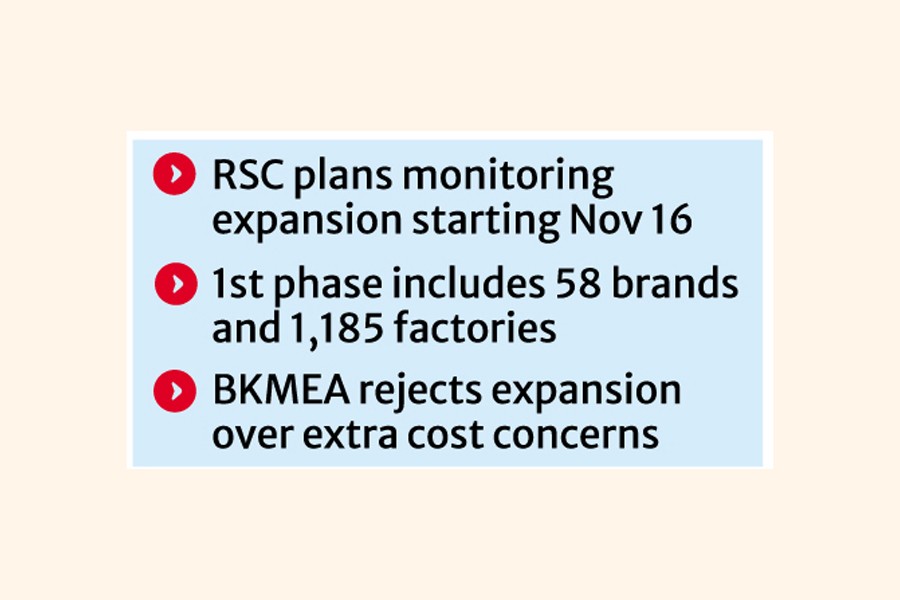
The notice came after the RSC, which took over the functions of the Accord on Fire and Building Safety in 2020, recently informed its listed factories of plans to expand its activities to cover non-OSH issues in two phases from November 16.
In its circular, the BGMEA stated, "We kindly request all member factories not to respond to any communications, letters, or circulars from the RSC related to the non-OSH complaints mechanism."
The trade body said it is reviewing the matter and is in dialogue with the RSC to clarify its position. A final decision will be communicated after the upcoming RSC board meeting, the BGMEA added, urging members not to comply with the non-OSH complaints mechanism for the time being.
The RSC had earlier informed factories that the expanded Comprehensive Complaints Mechanism (CCM) would go beyond OSH issues to cover a wider range of workplace concerns, especially labour rights.
These include unfair employment contracts, separations, wages, benefits, leave, freedom of association and collective bargaining, child labour, forced labour, and other forms of workplace discrimination.
The expansion will be implemented in two phases. The first phase, lasting six months, will cover 58 brands and 1,185 factories, establishing the foundation for full implementation. The remaining brands and factories will be included in the second phase, according to the RSC letter.
Mohammad Hatem, president of the Bangladesh Knitwear Manufacturers and Exporters Association (BKMEA) and a member of the RSC board, told The Financial Express that they did not agree with the expansion.
"RSC's jurisdiction does not cover non-OSH issues, and they will not be allowed to do the same," he said, noting that the proposed expansion would require additional time, manpower, and cost.
"The industry cannot bear the additional cost at a time when buyers' unethical buying practices prevent manufacturers from getting fair product prices," he added.
Industry insiders said the disagreement has been ongoing, with sector representatives on the RSC board opposing the expansion despite support from buyers and trade union representatives.
RSC spokesperson and head of engagement Zobaidur Rahman said the board decided on October 20 to launch the non-OSH complaints mechanism, and letters to factories were issued accordingly.
"RSC has also communicated with brands and trade unions about the phased expansion of non-OSH monitoring," he said, urging the industry not to disregard these communications.
The RSC continues to monitor and carry forward the significant workplace safety achievements in Bangladesh's RMG sector made under the Accord, which was formed after the 2013 Rana Plaza tragedy.
The Accord, a platform of over 220 mainly European brands, buyers, and trade unions, operated for five years to inspect fire, electrical, and structural safety in garment factories.
munni_fe@yahoo.com
© 2026 - All Rights with The Financial Express

