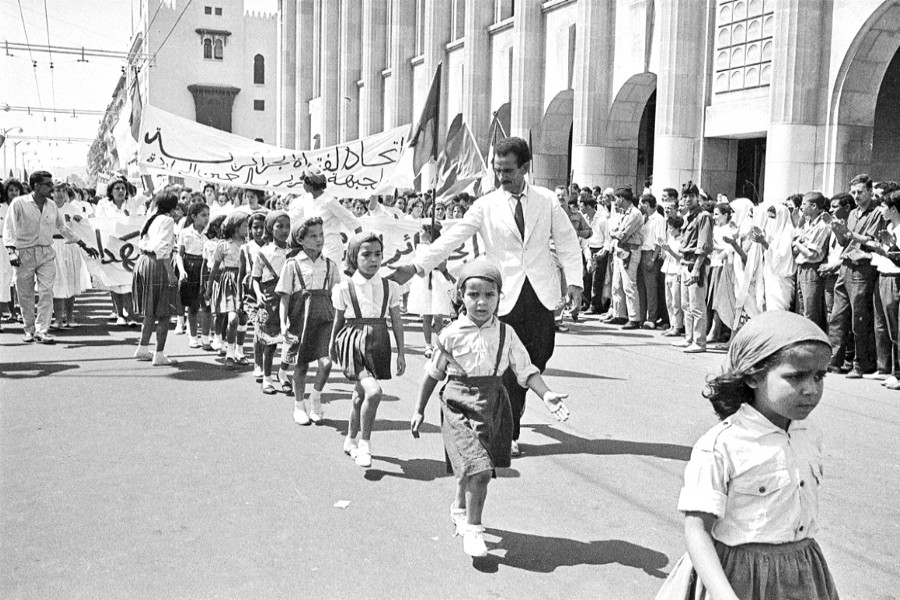
 Children march in a parade during the official independence celebrations in Algiers, Algeria on July 5, 1962 — AP Photo
 Algerian Independence Day, celebrated every year on July 5, is one of the most important national occasions in the history of Algeria. It marks the end of more than 132 years of French colonial rule and the birth of Algeria as a free and sovereign nation. This day is not only a celebration of political independence; it is also a solemn reminder of the courage, sacrifice and determination of the Algerian people. The independence of Algeria was achieved through one of the longest and most remarkable anti-colonial struggles of the twentieth century. It remains a powerful symbol of freedom, national dignity and the right of every citizen to determine their future.
The French occupation of Algeria began in 1830 and gradually developed into a harsh colonial system. Algeria was not treated merely as a colony, but as an extension of France itself. The land, resources, institutions and political life of the Algerian people were placed under foreign domination. Large areas of fertile land were taken from Algerians, while social and economic privileges were given to European settlers. The indigenous Algerian population suffered political exclusion, economic hardship, cultural suppression and social discrimination. Their identity, language, religion and traditions were placed under continuous pressure. Yet, despite these difficult conditions, the Algerian people preserved their sense of belonging, their national consciousness and their hope for freedom.
The struggle for Algerian independence did not begin suddenly. Throughout the colonial period, Algerians resisted foreign rule in different forms. Early resistance leaders, scholars, tribal leaders, intellectuals and political activists played important roles in keeping the spirit of national liberation alive. Over time, resistance became more organised and politically mature. Algerians understood that freedom could not be granted by the colonial power; it had to be achieved through unity, sacrifice and national struggle. This awareness reached a decisive stage on November 1, 1954, when the Algerian Revolution began under the leadership of the National Liberation Front, known as the FLN.
The outbreak of the Algerian Revolution on November 1, 1954 changed the course of Algerian history. It transformed scattered resistance into a national liberation movement with clear political objectives. The revolution called for the restoration of Algerian sovereignty, the end of colonial domination and the creation of an independent Algerian state. It united people from different regions, classes and backgrounds under one national cause. Men and women, workers and farmers, students and intellectuals, villagers and urban citizens all contributed to the liberation struggle. This unity became one of the strongest foundations of the Algerian Revolution.
The Algerian War of Independence was extremely difficult and painful. The colonial authorities responded to the revolution with severe military force, repression and violence. Villages were destroyed, families were displaced, activists were arrested, and many civilians suffered deeply. Yet the determination of the Algerian people did not weaken. The freedom fighters continued their struggle in the mountains, cities, villages and diplomatic arenas. Their courage demonstrated that military power alone could not defeat a people determined to reclaim their homeland. The revolution became a moral and political challenge to colonialism itself.
One of the most remarkable aspects of the Algerian struggle was the role of ordinary people. Independence was not achieved only by political leaders or armed fighters. It was achieved by the collective sacrifice of the nation. Women carried messages, treated the wounded, supported families and took part in resistance activities. Students raised awareness and joined the national cause. Workers, peasants and local communities provided shelter, food and support to freedom fighters. Many families lost their loved ones, yet they continued to support the struggle. This collective participation gave the revolution its strength and legitimacy.
The martyrs of Algeria hold a sacred place in the nation’s memory. Millions of Algerians suffered during the long years of colonialism and the war of liberation. Those who gave their lives for freedom are remembered not only as victims of history, but as builders of the nation. Their sacrifice gave future generations the right to live under their own flag, speak with their own voice and shape their own destiny. Independence Day is therefore a day of pride, but also a day of remembrance.
Algeria’s independence was officially achieved on July 5, 1962, following the Evian Accords and the overwhelming support of the Algerian people for independence through a referendum. The date itself carries deep historical meaning, as it came exactly 132 years after the French occupation began in July 1830. The raising of the Algerian flag marked the return of sovereignty to the Algerian people. It was a moment of national rebirth after generations of colonial domination. For Algeria, independence meant the recovery of land, identity, dignity and political freedom.
The significance of Algerian independence extended far beyond Algeria’s borders. The victory of the Algerian Revolution inspired many oppressed peoples across Africa, Asia, the Arab world and Latin America. It proved that colonialism, despite its military and political power, could not permanently suppress the will of a united people. Algeria became a symbol of anti-colonial resistance and a source of encouragement for other liberation movements. Its independence strengthened the global movement for decolonisation and contributed to the decline of colonial rule in many parts of the world.
After independence, Algeria also played an important role in supporting liberation struggles and defending the principles of sovereignty and self-determination. The country became known for its strong commitment to anti-colonial causes and its support for oppressed peoples. Algeria’s foreign policy was shaped by its own historical experience. Having suffered under colonial rule, Algeria understood the value of independence and the importance of international solidarity. This legacy continues to define Algeria’s identity as a nation that values freedom, justice and dignity.
Algerian Independence Day is also a celebration of national identity and cultural pride. Colonialism attempted to weaken the identity of the Algerian people, but it failed to erase their language, faith, traditions and historical memory. Independence restored the right of Algerians to express their culture freely and build their future according to their own values. The celebration of July 5, therefore, reflects not only political liberation, but also cultural survival. It honors the strength of a people who refused to lose their identity even under long foreign domination.
Today, as Algeria celebrates its Independence Day, it reminds the nation of the importance of unity, resilience and responsibility. Freedom is not only a historical achievement; it is a continuous duty. Each generation has the responsibility to protect national sovereignty, preserve historical memory and contribute to the progress of the country. Independence Day calls on citizens to honor the past while working for a stronger and more prosperous future.
For younger generations, Algerian Independence Day carries an important lesson. It teaches that dignity, justice and freedom require courage and sacrifice. It also teaches that national unity is essential in facing great challenges. The story of Algeria’s liberation shows that even the most powerful colonial system can be defeated when a people remain united in their demand for freedom. This lesson continues to inspire not only Algerians, but all nations that value independence and self-determination.
In conclusion, Algerian Independence Day is far more than a national holiday. It is a living symbol of courage, sacrifice and national dignity. It honors the martyrs, freedom fighters and ordinary citizens who gave everything for the liberation of their homeland. It celebrates the victory of a people who endured more than a century of colonial rule but never abandoned their dream of freedom. The independence of Algeria in 1962 remains one of the most powerful achievements in modern anti-colonial history. It stands as a proud reminder that freedom is earned through resilience, unity and unwavering faith in national sovereignty. On July 5, Algeria does not only remember its past; it renews its commitment to the values of freedom, justice and self-determination that shaped its national destiny.
Md Nazmul Hassan, director, International Institute of Global Studies, (IIGS)
© 2026 - All Rights with The Financial Express

