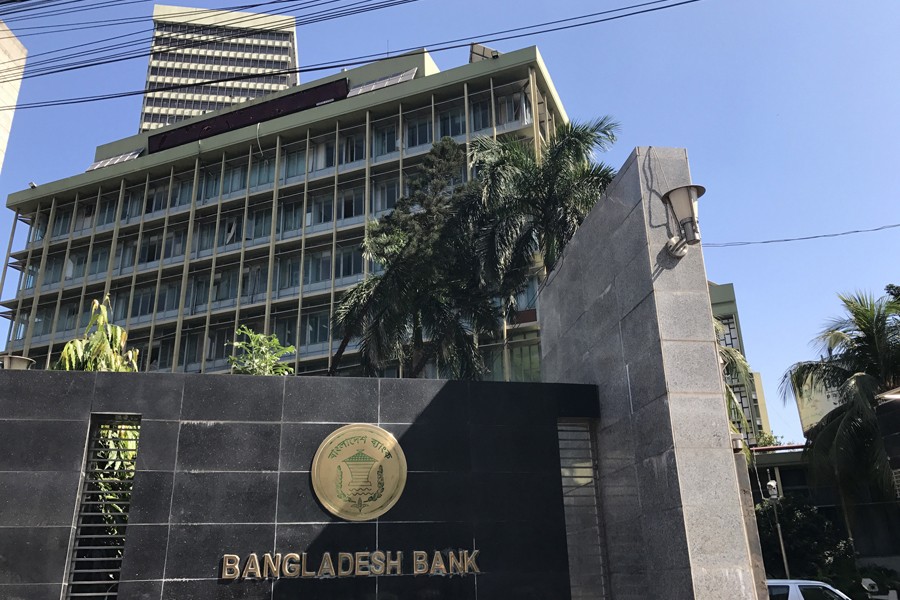
Bangladesh today stands at a monetary and financial crossroads. The country is grappling with persistent inflation, exchange rate volatility, dwindling reserves, and external debt obligations that feel heavy in a fragile global economy. At the centre of these challenges is the Bangladesh Bank (BB), the nation’s central bank. Yet for much of its history, BB has not functioned as a truly independent monetary authority. Its senior executives often acted as bureaucratic caretakers, following inherited routines rather than innovating to meet new realities.
That culture of habit over analysis has had lasting consequences: weak exchange rate management, politicised interest rate policies, and delayed responses to inflation. The central question now is whether this moment—under a governor with international experience and academic grounding—will mark a break with the past or whether institutional inertia will drag the bank back into “policy by repetition.”
Policy by Repetition - A Historical Pattern: Senior executives at BB have too often approached monetary policy as clerical work rather than as an intellectual challenge. Without rigorous training in macroeconomics and monetary theory, they relied on “ditto marks” from history—repeating yesterday’s playbook regardless of global changes.
When inflation surged, tightening came belatedly, often under political pressure. When reserves slipped, administrative controls replaced market-based adjustments. Exchange rates were managed politically, not economically.
The result was an institution more reactive than proactive, more comfortable with inertia than innovation.
Independence and Expertise - The Constitutional Mandate: On paper, Bangladesh Bank is independent. The Constitution and the Bangladesh Bank Order of 1972 envision a central bank shielded from political interference, empowered to design policies for long-term stability.
But independence in law is meaningless without independence in practice—and that requires expertise. Running a central bank is not about rubber-stamping decisions; it is about interpreting data—money supply, credit growth, capital flows, inflation expectations—and translating them into coherent policies.
Countries that value independence ensure their central banks are staffed with highly trained economists. The Federal Reserve, the European Central Bank (ECB), and Reserve Bank of India (RBI) are research-driven institutions with teams of experts capable of complex forecasting and forward guidance.
Bangladesh Bank, by contrast, has historically lacked this intellectual infrastructure. Without enough economists in senior roles, independence remains symbolic, not functional. Too often BB has slipped into subservience to the Ministry of Finance. On the surface, such an arrangement appears “efficient”—one chain of command, with fiscal and monetary policy moving together.
In reality, it is a trap. Finance ministries are political bodies, pressured to borrow cheaply, maintain growth before elections, and manage optics rather than fundamentals. That cycle encourages interest rate suppression, exchange rate manipulation, and expansionary policies that undermine long-term stability.
For Bangladesh, this has meant artificially low interest rates that discouraged savings, exchange rate policies that drained reserves, and exporters and remitters denied the true value of their earnings. In such a system, the central bank becomes an implementing agency for political expedience rather than a guardian of stability.
Training the Missing Backbone: Even with constitutional independence and a reform-minded governor, BB cannot function effectively without a cadre of skilled economists. The institution needs officers who are analysts, not just administrators—capable of designing policy, running forecasting models, and engaging with global best practices.
That requires investment in human capital. Bangladesh Bank must send promising officials abroad for advanced training, as India and Vietnam have done with success. Partnerships with the International Monetary Fund (IMF), World Bank, and leading universities should be leveraged not just for advice but for long-term skill-building.
Reform is not only about autonomy; it is about building the intellectual capacity to use that autonomy well. Until BB creates that pipeline of expert economists, independence will remain hollow.
A Governor of a Different Mold: The current leadership of Bangladesh Bank represents a rare opportunity. For perhaps the first time since independence, the governor brings both international experience and academic research credentials. His background with the IMF exposed him to complex global debates, and his scholarship reflects the analytical rigor past governors often lacked.
That combination equips him to break the cycle of “policy by habit.” But he cannot do it alone. Reform requires not just one knowledgeable leader but a culture of knowledge—teams of trained economists empowered to challenge assumptions and innovate. The government must also strengthen his hand: the governor should hold cabinet rank and be removable only by parliamentary process in cases of proven misconduct.
A Personal Perspective: My affinity for Bangladesh Bank began in 1958, when as a schoolboy visiting Dhaka, I was captivated by its imposing glass-fronted building. Curious, I asked my father what degree was needed to work there. “Perhaps an M.A. in economics,” he said. That planted a seed of ambition that grew until I earned my Ph.D. in economics in 1985.
Since then, Bangladesh Bank has remained an integral part of my professional journey. My engagement began in 1999, when Dr Farashuddin Ahmed was governor, and continued under every governor since. Over the years, I have conducted multiple monetary policy workshops, delivered seminars, and trained a dozen economists in my department at Eastern Michigan University. Many of these former students went on to rise through the ranks of Bangladesh Bank — among them Dr Habibur Rahman, now Deputy Governor and soon to retire. Watching them serve the very institution that once inspired me has been both rewarding and deeply personal
The lesson is clear: central bank effectiveness cannot be imported. It must be cultivated from within, by empowering professionals committed to knowledge and integrity.
What Needs to Change: The outlines of reform are not new. They have been echoed for years by IMF loan program reports, World Bank assessments, and Bangladeshi economists. The advice has been consistent: (1) Strengthen research capacity within Bangladesh Bank; (2) Depoliticise senior appointments so expertise, not connections, determines leadership; (3) Invest in training abroad to create a new generation of policy economists; (4) Improve transparency through inflation reports, forward guidance, and communication with markets and the public; and (5) Recalibrate relations with the Ministry of Finance, ensuring coordination without subservience.
None of these reforms are revolutionary. They are common-sense steps other countries have taken, but Bangladesh has repeatedly deferred.
Reform or Relapse: The stakes are high. Bangladesh Bank can either embrace reform and strengthen its independence, or relapse into the habits of history.
Reform means building the intellectual infrastructure of a true central bank: economists trained to interpret data, empowered to design policy, and independent enough to resist short-term political pressure. Relapse means policy dictated by expedience, reserves drained by mismanagement, inflation controlled too late, and credibility eroded further.
Bangladesh does not lack roadmaps. It lacks willpower. The opportunity under current leadership is rare; whether it is seized or squandered will shape not just the central bank but the stability of the economy for a generation.
Bangladesh Bank is at a crossroads. Reform is within reach—but only if independence is paired with expertise, and only if training and intellectual depth replace habit and hierarchy. The choice is clear: reform, relapse, or renewal.
Dr Abdullah A Dewan is a former physicist and nuclear engineer at the BAEC and professor emeritus of economics at Eastern Michigan University, USA. aadeone@gmail.com
© 2026 - All Rights with The Financial Express

