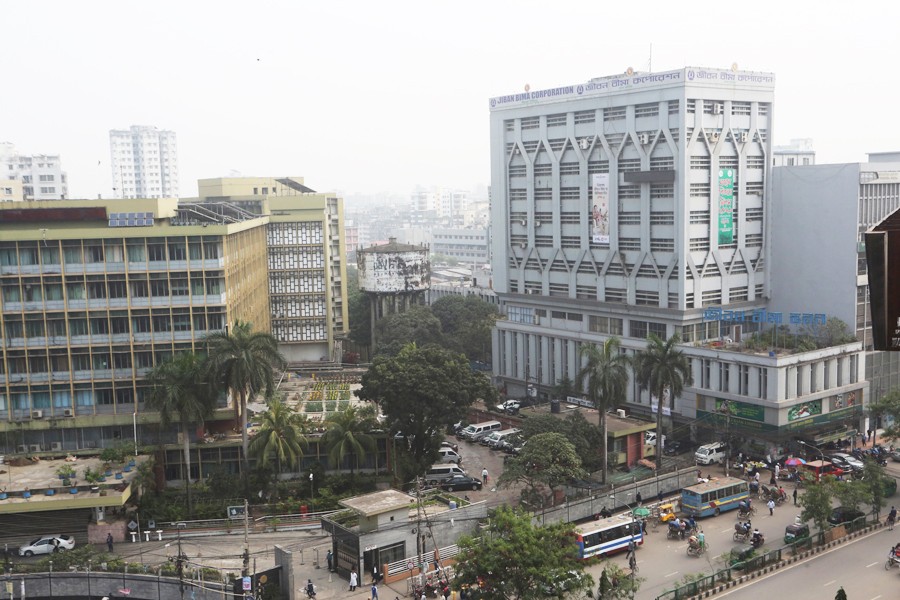
 A partial view of Motijheel Commercial Area in Dhaka, Bangladesh —FE File Photo
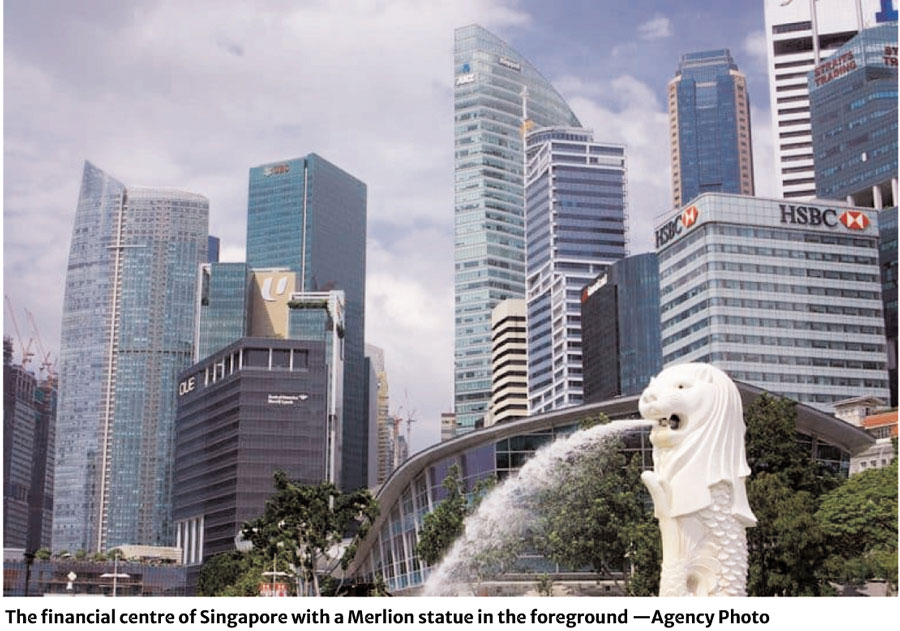
 It is often suggested—sometimes wistfully, sometimes with great confidence—that if Bangladesh simply adopts a specific policy (or a specific set of policies), it can “become the next Singapore.” This is an uplifting thought, but simple arithmetic delivers a gentle reality check. With a per capita income of mid–two thousand in market dollars, catching up to Singapore’s ninety thousand dollars would require not just exceptional growth but also a fair bit of patience. Even if Singapore graciously agreed to stand still, and Bangladesh grew at its most impressive rates, the journey would take not one generation but several. Realistically, it is the sort of long-term aspiration you pass down like an heirloom—but not a five-year plan!
Yet behind this humour lies a serious question: if Bangladesh cannot become Singapore anytime soon, can it at least become something closer to what Singapore once was—a dynamic export powerhouse positioned to climb the value chain?
For three decades, Bangladesh’s development trajectory suggested as much. The country became a quiet success story of globalisation for low-income countries, building an apparel industry that now accounts for over 84 per cent of merchandise exports, employs around 4-5 million workers, and contributes roughly 11-12 per cent of gross domestic product (GDP). Poverty fell from 48.9 per cent in 2000 to 18.7 per cent in 2022, with RMG playing a central role. Women’s labour force participation increased significantly in export-oriented districts. By many metrics, Bangladesh’s experience mirrored the early phases of East Asian industrialisation.
 However, the global context that enabled such growth is changing rapidly. A recent analysis by economists Pinelopi Goldberg (Yale) and Michele Ruta (IMF) highlights precisely why past export miracles—Japan, Korea, Taiwan, and later Vietnam—may no longer be replicable. Their core insight is stark: the global economy is now offering far fewer opportunities for late industrialisers than it did between 1980 and 2010.
Automation is the most immediate challenge. While robot density in apparel remains low, the technology frontier is shifting quickly. According to the International Federation of Robotics, annual industrial robot installations worldwide increased from about 120,000 units in 2010 to around 553,000 units in 2022. Goldberg and Ruta estimate that 64 percent of textile jobs globally are technically automatable. As automation becomes cheaper and “near-shoring” regains favour, Bangladesh’s labour-cost advantage may erode substantially. In 2010, only a few thousand manufacturing jobs were recorded as reshored to the US, whereas by 2023, annual job announcements from reshoring and foreign direct investment (FDI) had risen to roughly 287,000.
Protectionism, meanwhile, has returned in modern guise. The United States (US) and European Union (EU) have revived industrial policy at a scale unseen in decades. The CHIPS Act (about US$280 billion) and the Inflation Reduction Act (about US$890 billion) together channel well over US$1 trillion into clean energy, strategic manufacturing, and supply-chain restructuring. The EU’s Green Industrial Plan and expanding due diligence rules further tighten access to its markets. The Carbon Border Adjustment Mechanism (CBAM)—currently in its transitional phase—seeks to introduce carbon tariffs on imports in emissions-intensive sectors. Given that Bangladesh generates roughly 50 per cent of its electricity from natural gas, 30 per cent from oil, and less than 4 per cent from renewables, the carbon intensity of textile production poses real risks. The EU accounts for 40-50 per cent of Bangladesh’s RMG exports, making CBAM economically consequential.
Geopolitics adds still more complexity. The US–China rivalry has begun to reshape trade flows: cross-border FDI between the two economies has fallen by nearly 75 per cent since 2016. The World Trade Organization (WTO)’s dispute settlement mechanism effectively ceased functioning in 2019, eroding the predictability smaller economies rely on. FDI inflows to developing economies fell from US$685 billion in 2019 to US$435 billion in 2023—a decline of nearly 40 per cent—as multinational firms prioritise resilience and political alignment over cost considerations alone. Bangladesh, which typically attracts 0.4–0.6 per cent of GDP in FDI (compared with Vietnam’s 7-8 per cent at its peak), is especially exposed.
These global headwinds imply that Bangladesh’s traditional model—labour-intensive, low-skill, low-tech exports—is facing higher obstacles, weaker technological spillovers, and far greater policy uncertainty. Yet Bangladesh is not without comparative strengths.
With 170 million consumers, the country possesses far greater scale than Cambodia, Sri Lanka, or even Malaysia. The garment industry has evolved beyond the basic cut-make-trim model: Bangladesh now hosts over 250 LEED-certified green factories, the highest such concentration in the world. Backward linkages have deepened, with domestic textile production meeting around 85 per cent of RMG demand in knitwear. Several firms are moving into synthetics, performance fabrics, and limited design and branding. The labour force remains young, with a median age of little over 27 years, and Bangladesh is taking baby steps into the digital services market as a supplier of online freelancers, ICT, and IT-enabled services.
But strengths alone do not guarantee success or transformation. Structural constraints are binding and measurable. Bangladesh’s export concentration is among the highest globally: the top five products account for nearly 90 percent of merchandise exports (compared with 25 per cent in Thailand, 38 per cent in Indonesia, and 40 per cent in Vietnam). Productivity growth in manufacturing has averaged under 2 per cent annually over the last decade, compared with 5–7 per cent in successful Asian industrialisers.
Compounding these challenges is Bangladesh’s tariff structure, which discourages export competitiveness. While Bangladesh’s average tariffs on final goods remain higher than those on intermediate inputs, the tariff structure exhibits sector-specific tariff inversion and anti-export bias, as key production inputs often face substantial duties once para-tariffs and exemptions are taken into account. This raises production costs and weakens incentives for export-oriented production. If Bangladesh is to move into higher-value exports, incentives must shift toward measurable outcomes—export performance, innovation, quality upgrading, training, and R&D.
Climate vulnerability intensifies the economic challenge. Bangladesh ranks 7th on the Global Climate Risk Index and faces annual losses estimated at 1–2 per cent of GDP due to extreme weather events. Cyclone damage, rising heat stress, and flooding disrupt production and logistics—factors global buyers increasingly consider when choosing sourcing locations. Without accelerated investments in renewable energy, energy-efficient factories, and climate-resilient infrastructure, Bangladesh risks losing reliability advantages.
What, then, is the realistic pathway for Bangladesh to become an export powerhouse in a more demanding world?
The country must move decisively into higher-skilled segments of the garment industry—synthetic fibers now account for over 60 per cent of global apparel demand, yet Bangladesh’s share in this segment remains modest. STEM education and vocational training must support diversification into electronics assembly, agro-processing, pharmaceuticals, and light engineering. Digital services should be elevated from a promising niche to a national priority.
Regional integration is essential. Intra-Asian trade now represents 60 per cent of global trade. Bangladesh must leverage regional arrangements such as BBIN, BIMSTEC, and ASEAN-plus to integrate into Asian supply chains. And climate readiness must become central to industrial policy: renewable energy adoption, green industrial zones, and resilient logistics are now prerequisites for export survival.
Finally, institutions matter. No country has climbed the export ladder without predictable regulations, efficient logistics, transparent governance, clean government, and a stable macroeconomic environment. Singapore is unique, but an honest and trusted government should be achievable anywhere.
Bangladesh may not be catching Singapore anytime soon—perhaps a relief, since Singapore shows no intention of slowing down for us! But that does not preclude Bangladesh from emerging as a credible middle power in the global economy. Becoming an export powerhouse is undeniably harder than before, but not outside the realm of possibility. The ladder may be narrower and steeper, but the summit remains within reach—if Bangladesh commits to a modernised trade regime, performance-based industrial policy, and strategic investment in education and capabilities suited to a post-globalisation world.
M G Quibria is a development economist and former tenured professor of economics at Morgan State University. mgquibria.morgan@gmail.com
© 2026 - All Rights with The Financial Express

