 As the Earth's climate warms and ecological systems become increasingly unstable, Bangladesh emerges as one of the most critically endangered nations in the intersection of environmental fragility and public health. The silent but insidious advance of vector-borne and waterborne diseases reveals the profound vulnerability of Bangladesh's health systems in the face of global warming. What appears on the surface as isolated outbreaks of dengue, cholera, or malaria is, in truth, symptomatic of a much deeper, climate-driven public health emergency. These diseases, driven by altered weather patterns, rising temperatures, erratic rainfall, and flooding, are not just a biological hazard-they are indicators of a systemic crisis that threatens to overwhelm infrastructure, deepen inequalities, and compromise the nation's developmental trajectory.
The unique geographical and ecological context of Bangladesh amplifies its exposure to climate variability. Located in the deltaic plains of the Ganges-Brahmaputra-Meghna river system, the country is regularly affected by cyclones, floods, landslides, salinity intrusion, and rising sea levels. These phenomena are no longer occasional disasters-they are becoming chronic and intensifying in scale. Such environmental instability is giving rise to changing patterns in disease ecology. Warmer ambient temperatures, longer wet seasons, and increased humidity create fertile breeding grounds for disease vectors, such as mosquitoes. At the same time, contaminated floodwaters and failing sanitation systems accelerate the transmission of bacteria and viruses responsible for a range of debilitating illnesses. These patterns are shifting from seasonal to endemic, creating new health risks that extend beyond their traditional geographic and temporal confines.
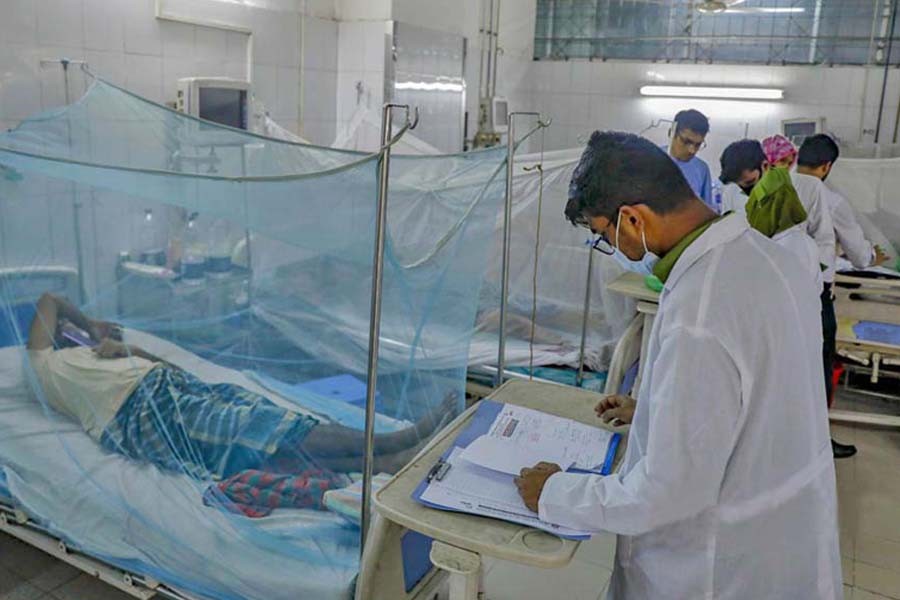
One of the starkest illustrations of this shift is the rise in vector-borne diseases, particularly dengue fever, chikungunya, and malaria. In recent years, Bangladesh has witnessed unprecedented outbreaks of dengue, culminating in the 2019 epidemic, which pushed the public health system to its limits. Once considered a seasonal illness largely confined to urban centres during the monsoon, dengue has now spread to rural areas and persists even during the dry months. The Aedes aegypti mosquito, the primary vector for dengue, thrives in stagnant water typically found in urban households, construction sites, and blocked drains. Climate-induced changes have extended their breeding cycle and geographic range, turning once-transitory public health issues into year-round threats.
The problem is not limited to dengue. The resurgence of malaria in the southeastern hilly districts, such as Khagrachari, Bandarban, and Rangamati, adds a worrying dimension to the climate-health nexus. Despite sustained efforts under the national malaria control programme, these regions continue to face outbreaks driven by the shifting ecology of the Anopheles mosquito. Deforestation, warmer high-altitude temperatures, and shifting rainfall patterns are enabling malaria vectors to thrive in previously non-endemic zones.
Meanwhile, the spectre of waterborne diseases looms even larger. Recurrent floods, sea-level rise, and cyclone-induced storm surges are contaminating freshwater sources with saltwater, faecal matter, and industrial pollutants. Cholera, typhoid, hepatitis A and E, and acute diarrheal diseases are common occurrences in both urban slums and rural flood-prone areas. In the aftermath of Cyclone Aila in 2009, the coastal belt experienced prolonged outbreaks of cholera and skin diseases due to contaminated water and inadequate sanitation facilities. These outbreaks are not merely reflections of poor hygiene; they are emblematic of a crumbling environmental infrastructure made worse by climate change. Salinity intrusion has also led to changes in water chemistry, allowing pathogens like Vibrio cholera to proliferate.
Bangladesh's most vulnerable populations disproportionately bear the consequences of these health crises. Children under five, pregnant women, elderly individuals, and people with pre-existing health conditions are the first to suffer. Low-income communities, particularly those living in informal settlements and disaster-prone rural areas, are trapped in a cycle of poor health, limited access to healthcare, and economic hardship. In urban slums of Dhaka, where millions live in cramped quarters with inadequate drainage, open sewage, and no piped water, the transmission of infectious diseases becomes almost inevitable during the rainy season. The result is a sustained burden of illness that affects productivity, educational attainment, and overall well-being.
From an economic perspective, the impact of climate-sensitive diseases is immense. Repeated illness within households leads to lost income, high medical costs, and prolonged absences from work or school. The burden on the healthcare system intensifies during outbreak seasons, with hospitals often running at full capacity or beyond.
The scientific evidence linking climate change to these disease patterns is increasingly robust. The icddr,b has produced longitudinal data showing clear correlations between spikes in temperature and the incidence of diarrheal diseases. Similarly, the Institute of Epidemiology, Disease Control and Research (IEDCR) has documented the expansion of dengue's range and the recurrence of malaria in areas once declared malaria-free. Despite these findings, surveillance systems remain rudimentary, particularly in areas outside urban centres.
Confronting this invisible invasion demands a paradigm shift in health and climate policy. A climate-resilient health system must be built on a foundation of integrated data, adaptive planning, and community participation. Surveillance networks must be strengthened through the use of digital tools and real-time reporting mechanisms. Health workers must be trained not only in clinical management but also in recognising the signs of climate-driven disease patterns. Investments must be made in infrastructure-such as climate-resilient clinics, mobile health units, and water purification systems-to ensure continuity of care during disasters. Community health education campaigns can empower people to adopt preventive behaviours and demand better services from local authorities.
Urban planning must also be reimagined to accommodate the health demands of a warming world. Dhaka and other megacities require robust drainage systems, enhanced waste management, and stringent regulations on water storage practices. Informal settlements require targeted interventions that prioritise safe housing, access to clean water, and disease prevention. The urban poor, who live closest to the sources of disease and farthest from quality healthcare, must be at the centre of any health adaptation strategy. In rural and coastal areas, climate-smart agriculture, elevated water storage tanks, and rainwater harvesting can reduce exposure to waterborne illnesses. These measures, while often discussed in development circles, require scale, coordination, and accountability to achieve tangible outcomes.
At the national level, climate adaptation must be institutionalised within the Ministry of Health and Family Welfare's strategic plans. Cross-sectoral coordination is essential, involving ministries of water resources, agriculture, environment, and disaster management. Bangladesh's National Adaptation Plan (NAP) and Nationally Determined Contributions (NDCs) under the Paris Agreement should explicitly link climate goals with public health objectives. Financing mechanisms such as the Green Climate Fund should prioritise investments in climate-resilient healthcare and disease surveillance. Moreover, Bangladesh must continue to play a leading role in global climate-health dialogues, advocating for climate justice, technology transfer, and capacity building.
International collaborations are also indispensable. As the impacts of climate change transcend borders, regional cooperation on disease surveillance, vector control, and climate forecasting becomes critical. Bangladesh can benefit from joint research initiatives with neighbouring countries and global institutions that specialise in planetary health.
Climate change is not just an environmental issue; it is a fundamental threat to human security, and it must be addressed with the full intellectual and political force available. Yet the success of any intervention ultimately rests on the question of governance. Bangladesh must reckon with the underlying political economy that has allowed environmental degradation and public health neglect to persist. Weak enforcement of environmental laws, corruption in infrastructure projects, and poor urban planning have exacerbated the vulnerability of millions.
The climate-driven health crisis is not a future projection-it is a present reality. The shifting epidemiological patterns observed across Bangladesh are early warnings of a deeper, systemic unravelling. If left unaddressed, these trends could reverse decades of progress in poverty alleviation, education, and human development. Confronting this challenge requires moving beyond short-term fixes and embracing a long-term vision grounded in resilience, equity, and sustainability. It demands that climate change be treated not only as an environmental or economic issue but as an urgent public health emergency. Every degree of warming now carries with it a toll of illness, suffering, and loss.
The invisible invasion of climate-sensitive diseases is a defining public health challenge of our time. For Bangladesh, this crisis is exacerbated by geography, demography, and poverty-but it can be addressed with knowledge, solidarity, and effective governance. As the planet warms and disease vectors multiply, the stakes grow higher. Protecting human health in a climate-changed world is no longer optional; it is a moral, political, and existential imperative.
Dr Matiur Rahman is a researcher and development professional.
matiurrahman588@gmail.com
© 2026 - All Rights with The Financial Express

