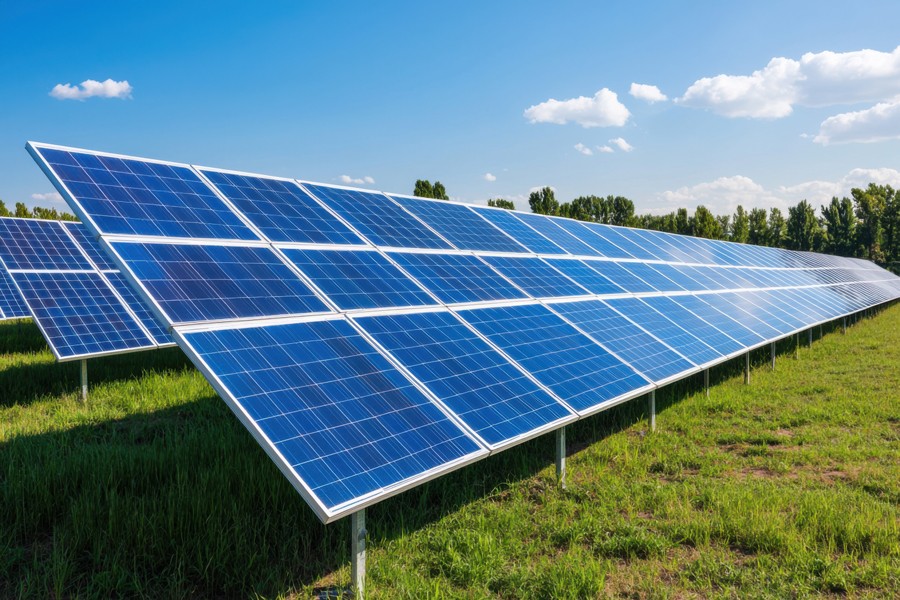
Bangladesh government has been trying to accelerate renewable energy- based power generation for diversifying primary energy sources. Bangladesh remains significantly behind its regional neighbours in renewable energy use. As reported, India, Pakistan, Vietnam and Thailand have considerably expanded their solar, wind and hydro energy use for power generation to reduce fossil fuel dependence and to secure diversification of energy sources. On the contrary, Nepal and Bhutan have been successfully harnessing hydroelectricity as the main sources for power.
Minister for Ministry of Power, Energy and Mineral Resources, Iqbal Hassan Mahmud informed the media (May7, 2026) that the government was set to introduce new policy framework to accelerate solar energy expansion and attract investment in renewable energy following Prime Minister's directive. The minister further informed that the government had been working on a simplified framework for importing solar power generation equipment including solar PV panels, inverters, frames etc., to reduce tax burden on investors in renewable energy sector, and also set out enabling conditions in the policy so that battery storage technology for electricity will be encouraged and solar energy can support evening peak hour demands in the country. It is expected that the government would finalise the 'new policy' document within May 2026, approve it by June 2026. Bangladesh has a target for 10,000 MW renewable energy-based power generation within next five years. Energy Minister further expressed the hope that the new policy would help expand rooftop solar power generation with the participations of private investors in the major cities. He expected that policy support from the government would help create a profitable market for investors while easing pressure on grid connected electricity supply.
Bangladesh Chamber of Industries (BCI) leaders consider that the country has fallen into an 'energy trap' by increasing heavy dependence on fossil fuel imports and delays in transition to renewable energy. It was opined in a seminar organised by the BCI in Dhaka on May 10, 2026. BCI President Anwar-ul-Alam Chowdhury considers that 'the growing dependence on imported fossil fuels has become one of the country's biggest economic vulnerabilities, as it exposes the economy to global shocks and forces the government to spend nearly $12 billion annually on fuel imports.'
Published reports suggest that the country's primary energy imports surged from 47.7 to 62.5 per cent between the fiscal year 2020-2021 and 2024-2025. And the average power generation costs increased from BDT 6.61/kWh to BDT 11.33/kWh between FY 2020-2021 and 2022-2023. Cost of fuel has a major role in increasing power generation costs. Against the global average of 33.8 per cent renewable energy share for grid connected power generation, Bangladesh has only 2.3 per cent share for the same.
Experts believe that delays in land allocation, weak financing, tax burdens on solar power generation equipment and batteries and absence of sovereign guarantees for the renewable energy based power generation facilities (solar and wind parks) remain as major impediments for private investment growth for the sector.
In the global arena, fossil fuel supply chain disruptions and uncertainties due to US-Israel and Iran war have been pushing global shifts from oil and gas to clean energy sources. The 1970's oil shocks compelled the industrialised economies to reduce reliance on oil supply dependent on OPEC cartel and enhance energy efficiency, focus on nuclear energy, introduction of electric vehicles, mass communication networks (metro, electric trains etc). The recent Persian Gulf crisis has already pushed the soaring demands for electric vehicles to offset oil and gas-based vehicles. As the renewable energy options are tested alternatives, countries of the world including in Southeast and South Asia have been rapidly expanding their solar, wind and hydropower generation capacities.
The Guardian (May 3, 2026) reported that Vietnam decided to shelve a massive LNG terminal development project and planed for substituting it with renewable energy projects. In India, solar accounted for 9 per cent of Indian electricity generation last year (up from 0.5 per cent a decade ago). Indian consumer market has been witnessing strong demand for 'electric three wheelers'. China, already the leading manufacturer of electric vehicles, solar PV panels, batteries and other accessories for solar and wind power generation has taken commendable lead in renewable energy towards faster transition to clean energy.
Mushfiqur Rahman is a mining engineer, He writes on energy and environment issues.
© 2026 - All Rights with The Financial Express

