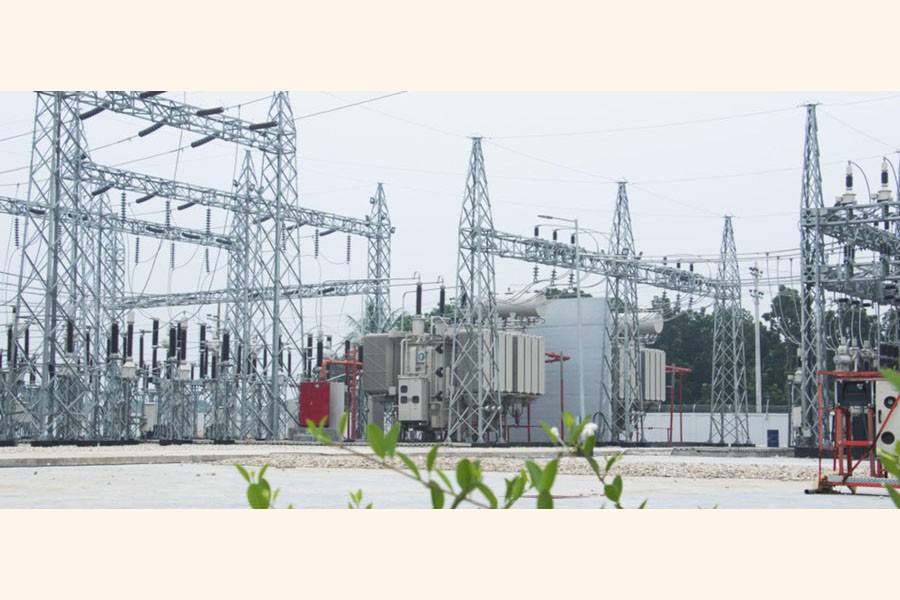
Bangladesh government has increased 16.7 per cent electricity tariffs at the customer level effective from June 2026 billing cycle. As a result, the retail consumers of electricity will require to pay Taka 1.52 more (weighted average price) per unit (kilowatt-hour (kWh) electricity use. As per the new power tariff rates applicable for the residential category, customers who use 76-200 units of electricity per month will pay at a rate of Taka 8.5 per kWh. Previous rate before the tariff hike was Taka 7.2/unit; domestic consumers using 201-300 units/month to pay Taka 9.1/unit.; consumers using 301-400 units/month Taka 9.62/unit; consumers of 401-600 units/month Taka 15.01/unit; consumers above 600 units/month Taka 17.35/unit. For irrigation purposes applicable rate of electricity is Taka 6.04/unit (kWh); for small industries Taka 12.73/unit; for education institutes/hospitals Taka 9.05/unit; for battery charging stations Taka 11.36/unit; for commercial 15.36/unit and for industries Taka 12.75/unit. The power tariff remains unchanged for the lifeline and low use domestic customers i.e., those who use less than upto 0-50 units and 50-75 units/month. The lifeline electricity consumers pay Taka 4.63/unit and residential consumers belonging to first phase (0-75 unit per month) users pays Taka 5.26/unit.
Bangladesh Energy Regulatory Commission (BERC) announced the revised electricity tariff rates applicable for different slabs of retail customers on June 3, 2026. The wholesale electricity tariff and the transmission charges have been increased by Taka 1.39 per unit to Taka 8.39 per unit and from Taka 0.3135 to Taka 0.3886 per unit respectively. Bangladesh government says that the electricity tariff increase is aimed at reducing the power sector's mounting subsidy burden. On the other hands, business and industry leaders, energy analysts caution that the electricity tariff hikes will fuel further inflation, raise people's cost of living and make business and industrial productions challenging. BERC announced the new electricity tariff rate 'not assessing the impacts on economy'. BERC Chairman however believe that the new rates 'would definitely increase the people's expenditure'.
Earlier liquid fuel prices were increased amid pressure on energy sector due to the Persian Gulf war. The government said that the fuel price revisions were linked to the fluctuations in international energy market.
BERC estimates that the government subsidy burden reached Taka 56,000 crore annually for Bangladesh Power Development Board (BPDB). The increased power tariff will help reduce the burden approximately Taka 14,200 crore leaving approximately Taka 41,000 crore subsidy burdens for the 2026-2027 financial year to be met by the government's budgetary supports.
Analysts believe that the huge subsidy burdens for the power sector remains a major challenge despite repeated power tariff adjustments. BERC acknowledges that the capacity payments for IPPs and rental power plants remain a major contributor to electricity costs. Experts further identified that the low plant efficiency (approximately 41 per cent), high cost of primary fuel (more than 60 per cent primary fuel for power generation have been imported) and significant devaluation of Taka have impacts on power tariff increments.
On the other hand, BPDB could not utilise comparatively cheaper power generation units with their maximum generation capacity partly due to its limitations for timely arranging financing for low price fuel. On the contrary, BPDB uses approximately 10.7 per cent liquid fuel based (furnace oil and diesel) power generation plants. These liquid fuel based plant's power generation costs are significantly high compared to the alternatives. BERC Chairman wanted to issue specific directives for reducing power generation costs so that low cost power generation plants get priority for electricity generation.
Experts consider that BPDB can further reduce power generation and distribution costs by containing system loss, enhancing efficiency and increasing share of renewable energy (mainly solar energy) for power generation. Bangladesh targets for 20 per cent increase of electricity generation using renewable and clean energy sources by 2030 (around 6,145 MW) and 30 per cent by 2040. However, real achievements in grid connected clean energy power generation remain low so far (presently grid connected solar and wind and Hydro power generation capacity is 1,405 MW only). As per electricity generation mix (installed power generation capacity: coal fired power generation capacity stands 6,273 MW (19.34 per cent); gas fired 12,472 MW (38.45 per cent); furnace oil 5,641 (17.39 per cent); diesel 768 MW (2.37 per cent); renewable (on grid and off grid) 1,783 MW (5.5 per cent), captive 2,800 MW (8.63 per cent) and imported 2,696 MW (8.31 per cent).
Sector experts believe that the share of renewable (mainly solar energy) energy can be significantly increased within 2-3 years provided government lands are used for developing solar parks and power evacuation facilities are built by BPDB (or its subsidiary organisations). Investors (IPP and Public and Private partners) may be attracted for investment in mobilising resources for solar power plant development and its operation under specific contracts and agreed tariff rates. Government equity can be its land and power evacuation facilities. Thus BPDB will come forward as a major investor and partner for developing the projects as sustainable investment and lucrative projects. Increased share of solar and renewable power projects if operated efficiently, can significantly reduce power generation costs and reduce BPDB's subsidy burdens.
Mushfiqur Rahman is a mining engineer. He writes on energy and environment issues. mushfiq41@yahoo.com
© 2026 - All Rights with The Financial Express

