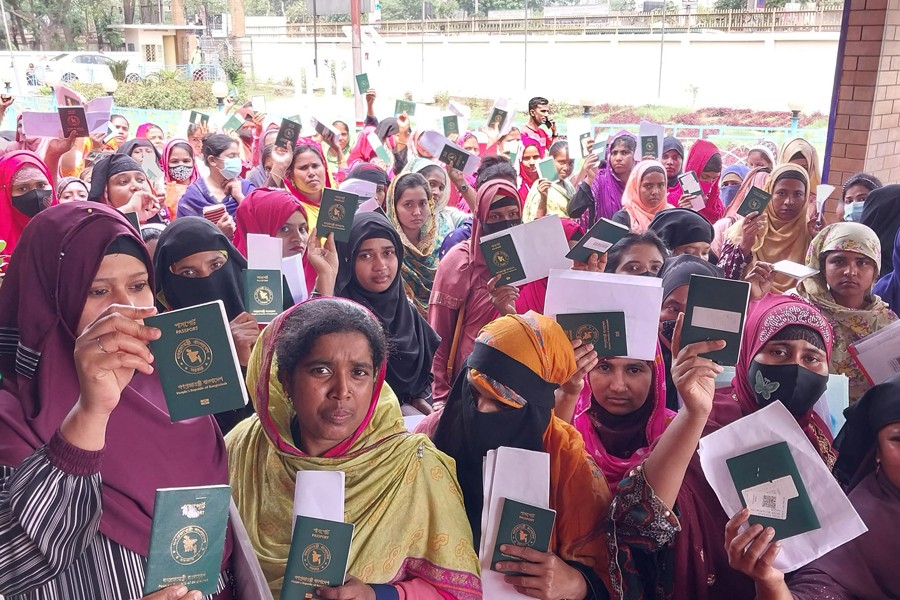
 A group of Bangladeshi migrant women displaying their passports — MJF Photo
 Across the developing world, migration has long been a pathway to economic mobility, a strategy for families seeking stability or upward movement. But in recent years, a new force has reshaped how young people think about leaving home. Social media platforms such as TikTok, YouTube and Facebook are transforming the meaning of migration, turning it from a rational economic decision into an aspirational identity. In Bangladesh, the phenomenon is especially intense, as digital technology penetrates rural areas, youth cultures evolve, and global mobility becomes part of everyday fantasy. Migration is no longer simply a journey; it is a dream crafted, circulated and magnified through screens.
This shift has profound social implications. In the past, migration narratives spread through kinship networks, village gossip, returning migrants and personal letters. Stories of hardship travelled alongside stories of success. Today, however, the digital ecosystem amplifies only one side of the story. Influencers wearing designer jackets on the streets of Milan, Bangladeshi workers filming themselves with luxury cars in Dubai parking lots, and YouTube channels promising "100 per cent guaranteed" work visas in Europe create a parallel reality. These images circulate with breathtaking speed, shaping perceptions not only among youth but also among parents, teachers and local leaders. Migration desire becomes a collective imagination, fuelled less by lived experience and more by online spectacle.
The emotional power of these digital fantasies is rooted in their form. TikTok videos are short, visually striking and emotionally charged. They compress the complexity of migrant life into seconds of glamour, confidence and mobility. YouTube vloggers document their lives abroad in curated snippets, rarely showing the drudgery of 16-hour shifts, cramped accommodations or exploitative employers. Facebook groups, some with hundreds of thousands of members, function as informal marketplaces where migration hopes, rumours, and fake opportunities blend seamlessly. The platforms reward sensationalism, creating a distorted image of life abroad that becomes more persuasive than reality.
In rural Bangladesh, this shift is evident. Smartphones are now ubiquitous, often becoming the primary window to the world for young people in districts such as Cumilla, Madaripur, Brahmanbaria, Jashore and Sylhet. Unlike earlier generations whose reference points were local role models or modest educational aspirations, today's youths grow up watching Dubai skylines, European streetscapes and American college campuses. For many, the village becomes a temporary waiting room, and the passport becomes a symbol of adulthood. Migration is framed not as one option among many but as the only meaningful route to success. The village tea stall, once a centre of communal conversation, is now a space where young men huddle over screens watching videos of life abroad.
Social scientists argue that this phenomenon aligns with theories of mediated aspiration. When global lifestyles become visible through digital platforms, they set new benchmarks for what a "good life" looks like. Aspirations are no longer locally anchored; they become globalised imaginaries. A young man in Munshiganj compares his life not to his neighbours but to a Bangladeshi influencer in Qatar showing off a new iPhone. A rural student in Madaripur sees the transformed appearance of a cousin who migrated to Italy and assumes success is universal. The digital gap between aspiration and lived reality widens, producing both hope and anxiety. The desire to migrate becomes a social expectation, even an emotional obligation.
The result is a decisive cultural shift where migration is not only normalised but glamorised. Young men increasingly equate migration with masculinity, independence and prestige. Families consider a migrant son a badge of honour. Brides' families sometimes prefer grooms who work abroad, reinforcing migration as a status marker.
Yet the digital manufacture of migration dreams hides a darker reality. Traffickers, unscrupulous agents and fraudulent intermediaries exploit these aspirations with alarming effectiveness. Facebook groups are filled with advertisements promising "direct visas," "shortcut routes", and "no interview needed" opportunities. Many of these offers lead to financial ruin, dangerous journeys or exploitation in transit countries. Thousands of Bangladeshi migrants have been stranded in Libya, Algeria, or the Balkans after following online promises that never materialised. Boats carrying irregular migrants from Cox's Bazar or Teknaf into the Bay of Bengal are often filled with youths who first encountered the idea of irregular migration on social media. The digital world does not merely inspire dreams-it can also engineer peril.
Youths compare their rural surroundings to the glossy visuals of urban or foreign lifestyles, generating a sense of being left behind. This emotional landscape can shape mental health. Stress, shame, family conflict and depression sometimes emerge from these comparisons. When parents invest their savings in failed migration attempts, the psychological burden on young people becomes immense. The digitalised world of aspiration transforms into a source of emotional distress, yet these pains remain hidden behind the public dream of migration.
Migration dreams push households to take high-interest loans, sell land or incur debts to finance travel. These decisions often do not reflect economic rationality but emotional desire. The cost of attempting migration, even unsuccessfully, can plunge families into long-term financial hardship. The digital portrayal of "easy success abroad" fuels this risk-taking behaviour, overriding cautionary tales that rarely receive equal visibility online. Communities thus oscillate between prosperity and loss, between remittances and debt traps, shaped by a digital economy of dreams.
Yet it would be misguided to dismiss social media as purely harmful. These platforms also empower migrants by giving them a voice and visibility. Bangladeshi workers in the Gulf share labour abuses that once remained hidden. Migrants in Europe post informative videos about legal pathways and working conditions. Some influencers use their platforms to warn potential migrants about fraud, debt and exploitation. Social media has become an essential space for migrant communities to form virtual support networks, raise awareness and mobilise for rights. The problem lies not in the platforms themselves but in how aspirations are curated and consumed.
To address these challenges, Bangladesh requires a multi-layered response. First, digital literacy needs urgent strengthening, especially in rural areas. Young people must learn to differentiate between curated content and reality. Critical thinking about online narratives should be part of school curricula, youth programmes and community awareness campaigns. Parents also need education about the risks and realities of overseas migration so that they can evaluate promises made by agents and social media influencers more cautiously.
Second, the government can play a greater role in regulating online migration advertisements. Many countries have already introduced digital monitoring units that target fraudulent migration content and unverified agents. Bangladesh too can develop mechanisms to flag misleading posts, promote verified information and provide online platforms where aspiring migrants can receive factual guidance. The Ministry of Expatriates' Welfare and Overseas Employment can strengthen its digital outreach to counter the flood of misinformation online.
Third, local opportunities must be reframed as attractive and viable. When young people see successful entrepreneurs, skilled professionals or innovators within Bangladesh, they develop alternative role models. The narrative that "success only exists abroad" must be replaced with multiple pathways to dignity and prosperity. Media, policymakers and educational institutions can showcase domestic success stories that challenge the dominance of foreign glamour.
Finally, the emotional and psychological dimensions of migration aspirations must be addressed. Community-based counselling, peer support groups and social workers can help young people navigate the pressures of aspirational culture. Mental health services need to become more accessible so that individuals and families struggling with failed migration attempts or debt can receive timely support. Social media itself can be part of the solution, with targeted campaigns that portray realistic depictions of migrant life, emphasising legal pathways, skill development and financial planning.
The challenge for Bangladesh is to ensure that these dreams remain grounded in reality, informed by accurate knowledge and aligned with sustainable development. Migration will continue to shape the country's economy and society, but the pathways to it must be safe, realistic and equitable. As social media continues to dominate the emotional universe of young people, the responsibility lies with families, policymakers and communities to engage critically with the digital manufacture of dreams. Only then can the aspirations of the next generation reflect not illusion but informed possibility.
Dr Matiur Rahman is a researcher and development professional.
matiurrahman588@gmail.com
© 2026 - All Rights with The Financial Express

