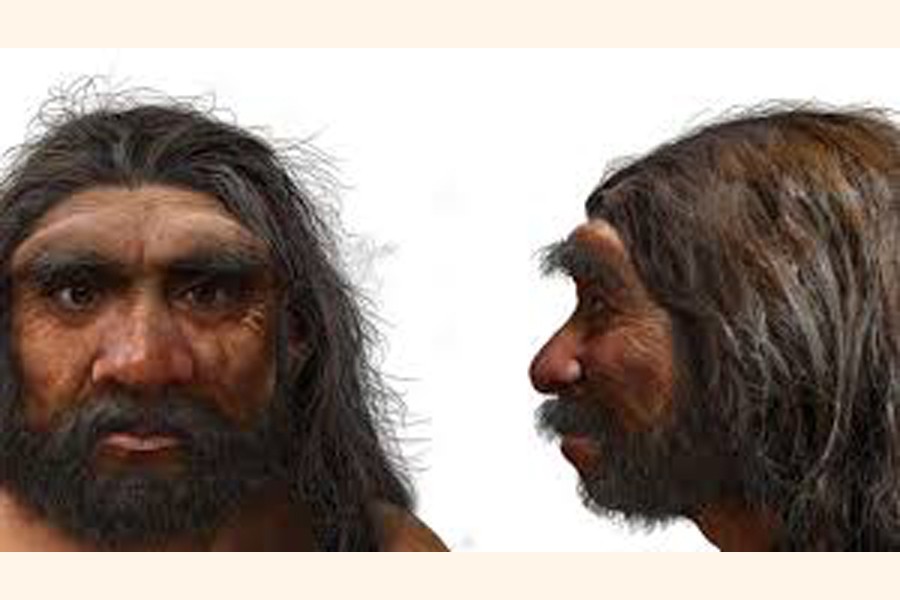
BANGKOK, Sept 26 (AFP): A digital reconstruction of a million-year-old skull suggests humans may have diverged from our ancient ancestors 400,000 years earlier than previously thought and in Asia not Africa, a new study said Friday.
The findings are based on a reconstruction of a crushed skull discovered in China in 1990, and have the potential to resolve the longstanding "Muddle in the Middle" of human evolution, researchers said.
The skull, labelled Yunxian 2, was previously thought to belong to a human forerunner called Homo erectus.
But modern reconstruction technologies used by a group of researchers found features that are closer to species previously thought to have existed only later in human evolution, including the recently discovered Homo longi and our own Homo sapiens.
"This changes a lot of thinking," said Chris Stringer, an anthropologist at the Natural History Museum, London, who was part of the research team.
"It suggests that by one million years ago, our ancestors had already split into distinct groups, pointing to a much earlier and more complex human evolutionary split than previously believed," he added.
If the findings are correct, it suggests there could have been much earlier members of other early hominins, including Neanderthals and our own Homo sapiens line.
But it also "muddies the waters" on longstanding assumptions that early humans dispersed from Africa, said Michael Petraglia, director of Griffith University's Australian Research Centre of Human Evolution, who was not involved in the study.
"There's a big change potentially happening here, where east Asia is now playing a very key role in hominin evolution," he told AFP.
© 2026 - All Rights with The Financial Express

