
 Following the exit of the caretaker regime after the holding of the 9th parliamentary election in December 2008, expectations ran high among the people in Bangladesh that the grand-alliance government led by Awami League (AL) would keep its pledge of ushering in a new brand of politics and governance in the country in accordance with the ‘Charter of Change’ and ‘Vision-2021’ contained in its election manifesto. But the reality turned out to be frustrating.
Twists started in all pillars of the state and democratic dispensation: The first thing the new government did was a massive reshuffle of the entire bureaucracy in order to put party loyalists in all key positions. Next, series of promotions were given from Deputy Secretary to Secretary levels, where only those vetted by the pro-AL bureaucrats were promoted. Numerous professional civil servants, whose only fault was good postings under the previous regime, were left out in the process. Upazila elections were held on 22 January 2009, immediately after the parliamentary election, which were steeped in irregularities by ruling-party-men at many places. By-elections to some vacant JS seats were also held, but, again, there were reports of massive rigging by the ruling-party spoils-men in some constituencies. Bhola is one, for instance. Subsequent municipal and union-parishad elections were also fraught with wholesale rigging and manipulations by pro-AL candidates.
Among the first things the AL-led government did was also clip the wings of the military. As many as 57 mid-level and high-ranking army officers were killed in the BDR mutiny at Dhaka’s Pilkhana on 25-26 February 2009 under circumstances cloaked in mystery. The probe reports on the mutiny were never made public by the regime, but there were allegations that the mutineers had previous contacts with some ruling-party stalwarts. For the first time in the country’s history, a Defence Adviser to the Prime Minister was appointed at PMO, who happened to be a close relative of the prime minister and served as a loyal general during the previous tenure of AL. Tarique Ahmed Siddique virtually became the de-facto head of defence forces – above the three services’ chiefs. Soon afterwards, the whole military was politicised in favour of the ruling party. Patriotic and professional officers suspected to be holding dissenting views were dismissed forthwith whenever the opportunities arose.
Manipulating the judiciary was another strike at the roots of the state: The AL-led regime did not waste time in dealing a blow to the judiciary, forcing it to toe its line. The first thing it did was stop the separation process of the country’s judiciary initiated by the previous caretaker regime in accordance with a Supreme Court verdict. No separate secretariat for the judiciary was set up under the top court as per that verdict, and the lower judiciary continued to remain under the control of the executive vis-à-vis the Ministry of Law, Justice and Parliamentary Affairs. Party loyalists were placed in all key positions of the judiciary – starting from the district level up to the appellate division of the Supreme Court. New judges with ruling-party background were appointed in droves at the highest court, and seniority was blatantly violated through supersesion while promoting judges to the appellate division—quite unprecedented in the country’s history. The judiciary became so partisan that it did not even grant bail to opposition leaders and workers in apparently ‘cooked-up’ cases, although ‘bail’ was a constitutional right.
Some judges in the Supreme Court openly sided with government positions in almost all matters of the state, and delivered some highly controversial verdicts, including the scrapping of the constitutional provision for caretaker government (CTG). What raised eyebrows even more was the fact that the final detailed verdict on CTG did not tally with the earlier short version, and the written full verdict was submitted long after former chief justice Khairul Haque (who drafted it) had retired. The most notable feature of the trial was that seven out of eight amici curiae, including Attorney-General Mahbubey Alam, were in favour of the CTG’s continuity, and predicted eruption of chaos in the country if the subsequent two elections were not held under that system. Only AL -loyalist Ajmalul Hossain QC, who was the last among the amici curiae to place arguments, took a stand against the election-time neutral government. His arguments were later used in overturning the High Court verdict upholding the system.
 The revocation of the CTG system in parliament on 30 June 2011 through the 15th constitutional amendment – even before the full verdict of the Supreme Court was released and despite the short verdict prescribing continuation of the system for two more elections – was an act of unbridled hypocrisy and a shock of the century for the masses. It was in fact the AL who along with Jatiya Party and the Jamaat-e-Islami had resorted to relentless street violence and terrorism for continuous two years (1994-96) for incorporating this system, and ultimately the BNP regime accepted the demand by bringing changes to the constitution in March 1996. It was later gathered that the revocation of the CTG system was done in accordance with the lone wishes of the prime minister, Hasina, as the parliamentary committee formed for the purpose had never recommended its abolition at any stage. Interestingly, parliamentary election under a caretaker government was the very first item in Vision-2021 that was appended with the election manifesto of the AL back in 2008.
Corrupting the institutions bred a corruption galore: There were corruption scandals galore throughout the tenure of the AL-led government during 2009-14. The Padma Bridge graft case became well-known all over the world. Similar to 1996, when the AL was in power, small investors in the stock market were taken for a ride during 2009-10, but the impact of that crash can be felt even today. As in the past, no legal action was taken against the real culprits, as they were mostly pro-AL men. There were also series of scams involving multi-layer marketing (MLM) companies and e-commerce entities, which robbed billions from millions of small investors. These included the much-publicised ‘Destiny’ and ‘Unipay2u’ scams.
Banking scandals like those committed by ‘Hallmark’ and ‘Bismillah Group’, involving huge amounts of stolen money from state-owned banks, also rocked the country. These were in fact the mere tip of the iceberg, as the activists of the ruling party and front organisations engaged in a fierce rat race for becoming rich overnight through the use of mafia-like networks. Patronage and participation by those at the top made their jobs easier. The Awami mafia clan were further bolstered during the period through indiscriminate pardoning of pro-AL criminals and corrupt elements by means of wholesale withdrawal of cases against them.
Political crackdown: The arrests and detentions of top Jamaat-e-Islami leaders in the name of trial of war crimes and crimes against humanity also remained mired in controversies, especially when 195 identified Pakistani war-criminals were allowed to be sent back to Pakistan from India in 1974 by the then Sheikh Mujib regime. The resignation of the head of one of the two tribunals in 2012 following leakage of his Skype conversations with a Brussels-based lawyer only lent credence to allegations of manipulation in the course of justice. In fact, the world-renowned ‘Economist’ magazine termed the trial itself a ‘crime’. The leakage of the verdict document via internet in the war-crimes case against SQ Chowdhury before its actual delivery on 1 October 2013 supported the Economist’s assertion.
The activities of the so-called ‘Ganojagaran Mancha’ at Shahbag under police protection during the first half of 2013, which demanded the hanging of war criminals and the banning of politics by Jamaat-Shibir, demonstrated the double standards pursued by the Hasina regime. Many argued that if hanging was the ultimate aim, then why send people to tribunals and undertake a trial process at all? Besides, when the opposition was being repeatedly blocked from bringing out processions or holding meetings anywhere in the country, how could the so-called ‘Mancha’ be allowed to hold their nonstop programmes in the middle of Dhaka city, giving rise to chronic traffic jams and immense sufferings of the commuters as well as patients visiting the nearby BIRDEM and BSMMU hospitals?
The ruthlessness and cruelty of the regime was exposed through the arrests of thousands of opposition leaders and workers as well as the killing of hundreds of opposition protesters by the police across the country within a span of few days during April and May 2013. The opposition leaders and workers were indiscriminately arrested all over the country, and their number was so huge that the occupancy rate in jails almost trebled compared to their capacity.
The fascist regime also continued its dual policy of allowing numerous party loyalists to run new TV and radio channels as well as newspapers on the one hand, and not tolerating any dissent in the mass media on the other. The Channel One television outfit was banned in April 2010 as it was owned by BNP stalwart Tarique Rahman’s friend Giasuddin Al-Mamun. Weekly ‘Sheersha Kagaj’ was shut down and its editor put behind bars in 2011, as it was publishing stories of corruption by government high-ups. The Daily Amar Desh was also closed down temporarily in June 2010 based on a flimsy and cooked-up case centring its ownership, which, however, could resume publication after a gap of one month following a court verdict. But later, when the daily divulged the skype conversations of war-crime tribunal judge, and took a stand against the atheist bloggers-cum anti-religion activists of the ‘Ganojagaran Mancha’, it was again singled out for vengeful action. This ultimately led to the arrest and detention of its editor Mahmudur Rahman in April 2013 and the shutting down of its press. Broadcasts by two independent television channels – ‘Diganta’ and ‘Islamic TV’ – were also suspended in May 2013 following the wide coverage they gave to indiscriminate killings of the Hefajat-e-Islam activists at Dhaka’s Shapla Square by the law enforcers on May 6.
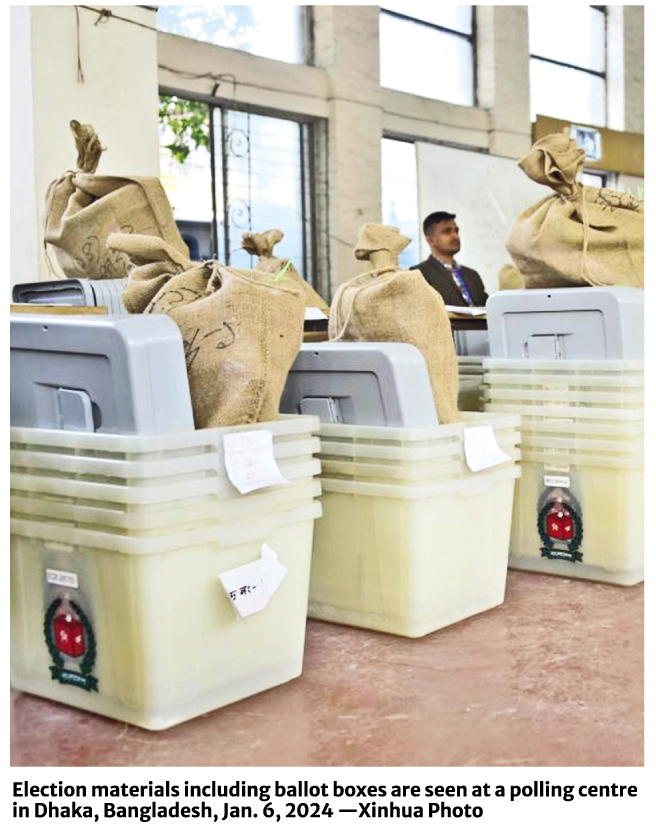
Farcical polls stand out as another epitome of the despotic deeds: The Awami League was fully convinced that they would suffer a huge defeat if the parliamentary election was held in a free and fair manner. This was vindicated by a number of nationwide surveys conducted by leading newspapers and agencies, where over 60 per cent of voters rejected the regime outright. The AL-led coteries, therefore, resorted to all kinds of ploys and tricks to crack down on the main opposition, and succeeded in keeping them out of contest during the farcical and one-sided 10th Jatiya Sangsad (JS) election held on 5 January 2014. It was sheer hypocrisy when Hasina said that she could not deviate an inch from the constitution, when the AL had outright rejected the constitutional provisions of the day in both February 1996 and October 2006 when BNP was in power.
Terminologies like ‘Mafiosi Rule’ and ‘Fascism’ were attributed to the 2009-14 period in Bangladesh. There were no checks and balances in the decision-making process at the highest level, as a single individual took all major decisions alone. It was previously announced by Hasina that the parliament would be dissolved on 25 October 2013 and an election-time government would assume office that day. That pronouncement was then shamelessly flouted by extending the sittings of the parliament as well as the cabinet repeatedly. The countrymen were kept in suspense for a long time regarding the timing of the election, the election schedule, and the assumption of office by election-time government!
The constitution was earlier amended in such a way that it was fully up to the prime minister to decide whether elections would be held during the last three months of the government’s tenure, or within 90 days after dissolution of parliament. Furthermore, the Jatiya Sangsad and the incumbent prime minister could remain in position until the next parliament-cum-government took charge, which was unprecedented in any democracy across the globe. This ensured continuation of the administrative arrangements, with the Awami bureaucrats presiding over all state apparatuses, thereby getting a free hand in taking recourse to overt and covert machinations during parliamentary polls. As a final check, the ever-loyal judiciary was always there to annul any polls that favoured the opposition. The BNP was therefore quite justified in rejecting any election under the incumbent prime minister by insisting on the creation of a level playing field as in 2001 before joining the election.
Dirty tactics: As in the past, the Awami mafia thugs continued to capture the streets whenever the opposition called any strike, and pounced on opposition activists in concert with the law-enforcers whenever they brought out any procession. Interestingly, the military strategy of attacking the ‘command and control centre’ first was also employed by the AL against their political foes. Consequently, the opposition was unable to come up with timely responses during their movements waged in 2013-14. A majority of casualties during the long spells of strikes were due to indiscriminate police firings, but the government and its loyal media accused the opposition instead for those deaths. Although a leading Bangla daily did not appeal to the Supreme Court for maintaining its neutrality when top opposition leaders were denied bails in cooked-up cases one after another, it surprisingly made a case for clamping down on the opposition strikers by blaming them for stray incidents of arson and related deaths during Hartals.
The AL’s offer of dialogue with the opposition all along remained a mere eyewash, as their intimidating and provocative utterances and ruthless repressive measures like blockading the BNP headquarters in Paltan and Gulshan as well as the residence of BNP chairperson with police, prison vans, and sand-loaded trucks, and arresting top BNP leaders while offering talks clearly demonstrated their unwillingness to hold any meaningful negotiation. Top leaders of BNP who were acting as the party’s spokesperson during November-December 2013 were shamelessly hauled up and arrested one after another even from their residences and venues, like the National Press Club, in order to silence the party before the parliamentary election.
Hundreds of opposition activists were indiscriminately killed or abducted, and thousands were wounded, detained, or put behind bars through a special drive of the joint forces involving the Police, RAB and BGB, which was quite rare in the history of democratic movements. The Jatiya Party (JP) chairman, Ershad, was kidnapped from his residence and put inside a hospital in order to force his party-men to contest the polls. When the JP chairman and his party candidates sent letters of withdrawal of their candidature from polls to the EC, the commission violated both the constitution as well as election rules by not giving effect to those withdrawals. Following this, all kinds of manipulation and doctoring were done by the EC as directed by their AL bosses while declaring 153 candidates elected unopposed, total seats being 300.
Finally, when the actual turnout on the day of voting was clearly less than 10 per cent as evident from reports in the mass media, an absurd voter turnout of 40 per cent was claimed by the EC a few days after the polls, which clearly indicated massive rigging and doctoring of results. The hypocritical nature of the AL regime’s approach was best exemplified by the utterances of Sheikh Hasina. On the one hand, she asserted that she would not budge an inch from the constitution, and on the other, she was claiming that she did not want premiership, she only wanted peace. The Awami League formed a poll-time government with participation of only the AL and a few minor parties, but termed it an ‘all-party government’. All these indicated a Goebbels-like ploy to hoodwink the local and foreign audiences and a mafia-like approach to force everybody into submission in order to claim victory and return to power.
 An Indo-US clique was alleged as a pivot to the supercilious regime: India’s blind support for the AL in Bangladesh also belied rationality. It had been an old ploy of the AL to paint its own citizens as fundamentalist radicals or extremists. Even during President Bill Clinton’s visit to Bangladesh in March 2000, a story was invented that the Islamic radicals had threatened to attack his helicopter if he flew to nearby Dhamrai for attending a Grameen Bank gathering. As a result, that programme was cancelled and an indoor event was arranged instead. Booklets were also simultaneously distributed at the time from the official Media Centre highlighting the impending threats of so-called fundamentalists and terrorists in Bangladesh. The AL once again used the same ploy to hoodwink the Indian and American establishments into believing that it was only them who could save Bangladesh from the imminent rise of Islamic radicalism in the country.
This was despite the fact that the Islamists in Bangladesh never received more than 8.0-percent votes in the parliamentary elections, and the previous BNP government was quite successful in tackling these extremist threats during its rule. The success of the previous BNP regime in this area was even acclaimed by the Western media. The Time Magazine published a cover story on the subject titled ‘Rescue Mission’ in April 2006. It was quite surprising that whereas India had honoured the majority sentiment of the Bangladeshi people during the liberation war, it did not do so at a critical juncture of democratic evolution in Bangladesh.
India appeared to be bent on bringing back the AL to power by any means in order to protect its so-called strategic interests, including corridor through Bangladesh, as well as security concerns in its north-east. But she was overlooking the fact that over 70-percent population in Bangladesh was against the AL regime, and alienating or upsetting an overwhelming majority could not be good either for India or for the democratic future of South Asia, for that matter.
The conclusion here could be a foregone conclusion: After the holding of a unilateral, non-participatory, and farcical election in January 2014, the Bangladeshi people receded into greater darkness instead of going forward, as pluralistic democracy was replaced by a controlled and hybrid one showing all symptoms of an autocratic and fascist mafiosi rule. Democracy degenerated into such a bizarre state that the largest opposition party was not even allowed to hold meetings or bring out processions—and a paranoid dictatorship appeared ever ready to take any repressive or cruel measures just to hang on to power by ‘hook or by crook’. Democratic sojourn in Bangladesh and its behavioural ramifications should be judged in the above context during any analysis of the decade-long mafiosi-rule that followed.
Dr Helal Uddin Ahmed is a retired Additional Secretary and former Editor of Bangladesh Quarterly. hahmed1960@gmail.com
© 2026 - All Rights with The Financial Express

