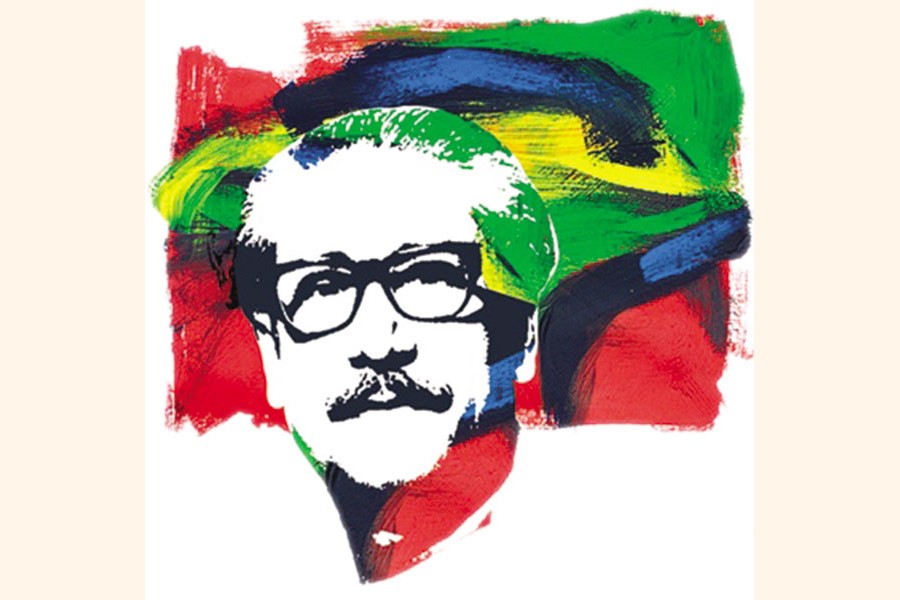
As the oldest son in a patriarchal family Mujib was showered with love and affection, but at the same time, much was expected of him. He had to act as a role model for other children in the family. Middle class Muslims had long realised that education was the key to success, whether in the government service or in professions like law or medicine. Sheikh Lutfur Rahman was eager to give his son the best possible education within his means. He was at first given private tuition at home. When he was ready for school his father had him brought to Madaripur where he was posted, since his native village lacked a suitable school. He was admitted to Class IV in the Islamia High School there. In 1931, when Mujib was eleven years old, his father was transferred to Gopalganj. Next year he secured admission to the Mission School, the better of the two schools in the sub-divisional town. As he was several years older than his classmates, they called him Mujibbhai. He became a spokesman for them in all school functions.
He was tall for his age but was prone to childhood illnesses. While in school, he was afflicted with beriberi, which is linked to Vitamin B deficiency and generally affects people who subsist on a diet of rice from which vitamin-rich husks have been removed. He also developed a serious eye problem which necessitated a visit to Calcutta where an eminent eye Specialist, Dr T Ahmed, performed a surgery. Although the operation was a success, his eyesight had already been affected and he had to wear corrective lenses for the rest of his life. There is a popular belief that his eye disorder was caused by beriberi, but this is not correct, because eye disorder is not one of the symptoms of the disease. However, beriberi causes inflammation of nerves and an emaciated appearance and it would take Mujib a number of years to get over his lean, undernourished appearance. Childhood illnesses made him drop out of school for several years, so that by the time he took his school-leaving Matriculation Examination in 1942, he was twenty-two years old, by far the oldest student in his class.
He did not excel in his studies. Sitting still in the class and memorising his lessons-rote learning was the norm then-did not suit him. He was more interested in outdoor activities like sports, especially volleyball, where his height gave him an advantage over others. Even in school his leadership potential was evident: whenever there was a school function or ceremony to be organised, he was in the forefront.
The head master of the Mission School, Girish Babu, understood child psychology and could appreciate why Mujib, hyperactive and restless by nature, was unable to concentrate on his studies and was indulgent towards him. Naren Babu, who took over as head master later, was dour and stern and Mujib had trouble with him. Fortunately, he was replaced not long after by Bilash Babu, to Mujib's satisfaction.
At the age of eighteen Mujib was married to a first cousin, Fazilatunnisa, a child-bride. In the Sheikh clan marriage between first cousins was the rule, rather than the exception. However, the marriage that took place was a mere formality, since there was no question of any co-habitation until the bride had reached puberty.
Mujib had, as yet, no central goal in his life. He was always interested in connecting with people and the urge to do things for them was strong in him. He was drawn to the Muslim League branch at Gopalganj which was looking for volunteers to do odd jobs for the party. His energy and hard work brought him to the attention of local party leaders who selected him for the position of Secretary to the Muslim League Defence Committee in Gopalganj. He served in that capacity until he left school. His future career as a politician was launched as much by chance as by his personality traits.
The Muslim League, after a long period of somnolence, was then beginning to make its influence felt among Muslims of India. The credit for the revival of the Muslim League must be given, more than any other person, to Mohammed Ali Jinnah. In many ways he was an unlikely leader of a communal organisation. He had begun his political career in Bombay, where he had a thriving law practice, as an "ambassador of Hindu-Muslim unity". He was a secular politician who believed in constitutional means to secure self-government for India. M.K. Gandhi sought to win mass support for Indian independence after the First World War by resorting to religious rhetoric and gave his backing for the Khilafat movement. Jinnah was outraged and warned Gandhi "not to encourage fanaticism of Muslim religious leaders and their followers". He was so disillusioned with the intertwining of religion and politics that he gave up political activity and in 1932 left India to practice law in England. In 1935, he was persuaded by Liaquat Ali Khan to return to India to lead the Muslim League. By this time Jinnah had come around to the view that with people like Gandhi dominating the Congress, there was no scope for secular politics in India: Muslims must therefore try to secure a fair deal for themselves through their own political organisation, the Muslim League. He was determined to bring within its fold all Muslim provincial leaders and their parties. The task was not easy. But when the Congress High Command, at the behest of Nehru, reneged on an agreement to share power with the Muslim League after the 1937 provincial elections, many Muslims were incensed and the popularity of the League grew. The performance of the Muslim League in the elections was impressive in Bengal, where it emerged as the leading Muslim party with 39 seats. Astutely Jinnah turned his attention to Bengal to demonstrate the importance of the League. He made a "very strategic move" by offering Muslim League's cooperation in a coalition government headed by FazIul Huq, whose Krishak Praja Party (KPP) had captured a greater percentage of total Muslim vote, but three seats fewer than the League. Fazlul Huq became the Chief Minister but the League got four out of six Muslim posts in the Cabinet.
Meanwhile, Jinnah had been searching for a formula which would rally the masses behind the Muslim League. After 1937 he embraced the theory that Hindus and Muslims were separate nations. To Fazlul Huq fell the honour of moving the historic resolution at the 1940 Lahore session of the Muslim League demanding that the Muslim-majority areas in the north-western and eastern zones of India should be grouped to constitute "independent states."
There is a story that it was in 1939 that Mujib had his first encounter with Fazlul Huq, then Chief Minister of Bengal and Shahid Suhrawardy, Minister of Commerce. They had come to Gopalganj on a tour of inspection and attended a function held in their honour at the Mission School. As they were returning to the Dak Bungalow, accompanied by the head master and the Sub-Divisional Officer, they found their narrow path blocked by a group of students led by Mujib. The S.D.O. was furious and the head master rebuked Mujib for his insolent conduct. Unperturbed, Mujib said that they would not move until their complaint had been heard. Fazlul Huq was curious to learn about their complaint. Mujib said that the roof of the school hostel had developed cracks with the result that rooms had become unlivable during the rainy season and nothing was being done to repair it. The head master apologetically explained that there was not enough money in the current budget for repairs which could cost as much as twelve hundred rupees. Fazlul Huq was so impressed by the forthright manner in which Mujib had put forward his complaint that he agreed to provide the required money. The story has a ring of truth, for throughout his life his personal and political conduct was courageous to the point of rashness when he was acting in a cause he believed in.
Sayyid A Karim is the first foreign secretary of Bangladesh. The piece is excerpted from his book titled "Sheikh Mujib: Triumph and Tragedy." (University Press Limited, Dhaka; February, 2020)
© 2026 - All Rights with The Financial Express

